

Regular mixed exercise drives molecular and structural changes that make the adult brain measurably more adaptable. The practical starting point: aim for at least 150 minutes of moderate aerobic activity per week as your baseline. Add two strength sessions, and include at least one skill-based session such as reformer Pilates or a coordination drill. That combination targets multiple neuroplastic pathways simultaneously, which is where the real gains live.
The three mechanisms doing the heavy lifting:
- BDNF and muscle-to-brain signalling: aerobic and resistance exercise trigger brain-derived neurotrophic factor (BDNF) release and muscle-secreted factors including IGF-1 and myokines, which cross the blood-brain barrier and stimulate synaptic growth.
- Angiogenesis via VEGF: vascular endothelial growth factor (VEGF) drives the formation of new blood vessels in the brain, improving oxygen and nutrient delivery to regions involved in memory and executive function.
- Synaptic remodelling: repeated motor and cardiovascular challenge reshapes dendritic spines and strengthens synaptic connections, particularly in the hippocampus and prefrontal cortex.
Statistic to know: A 2025 systematic review and meta-analysis found that 40–60 minute exercise sessions produced the most pronounced improvements in relative brain volume, with stronger effects seen in longer interventions and higher-compliance participants.
Pro Tip: Pair your aerobic session with a skill-based movement practice in the same week, not the same day. The molecular signal from cardio primes BDNF availability; the motor challenge that follows gives the brain something precise to wire.
Key takeaways
Exercise drives neuroplasticity through overlapping molecular, structural, and network mechanisms, and mixed training targeting all three pathways consistently outperforms any single modality for cognitive fitness.
| Point | Details |
|---|---|
| Mixed training is most effective | Combining aerobic, resistance, and skill-based exercise stimulates complementary neuroplastic pathways no single modality covers. |
| 40–60 minute sessions hit the sweet spot | A 2025 meta-analysis found sessions of this length produced the most pronounced improvements in brain volume. |
| Recovery is part of the process | Sleep, nutrition, and post-exercise recovery modalities determine whether molecular signals consolidate into lasting structural change. |
| Hippocampal change takes months | RCTs show structural brain changes after 6–12 months of consistent aerobic training; functional cognitive gains appear earlier, within 4–8 weeks. |
| Elevateandrestore applies the full model | Small-group Pilates, functional HIIT, and a recovery hub combine the exercise modalities and recovery support the evidence recommends. |
Table of Contents
- What is neuroplasticity and why does it matter for your brain?
- How does exercise drive neuroplasticity? The biology in plain language
- Which types of exercise help neuroplasticity most?
- How much exercise do you actually need for brain benefits?
- A practical weekly plan for neuroplasticity
- What else shapes how well exercise rewires your brain?
- What are the risks and limits of exercise-driven neuroplasticity?
- How Elevateandrestore applies these principles in practice
- Why mixed training is the right call for brain health
- Elevateandrestore: mixed training and recovery for a sharper brain
- Sources
What is neuroplasticity and why does it matter for your brain?
Neuroplasticity is the brain's capacity to reorganise its structure, connections, and function in response to experience, learning, and physical stress. It is not a single event but a layered process that unfolds across four distinct stages.
The four stages of neuroplasticity:
- Molecular signalling: a stimulus (exercise, learning, stress) triggers chemical cascades involving neurotrophins like BDNF, epigenetic modifications, and gene expression changes that set the conditions for structural change.
- Synaptic plasticity and spine remodelling: individual synapses strengthen (long-term potentiation) or weaken (long-term depression), and dendritic spines grow, retract, or change shape in response to activity patterns.
- Neurogenesis, gliogenesis, and angiogenesis: new neurons form in the hippocampus, supporting glial cells adapt, and new capillaries grow to supply metabolically active regions.
- Large-scale network reorganisation: over weeks to months, entire functional networks shift their connectivity patterns, reflected in changes to resting-state networks and task-related activation measured by fMRI and EEG.
Why does this matter for cognitive fitness? Memory consolidation depends on hippocampal neurogenesis. Sustained attention relies on prefrontal network efficiency. Motor skill acquisition requires precise synaptic remodelling in the cerebellum and motor cortex. And resilience to age-related cognitive decline is, in part, a function of how much structural reserve the brain has built up over decades. A systematic review of human and animal studies confirms that physical exercise raises neurotrophin production, including BDNF, GDNF, and NGF, and associates those rises with improvements in learning and memory. The molecular detail is richest in animal models, but the functional correlates in humans are consistent.
How does exercise drive neuroplasticity? The biology in plain language
Exercise is one of the most potent triggers of neuroplastic change available to adults, operating across every level from a single molecule to whole-brain network dynamics. A 2026 MDPI review describes these as hierarchical, multiscale mechanisms, and notes that plasticity can be adaptive or maladaptive depending on how training is structured.
The main biological pathways
BDNF and TrkB signalling is the best-characterised pathway in humans. Aerobic exercise acutely raises circulating BDNF, which binds TrkB receptors in the hippocampus and prefrontal cortex, activating downstream cascades that support synaptic growth and long-term potentiation. The effect is activity-dependent: intensity and duration both matter, and the signal decays within hours if not reinforced by repeated sessions.
Muscle-to-brain factors extend the story beyond BDNF. Contracting skeletal muscle secretes IGF-1 and a range of myokines (including irisin and cathepsin B) that cross the blood-brain barrier and independently stimulate neurogenesis and synaptic plasticity. This muscle-to-brain axis means resistance training contributes neuroplastic signals that aerobic exercise alone does not fully replicate.
VEGF and angiogenesis follow sustained aerobic load. VEGF drives capillary growth in metabolically active brain regions, improving oxygen delivery and creating the vascular infrastructure that supports long-term structural adaptation. This mechanism is well-supported in animal models and inferred from neuroimaging data in humans.
Synaptogenesis and dendritic remodelling are the structural outcomes of repeated BDNF and IGF-1 signalling. Dendritic spines increase in density and complexity, particularly in the hippocampus, and new synaptic connections form between neurons that fire together during coordinated movement and learning tasks.
Epigenetic modulation is an emerging area. Exercise appears to alter DNA methylation and histone acetylation patterns in brain tissue, effectively changing which genes are expressed in response to future stimuli. Much of this evidence comes from animal models, but the principle has significant implications for long-term cognitive resilience.
Anti-inflammatory pathways matter because chronic low-grade inflammation suppresses neurogenesis and synaptic plasticity. Regular moderate exercise reduces circulating inflammatory markers (IL-6 in its anti-inflammatory myokine role, TNF-alpha suppression), creating a neurochemical environment more permissive to plasticity.
Neural oscillation changes are a more recent line of human evidence. A 2024 Frontiers review summarises EEG research showing that exercise modifies alpha and beta band power and phase-locking, which correlates with improved attention and functional network integration. These oscillatory changes may be early, measurable indicators of cortical adaptation before structural changes are detectable by MRI.
How strong is the human evidence?
| Mechanism | Evidence strength in humans | Typical timeline |
|---|---|---|
| BDNF elevation (peripheral) | Strong | Acute (during/post session) |
| Hippocampal volume increase | Strong (RCTs) | Chronic (6–12 months) |
| Improved functional connectivity | Moderate (neuroimaging) | Chronic (weeks to months) |
| VEGF-driven angiogenesis | Moderate (inferred) | Chronic |
| Synaptic remodelling | Limited (mostly animal) | Chronic |
| Epigenetic modification | Limited (mostly animal) | Chronic |
| Neural oscillation changes | Moderate (EEG studies) | Acute and chronic |
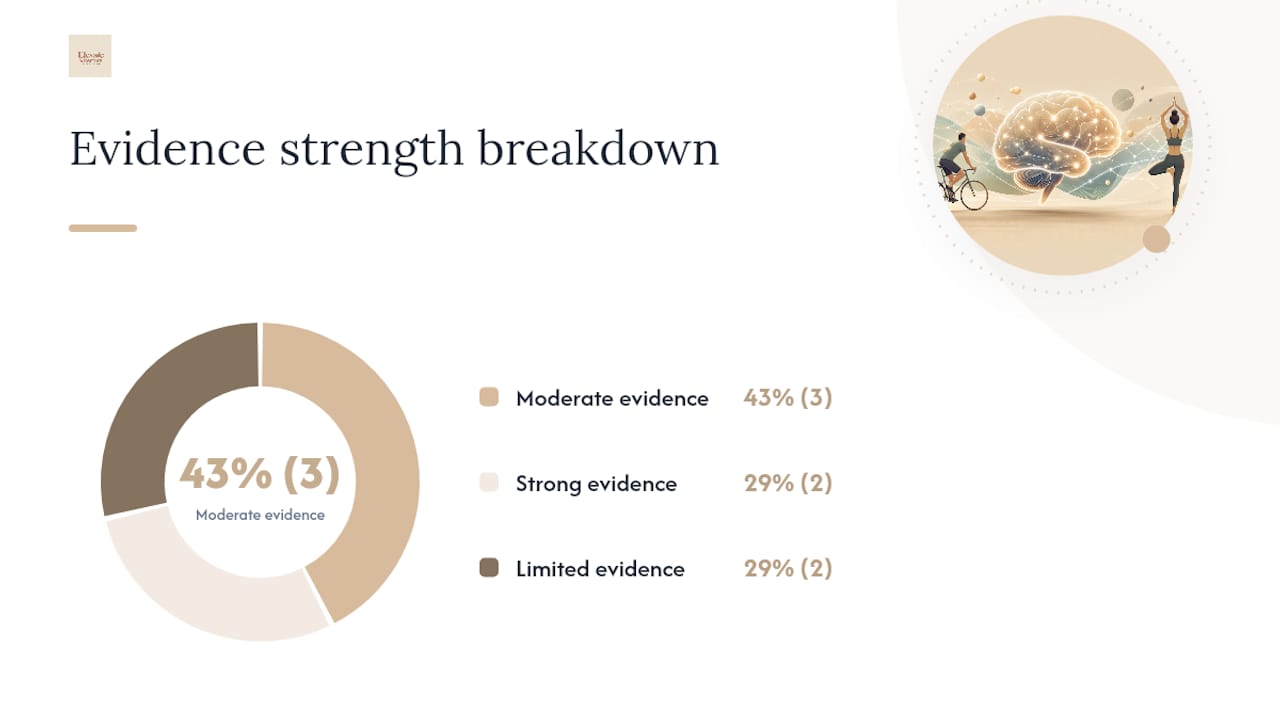
RCTs in older adults have shown that 6–12 months of aerobic training can increase hippocampal volume and improve memory performance, establishing the clearest human structural correlate of exercise-induced plasticity. Molecular mechanisms like synaptic remodelling and epigenetic change are compelling but largely inferred from animal work or peripheral biomarkers in humans.
Pro Tip: Exercise in a fed state with adequate protein and polyphenols (think a small meal 90 minutes before training). BDNF synthesis is energy-dependent, and a depleted metabolic state blunts the molecular signal even when the workout itself is solid.
Which types of exercise help neuroplasticity most?
Different exercise modalities stimulate different neuroplastic mechanisms, and mixed training produces broader network benefits than any single modality alone. The synergy is real: aerobic work primes the molecular environment, resistance training adds muscle-to-brain signalling, and skill-based movement gives the brain a precise task to wire.

| Modality | Primary neuroplastic mechanisms | Practical examples | Target outcomes |
|---|---|---|---|
| Cardiovascular/aerobic | BDNF spike, VEGF/angiogenesis, anti-inflammatory | Running, cycling, rowing, brisk walking | Hippocampal volume, memory, mood regulation |
| Resistance/strength | IGF-1, myokines, synaptic density in motor cortex | Barbell lifts, functional bodyweight, kettlebells | Executive function, processing speed, motor cortex remodelling |
| Skill/coordination | Synaptic remodelling, cerebellar and motor cortex plasticity, network reorganisation | Reformer Pilates, dance, martial arts, balance drills | Motor skill acquisition, proprioception, attention networks |
| Mixed/combined | All of the above, plus cross-network integration | HIIT circuits with skill components, Pilates + cardio weeks | Broad cognitive resilience, functional connectivity, network integration |
When to emphasise each modality:
- Aerobic first if your goal is memory improvement or you are returning from a sedentary period. The hippocampal volume response to sustained aerobic work is the most robustly demonstrated structural change in human trials.
- Resistance training becomes especially important from your 40s onward. Muscle mass decline reduces myokine output, so maintaining strength directly preserves the muscle-to-brain signalling axis.
- Skill and coordination work (including reformer Pilates) is underweighted in most programmes. Complex, variable movement patterns demand precise neural coordination, driving synaptic remodelling in regions that repetitive cardio does not reach. Functional training exercises for adults over 30 that involve multi-planar movement and balance challenge are particularly effective here.
- Mixed training is the default recommendation for cognitive longevity across adult age ranges, regardless of injury history, because it stimulates complementary pathways that no single modality covers alone.
How much exercise do you actually need for brain benefits?
The baseline for neuroplastic benefit aligns with the public-health minimum: 150 minutes of moderate aerobic activity per week, plus two resistance sessions. That is the floor, not the ceiling.
Practical weekly prescription:
- 150 minutes moderate aerobic activity (or 75 minutes vigorous), spread across at least 3 days
- 2 resistance/strength sessions targeting major muscle groups
- 1–2 skill-based sessions (coordination, balance, Pilates) for synaptic remodelling
- At least 1 dedicated recovery session or rest day
Session length matters. A 2025 dose-response meta-analysis found that 40–60 minute sessions produced the most pronounced improvements in brain volume, with benefits strengthening as intervention length and compliance increased. Sessions under 20 minutes and over 90 minutes showed diminishing returns in that analysis.
Intensity follows an inverted-U pattern for most cognitive outcomes. Vigorous intensity and HIIT produce sharper acute BDNF spikes but require adequate recovery to avoid the suppressive effect of chronic cortisol elevation on neurogenesis.
A simple 8-week progression template
Weeks 1–2: Establish the habit. Three aerobic sessions of 30 minutes at moderate intensity, one bodyweight strength session, one Pilates or balance session.
Weeks 3–4: Add duration. Extend two aerobic sessions to 40–45 minutes. Add a second strength session. Introduce one dual-task drill (balance + cognitive challenge) per skill session.
Weeks 5–6: Add intensity. Replace one moderate aerobic session with a 30-minute HIIT session (work-to-rest ratio 1:2). Increase resistance load progressively.
Weeks 7–8: Consolidate and assess. Maintain volume, prioritise session quality over quantity. Add one recovery modality (sauna, cold plunge, or compression) post-HIIT to manage inflammation.
Measurable cognitive changes, such as improved working memory and attention, typically emerge within 4–8 weeks of consistent training. Structural changes like hippocampal volume increases are documented after many months in RCT populations.
A practical weekly plan for neuroplasticity
The goal of a neuroplasticity-focused weekly plan is to stimulate multiple brain-change pathways in a single week, not to maximise any one of them. Mixed training produces the broadest network benefits, and the sequencing of sessions matters as much as the sessions themselves.
Sample weekly plan
| Day | Session type | Duration | Intensity | Neuroplastic objective |
|---|---|---|---|---|
| Monday | Aerobic (run, cycle, row) | 40–45 min | Moderate intensity | BDNF elevation, hippocampal priming |
| Tuesday | Reformer Pilates or skill/balance | 40–60 min | Low-moderate | Synaptic remodelling, motor cortex precision |
| Wednesday | Functional strength training | 45 min | Moderate-high | IGF-1/myokine signalling, motor cortex density |
| Thursday | Active recovery or rest | 20–30 min | Low (walk, stretch) | Consolidation, inflammation management |
| Friday | HIIT circuit (skill-integrated) | 30 min | High (work:rest 1:2) | Acute BDNF spike, network integration |
| Saturday | Aerobic + dual-task drill | 40 min + 10 min drill | Moderate + focused | Sustained angiogenesis, attention network |
| Sunday | Full recovery (sauna, cold plunge) | 30–45 min | Passive | Systemic inflammation reduction, consolidation |

Specific neuroplasticity exercises and how to progress them
Dual-task balance drill: stand on one leg while reciting a sequence (days of the week backwards, or counting in 3s). Progress by closing your eyes or adding a light upper-body task. This forces simultaneous motor and cognitive demand, which drives synaptic remodelling more effectively than either task alone.
Reformer Pilates footwork to long-box series: the variable spring resistance and unstable carriage surface demand constant proprioceptive recalibration. Progress by reducing spring load (increasing instability) or adding rotational components. Pilates improves your nervous system precisely because it combines motor precision with breath control and spatial awareness.
HIIT with coordination component: instead of straight-line sprints, use ladder drills, lateral shuffles, or agility patterns at high intensity. The novelty of the movement pattern adds a skill-learning demand on top of the cardiovascular stimulus.
Safety notes: if you experience persistent headaches, dizziness, or significant mood disruption following high-intensity sessions, reduce volume before intensity. Sudden introduction of high-intensity training in previously sedentary adults carries cardiovascular and musculoskeletal risk; a graduated approach over 4–6 weeks is safer and produces better long-term adherence.
Pro Tip: Schedule your highest-skill session (Pilates, coordination drills) before fatigue accumulates in the week, not after back-to-back hard sessions. Neural precision work done in a fatigued state reinforces sloppy movement patterns rather than clean ones.
For guidance on integrating Pilates with a strength programme, adding Pilates to your lifting programme covers sequencing in practical detail.
What else shapes how well exercise rewires your brain?
Sleep, nutrition, and recovery determine whether the molecular signals from exercise actually consolidate into lasting structural change. Exercise creates the conditions for plasticity; the rest of your lifestyle decides whether those conditions are met.
Key cofactors and what the evidence says:
- Sleep (7–9 hours, consistent schedule): slow-wave sleep drives glymphatic clearance of metabolic waste and consolidates long-term potentiation established during waking activity. Disrupted sleep suppresses BDNF expression and blunts hippocampal neurogenesis even when training volume is adequate.
- Protein and omega-3 intake: adequate dietary protein supports myokine synthesis in muscle. Omega-3 fatty acids (DHA in particular) are structural components of neuronal membranes and support synaptic plasticity. Polyphenol-rich foods (berries, green tea, dark leafy vegetables) have anti-inflammatory and neuroprotective properties supported by human observational data.
- Stress management: chronic psychological stress elevates cortisol, which directly suppresses hippocampal neurogenesis. Practices that reduce allostatic load, including mindfulness, social connection, and adequate rest, protect the neuroplastic gains from exercise.
- Cognitive challenge and learning: neuroplasticity is use-dependent. Pairing physical training with deliberate learning (a new language, a musical instrument, a complex skill) gives the brain's newly primed circuitry a specific task to encode, amplifying the structural benefit.
- Social engagement: group exercise and socially embedded training environments add a social-cognitive demand that activates prefrontal and limbic networks beyond what solo training achieves. Small-group formats are not just motivationally useful; they are neurologically distinct.
- Recovery modalities: cold water immersion and infrared therapy are increasingly used to manage systemic inflammation post-exercise, which may support the neuroplastic consolidation window. This is an emerging practice-based insight rather than a settled clinical guideline, and the evidence base is still developing.
The National Institute on Aging summarises human evidence that habitual physical activity supports cognitive function and resilience in older adults, reinforcing that consistency across the lifespan, not any single intervention, is what drives durable brain health.
What are the risks and limits of exercise-driven neuroplasticity?
The main risks are overtraining, maladaptive plasticity from poorly structured skill training, and misreading animal evidence as directly applicable to humans. None of these should discourage regular exercise, but they are worth understanding.
Red flags and safety precautions:
- Overtraining syndrome: excessive volume without adequate recovery suppresses BDNF, elevates chronic cortisol, and can impair cognitive function rather than improve it. Signs include persistent fatigue, mood disturbance, declining performance, and disrupted sleep.
- Maladaptive plasticity: the brain wires what it practises. Repetitive training with poor movement mechanics, or skill practice performed under excessive fatigue, can reinforce faulty motor patterns at a neural level. This is particularly relevant for people returning from injury.
- Sudden high-intensity training in untrained adults: the cardiovascular and musculoskeletal risks of jumping straight to HIIT without a base of moderate training are real. A 4–6 week graduated build is the standard precaution.
- Chronic systemic inflammation: conditions that sustain high inflammatory load (poor sleep, high-stress lifestyle, ultra-processed diet) blunt the neuroplastic response to exercise. Addressing inflammation is not optional background work; it directly affects outcomes.
- Evidence limits: much of the mechanistic detail about BDNF, synaptic remodelling, and epigenetic change comes from animal models. Human RCTs are strongest for hippocampal volume and functional cognitive outcomes, but the molecular pathways are largely inferred from peripheral biomarkers or animal work. Treat mechanistic claims with appropriate nuance.
For adults over 30 with a history of injury, functional training that prevents injury provides a useful framework for building movement quality before adding intensity.
Pro Tip: If you are relearning a motor skill after injury or a long break, prioritise supervised, brain-driven corrective training over high-volume repetition. Wiring the correct pattern first, even slowly, is more neurologically efficient than drilling a compensatory one at speed.
How Elevateandrestore applies these principles in practice
Elevateandrestore's programme is built around the same mixed-training logic the research supports: combine cardiovascular stimulus, motor skill precision, and structured recovery in a single weekly framework, and keep the group small enough that movement quality is never compromised.
How each service maps to neuroplastic mechanisms:
- Small-group reformer Pilates (max 6 people): the variable spring resistance and unstable carriage surface demand continuous proprioceptive recalibration, driving synaptic remodelling in the motor cortex and cerebellum. Complex sequencing within a class adds a working-memory and attention demand on top of the physical challenge. The small-group format adds a social-cognitive layer that solo training does not replicate.
- Functional HIIT classes: designed to produce the acute BDNF spike associated with vigorous aerobic effort, with movement patterns that include coordination and agility components rather than straight-line repetition. This targets both the cardiovascular neuroplastic pathway and the skill-learning pathway simultaneously.
- Recovery hub (infrared sauna, cold plunge, hot tub, compression therapy): used post-training to manage systemic inflammation and support the consolidation window. Reducing inflammatory load after a high-intensity session creates a more permissive neurochemical environment for the synaptic changes triggered during training.
A typical client pathway at Elevateandrestore might look like this: two reformer Pilates sessions per week for motor skill and synaptic precision, one functional HIIT session for the BDNF stimulus, and one recovery lounge session post-HIIT for inflammation management. That four-session week covers aerobic, skill, strength, and recovery in a format that is sustainable for adults managing work and family commitments.
Pro Tip: Book your recovery lounge session for the same day as your HIIT class, not the day after. The anti-inflammatory window is most relevant in the hours immediately following high-intensity effort.
Bookings are available as small-group Pilates sessions or as part of a membership that includes recovery hub access.
Why mixed training is the right call for brain health
The evidence for any single exercise modality improving cognition is decent. The evidence for mixed training is better, and the logic behind it is hard to argue with.
Aerobic exercise reliably raises BDNF and drives hippocampal volume change. Resistance training adds the muscle-to-brain signalling axis that aerobic work alone does not fully activate. Skill-based movement, particularly complex, variable patterns like reformer Pilates, drives synaptic remodelling in regions that repetitive cardio never touches. Stack all three in a single week and you are stimulating complementary pathways that reinforce each other.
What gets underweighted in most fitness conversations is the recovery side. The molecular signals from a hard session do not automatically translate into structural change. Sleep, nutrition, and inflammation management determine whether the brain's "fire and wire" process actually completes. Treating recovery as an afterthought is the most common way people leave neuroplastic gains on the table.
Individual responsiveness also varies more than most guides acknowledge. Baseline fitness, hormonal status, and sleep quality all modulate how strongly any given person responds to a training stimulus. That is why a personalised, small-group format, where a coach can observe movement quality and adjust load, produces more transferable gains than a generic programme followed alone. The 2026 MDPI review makes exactly this point: personalised, mixed approaches tend to produce more functional gains than repetitive, non-variable training.
Start with the basics, be consistent for 8–12 weeks, and pay as much attention to recovery as to the sessions themselves. The brain responds to the whole system, not just the hard parts.
Elevateandrestore: mixed training and recovery for a sharper brain
If the science in this article points anywhere, it points toward a programme that combines cardiovascular effort, motor skill precision, and structured recovery in the same week. That is exactly what Elevateandrestore offers in West Footscray.

Small-group reformer Pilates classes (capped at six people) deliver the motor skill and synaptic precision work the research identifies as underweighted in most adult programmes. Functional HIIT classes provide the acute BDNF stimulus. The recovery lounge with infrared sauna, cold plunge, hot tub, and compression therapy handles the inflammation management that determines whether training signals consolidate into lasting brain change.
Sessions are available as casual bookings, class packs, or weekly and monthly memberships. The small-group format means your movement quality is seen and coached, not lost in a crowd. Book your first reformer Pilates class or check availability for a recovery lounge session at elevateandrestore.com.au.
Sources
The sources below are the primary references used in this article. Each is worth reading if you want to go deeper on a specific aspect of the exercise-neuroplasticity connection.
- Multiscale mechanisms of exercise-induced neuroplasticity: From molecular pathways to network dynamics and behavioural adaptation
- Dose-response effects and mechanistic pathways linking physical exercise to brain volume and cognition: a systematic review and meta-analysis
- Effects of Physical Exercise on Neuroplasticity and Brain Function: A Systematic Review in Human and Animal Studies
- Physical exercise for brain plasticity promotion: an overview of the underlying oscillatory mechanism
- Lifelong exercise promotes brain health in older adults (NIA)
A note on evidence quality: the mechanistic detail in this article (BDNF pathways, synaptic remodelling, epigenetic change) is largely derived from animal models or peripheral biomarker studies in humans. The structural and functional outcomes (hippocampal volume, cognitive test performance, functional connectivity) are supported by human RCTs and meta-analyses. Where the two levels of evidence diverge, the human data takes precedence for practical recommendations. For personalised advice, particularly if you have a neurological condition, cardiovascular risk factors, or are returning from injury, consult a qualified health professional before significantly changing your training.
This article is general information, not a substitute for advice from a qualified doctor. Consult a qualified healthcare professional about your own circumstances before acting on anything here.