
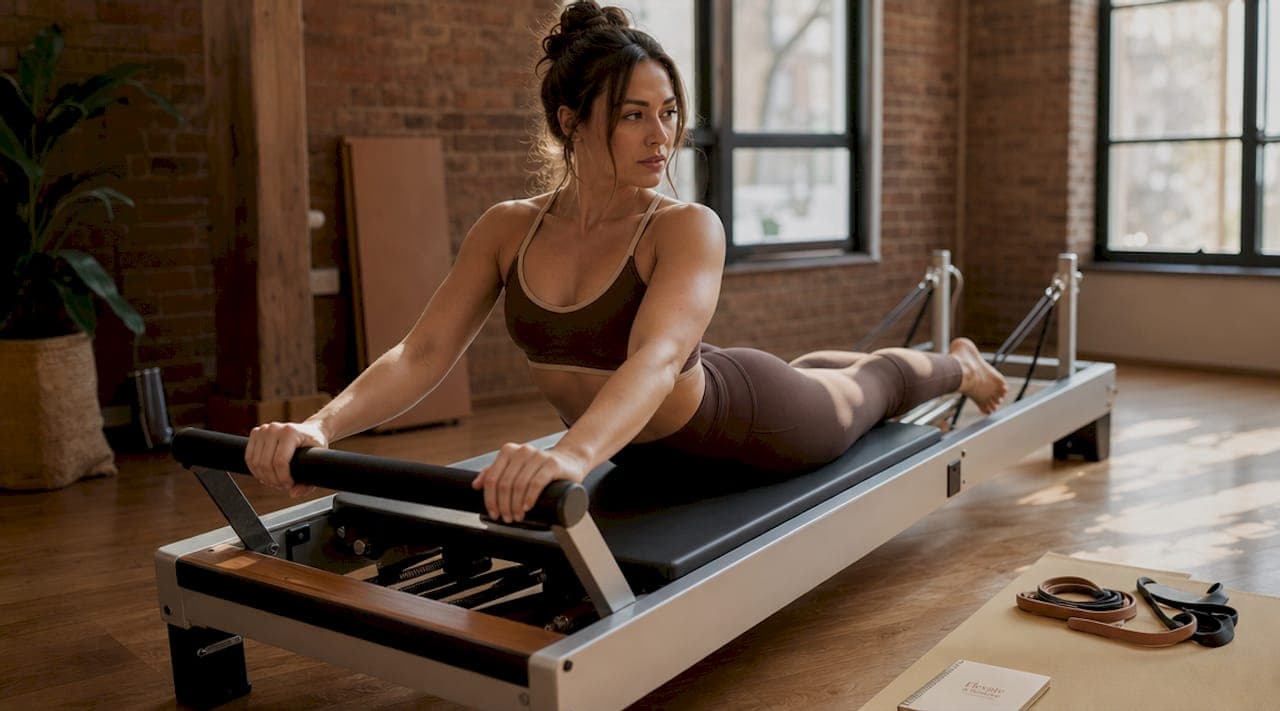
Adding Pilates to a lifting program means combining spinal control and stabiliser training with progressive resistance work to improve movement quality, recovery, and endurance without replacing maximal strength gains. Women over 30 who lift regularly often hit a plateau not because they need more weight on the bar, but because their stabilisers, breathing mechanics, and mobility are limiting their output. Pilates targets exactly those gaps. Research confirms that Pilates enhances movement quality and muscular endurance, making it a practical addition to any strength training routine rather than a competing discipline.
What are the benefits of adding Pilates to weightlifting?
Pilates is defined in the strength training context as a method for developing spinal control, coordinated force transfer, and deep stabiliser recruitment. These are the qualities that make your squats, deadlifts, and pressing movements more efficient and safer over time. The benefits of Pilates for weightlifting are specific and well-supported.
Core stability and force transfer
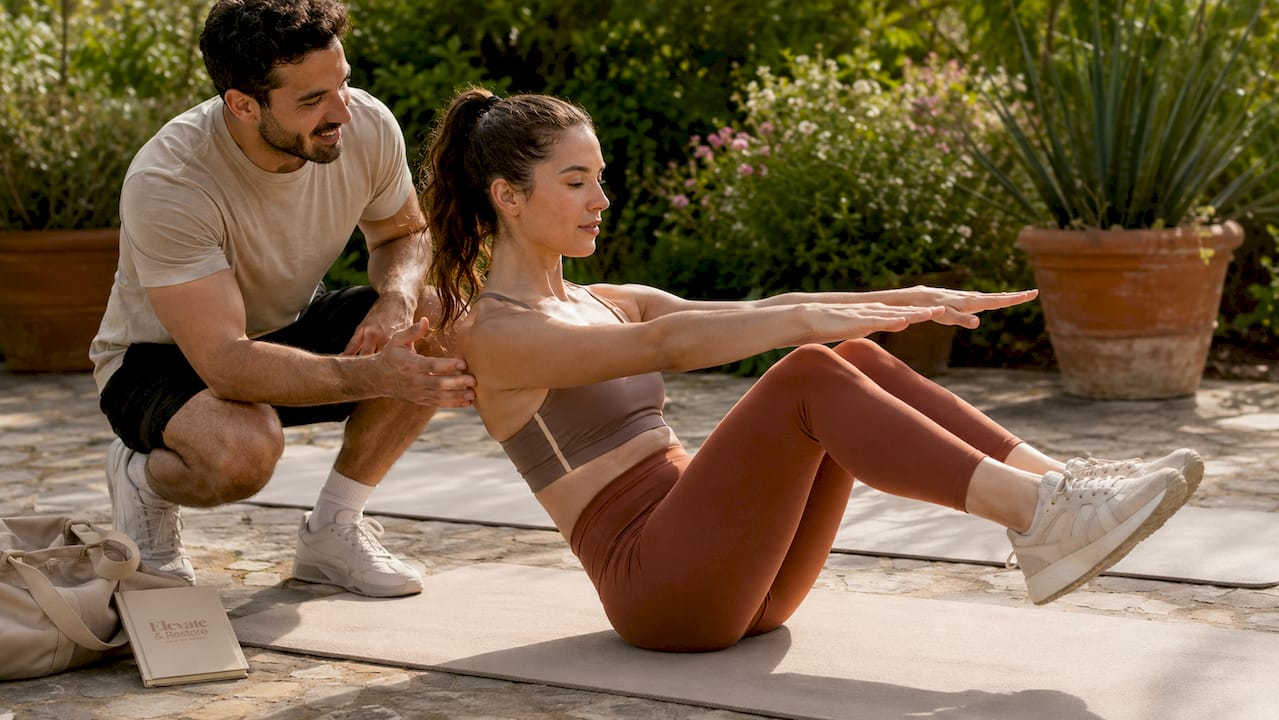
Pilates builds spinal control and coordinated force transfer rather than replacing maximal barbell training. When you brace for a heavy deadlift, the quality of that brace depends on deep stabilisers that standard lifting rarely isolates. Pilates trains those muscles directly, which means better bracing and less energy leak during compound lifts.
Muscular endurance and flexibility
An 8-week Pilates programme practised twice weekly improved flexibility and muscular endurance in women without significantly changing spinal posture angles. This matters for lifters because endurance in stabilising muscles delays form breakdown under fatigue. You hold your technique longer into a hard set.
Recovery and injury risk
Short-term reformer Pilates improved pain, function, and sleep in chronic low back pain patients within four weeks. For lifters, this translates to better recovery between sessions and reduced injury risk from accumulated spinal load. Pilates on a recovery day keeps you moving without adding to your fatigue debt.
Pilates does not replace heavy lifting for maximal strength gains. The American College of Sports Medicine is clear that strength gains require loads at or above 80% of your one-rep max and consistent volume. Pilates is an additive practice, not a substitute.
Key benefits at a glance:
- Improved deep core activation and bracing quality during compound lifts
- Greater muscular endurance in stabilising muscles, delaying technique breakdown
- Faster recovery between sessions through active, low-load movement
- Reduced injury risk from improved spinal control and hip hinge mechanics
- Better movement quality in hip hinges and pressing patterns
How to schedule Pilates around your strength training
Timing is the variable most lifters get wrong when integrating Pilates into strength training. The rule is straightforward: Pilates works best as recovery-day active work or a short warm-up to recruit deep stabilisers before lifting. Avoid full, high-intensity Pilates immediately after a maximal strength session when precision and neural output are already depleted.
Recommended frequency
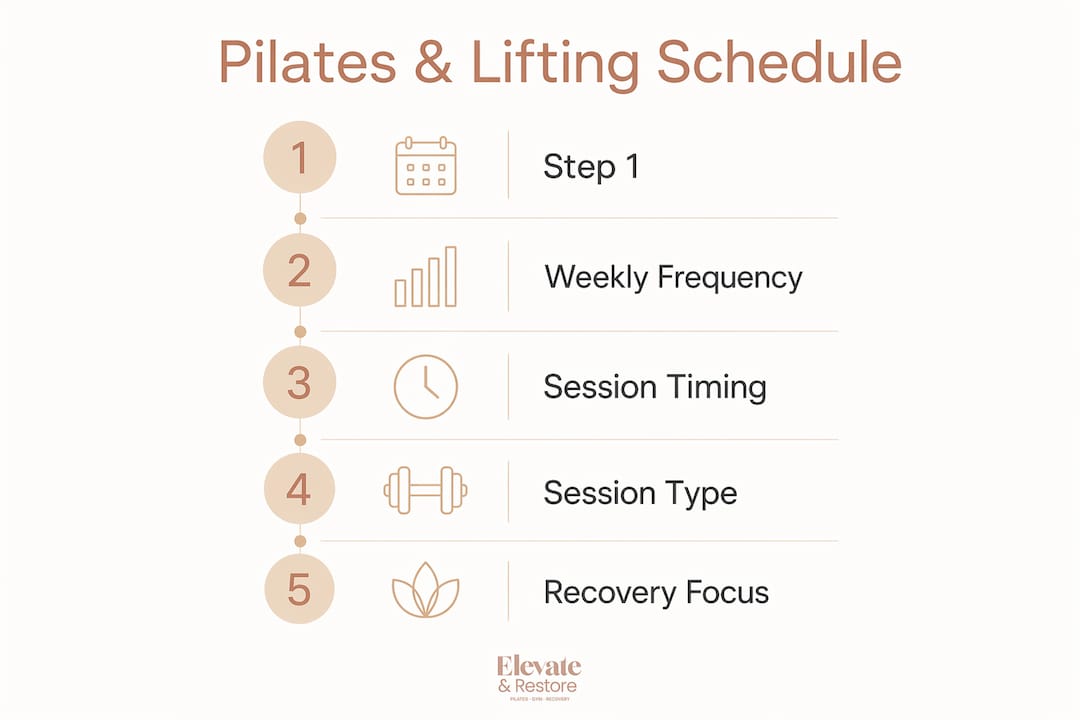
Most lifters add 1 to 2 Pilates sessions per week on recovery or lighter training days without compromising recovery. Three sessions per week is appropriate once you have built a base and your body has adapted to the combined load. Starting with one session and assessing how your lifting performance responds is the safest approach.
Sample weekly schedules
Here is how two common lifting structures can accommodate Pilates:
| Training day | 3-day lifting split | 4-day lifting split |
|---|---|---|
| Monday | Lower body lift | Upper body lift |
| Tuesday | Pilates (recovery) | Pilates (warm-up or recovery) |
| Wednesday | Upper body lift | Lower body lift |
| Thursday | Rest or light walk | Pilates (recovery) |
| Friday | Full body lift | Upper body lift |
| Saturday | Pilates (recovery) | Lower body lift |
| Sunday | Rest | Rest |
The 4-day split allows Pilates to slot in as a warm-up on lifting days or as a standalone recovery session. The 3-day split gives you more flexibility to use Pilates as a full recovery session between lifting days.
Timing within a session
A 10 to 20 minute Pilates activation before lifting primes stabilisers without impairing performance. This works particularly well before lower body sessions where hip and spinal control are critical. A full 45 to 60 minute Pilates session belongs on a non-lifting day or at least six hours before a heavy session.
Pro Tip: If you are new to Pilates, treat your first two weeks as a learning phase. Focus on breathing mechanics and correct form before worrying about intensity or frequency. Misreading initial muscle soreness as excessive fatigue is one of the most common reasons people abandon the combination early.
A progressive framework for combining Pilates and lifting
The most effective way to add Pilates to a lifting programme is through a phased approach that manages cumulative fatigue while building Pilates competency alongside your strength work. Here is a four-week framework drawn from structured integration research:
-
Week 1: Introduction phase. Add one Pilates session on a recovery day. Focus entirely on learning Pilates breathing, neutral spine, and foundational movements. Keep lifting volume and intensity unchanged. Your goal this week is adaptation, not performance.
-
Week 2: Building frequency. Add a second Pilates session, still on non-lifting days or as a light warm-up. Begin to notice how your bracing quality changes during lifts. If lifting performance drops noticeably, reduce Pilates to one session and reassess.
-
Week 3: Integration warm-ups. Introduce a 15-minute Pilates activation before one or two lifting sessions per week. Focus on movements that target the stabilisers you will use in that day's lifts. Hip circles, dead bugs, and single-leg balance work are practical choices before lower body sessions.
-
Week 4: Progressive overload phase. Increase Pilates session length or intensity slightly while maintaining lifting volume. This is where the combined programme begins to reinforce itself. Better bracing from Pilates supports heavier lifting, and heavier lifting gives Pilates-trained stabilisers more to do.
| Week | Pilates sessions | Session type | Lifting adjustment |
|---|---|---|---|
| 1 | 1 per week | Recovery day, foundational | No change |
| 2 | 2 per week | Recovery day or light warm-up | Monitor performance |
| 3 | 2 to 3 per week | Warm-up before lifts | Maintain volume |
| 4 | 2 to 3 per week | Warm-up and recovery | Progress both |
Monitoring your response
Subjective signals matter more than any schedule. If you are sleeping poorly, your lifting numbers are dropping consistently, or you feel persistently flat in sessions, reduce Pilates frequency before adjusting your lifting programme. The goal is additive benefit, not accumulated fatigue.
Pro Tip: Keep a simple training log for the first four weeks. Note your Pilates session type, your energy level before lifting, and your performance in key lifts. Patterns become obvious within two weeks and take the guesswork out of adjusting the programme.
For women over 30, functional training and injury prevention become increasingly relevant as training age increases. Pilates fits directly into that framework by addressing the stabiliser and mobility gaps that compound over years of lifting.
Common mistakes when combining Pilates with lifting
The most frequent error is treating Pilates as a replacement for strength training stimulus. Pilates supports but does not substitute the heavy loading required for strength and hypertrophy. Women who swap lifting sessions for Pilates classes because they feel tired will lose strength adaptations over time. Pilates belongs alongside your lifting programme, not instead of it.
Other mistakes worth knowing:
- Adding too many sessions too quickly. Three or more Pilates sessions per week in the first month, combined with a full lifting schedule, creates recovery interference. Start with one session and build gradually over four to six weeks.
- Skipping the learning phase. Pilates has a genuine instructional overhead and adaptation period. Jumping into advanced reformer work without understanding breathing and neutral spine mechanics reduces the benefit and increases the chance of misusing the method.
- Ignoring warm-up and cool-down within Pilates sessions. Pilates is not inherently low-intensity. A reformer session without proper preparation can leave stabilising muscles fatigued in ways that affect your next lifting session.
- Dismissing early soreness as a sign the programme is not working. Novel movement patterns create delayed onset muscle soreness in muscles you rarely target with lifting. This is adaptation, not a problem.
The Pilates vs strength training comparison from REP Fitness frames this well: Pilates is a control and stability practice that complements progressive overload. Both are necessary. Neither replaces the other.
If you are also exploring how Pilates compares to other movement practices, the Pilates vs yoga guide for women over 30 offers a clear breakdown of where each method delivers the most value.
Key takeaways
Adding Pilates to a lifting programme works best when it is scheduled as a recovery-day activity or pre-lift activation, progressed gradually over four weeks, and treated as a complement to heavy resistance training rather than a replacement.
| Point | Details |
|---|---|
| Pilates complements lifting | It builds spinal control and stabiliser strength that directly improves compound lift quality. |
| Timing determines outcome | Use Pilates as a warm-up or recovery session, not immediately after maximal strength work. |
| Start with one session per week | Build to two or three sessions over four to six weeks to avoid recovery interference. |
| Follow a phased framework | Progress from foundational learning to integration warm-ups to combined progressive overload. |
| Monitor subjective signals | Dropping lift numbers or poor sleep are signs to reduce Pilates volume before adjusting lifting. |
What I have learned from adding Pilates to my own lifting work
The honest truth is that I resisted Pilates for longer than I should have. It looked too gentle to matter alongside heavy lifting. What changed my mind was watching members at Elevateandrestore who lifted consistently but struggled with hip hinge mechanics and lower back fatigue. When they added two Pilates sessions per week, the change in their movement quality within a month was obvious. Not in their numbers, but in how they moved under load.
The part that surprised me most was how much better bracing quality transferred to the bar. Members who had been lifting for years suddenly had access to stabiliser recruitment they had never trained directly. Their technique held up later in sets. Their recovery between sessions improved. The combination is not complicated, but it does require patience in the first few weeks while your body learns a new movement vocabulary.
My advice is to commit to four weeks before judging the result. The first two weeks feel unfamiliar. By week four, you will feel the difference in your lifting. Personalise the schedule to your recovery capacity and do not be rigid about hitting a set number of Pilates sessions if your body is telling you otherwise.
— Elevate
Try Pilates and lifting at Elevateandrestore
Elevateandrestore runs small-group Reformer Pilates classes in West Footscray with a maximum of six people per session, which means you get genuine coaching attention rather than being lost in a crowd. The studio is built specifically for people who want to combine Pilates with strength training, with a gym and recovery hub that includes sauna, cold plunge, hot tub, and compression boots on site. For women over 30 who are serious about their lifting and want to add Pilates in a way that actually supports their programme, Elevateandrestore offers the structure and expertise to make that combination work from day one.
FAQ
How many times a week should I do Pilates alongside lifting?
Most lifters benefit from one to two Pilates sessions per week on recovery or lighter training days. Build to three sessions per week only after four to six weeks of adaptation.
Will Pilates make me weaker or interfere with my strength gains?
Pilates does not reduce strength gains when scheduled correctly. The ACSM confirms that strength requires heavy loading and consistent volume. Pilates adds stabiliser and mobility work without replacing that stimulus.
Can I do Pilates on the same day as lifting?
A short Pilates activation of 10 to 20 minutes before lifting is effective for priming stabilisers. Avoid a full, high-intensity Pilates session immediately after a maximal strength session, as precision and neural output are already depleted.
Is Pilates useful for women over 30 who lift?
Pilates is particularly relevant for women over 30 because it targets the stabiliser and mobility gaps that accumulate with training age. The pelvic floor and deep core benefits are also directly relevant to this group.
How long before I notice results from combining Pilates and lifting?
Most people notice improved bracing quality and movement control within three to four weeks. Flexibility and endurance improvements from an 8-week Pilates programme are well-documented in research on adult women.