

Low-impact exercise is defined as physical activity that keeps at least one foot in contact with the ground or removes gravitational loading from the joints entirely. That simple distinction matters enormously for adults over 30, because the low impact exercise benefits explained throughout this article go well beyond "being gentle." Regular low-impact activity reduces dementia risk by 30% and supports prevention of heart disease, stroke, and diabetes. The recommended dose is 30 minutes of brisk low-impact activity five days a week. That is a manageable target, and the returns are substantial.
How does low-impact exercise benefit joint health and mobility?
Low-impact exercise reduces mechanical stress on cartilage and connective tissue compared to high-impact alternatives. Running, jumping, and plyometric work generate ground reaction forces that can exceed three times body weight. Walking, cycling, swimming, and Pilates keep those forces low, which means joints can move through their full range without the cumulative wear that leads to pain and injury.
High-impact routines carry higher risk of stress fractures, shin splints, and foot trauma. That risk compounds over years, which is why physical therapists consistently recommend low-impact movement for anyone managing arthritis, recovering from injury, or simply wanting to stay active into their 50s and beyond. Cycling, in particular, shows lower prevalence of knee pain and osteoarthritis among regular practitioners compared to running populations.
Tai Chi practiced over 12 weeks produces clinically significant improvements in mobility, pain levels, and balance in adults with joint concerns. That is a short window for meaningful change. Water aerobics delivers similar results by using buoyancy to offload body weight while still requiring the muscles to work against resistance.
Common joint-friendly low-impact activities recommended by physical therapists include:
- Walking at a brisk pace on flat or gentle terrain
- Swimming and water aerobics for full-body conditioning without joint loading
- Cycling on a stationary bike or road for lower-limb strength and cardiovascular fitness
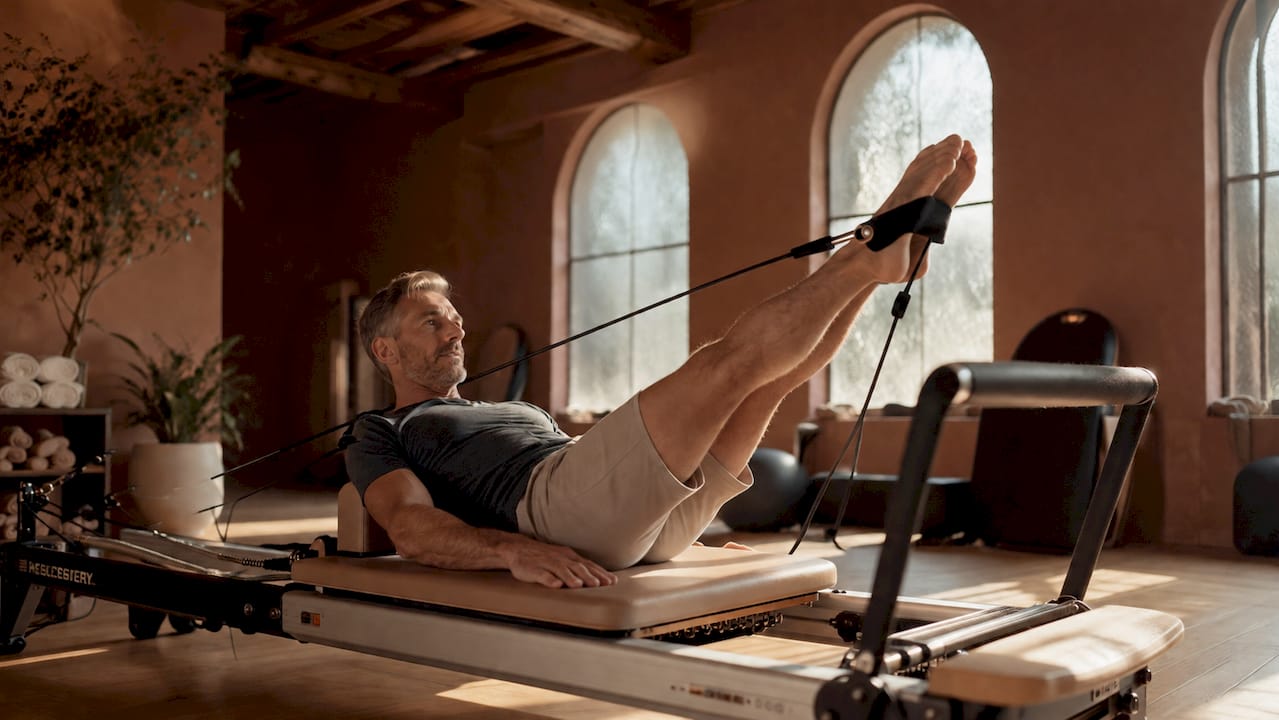
- Reformer Pilates for core stability, posture, and controlled range of motion
- Tai Chi for balance, coordination, and pain management
- Yoga for flexibility, breath control, and stress reduction
Pro Tip: If you are managing arthritis or recovering from an injury, start with water-based exercise or Reformer Pilates. Both allow you to control load precisely and build strength without aggravating inflamed joints. You can find practical guidance on injury-resilient Pilates to help you progress safely.
What are the cardiovascular and metabolic benefits?
Moderate-intensity exercise is the sweet spot for long-term heart health, and low-impact activities reach that zone reliably. Moderate-intensity low-impact exercise improves VO2 max sustainably, without the recovery demands of high-intensity training. VO2 max is the body's maximum oxygen uptake capacity. A higher VO2 max correlates directly with lower cardiovascular mortality risk.
The sustainability argument is the one cardiologists keep returning to. A consistent moderate-intensity routine is more predictive of long-term cardiovascular health than occasional high-intensity peaks. That means the adult who walks briskly five days a week will likely outlast the one who does intense boot camp twice a week and skips the rest. Consistency beats intensity over decades.
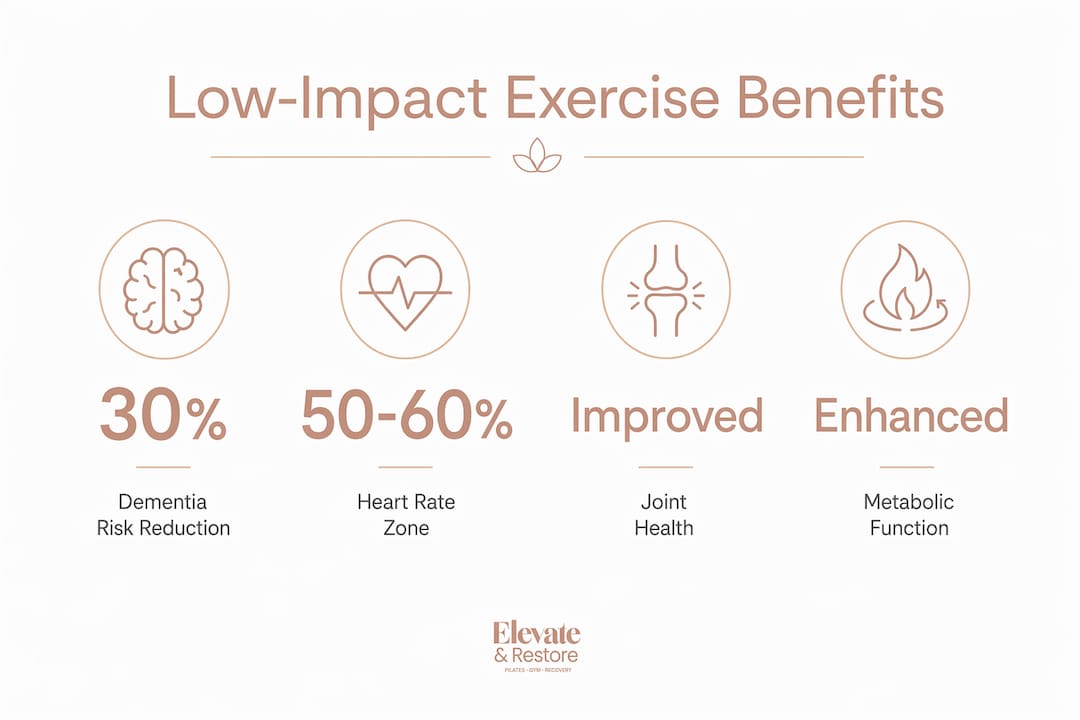
Metabolic benefits follow the same pattern. Regular low-impact activity improves glucose regulation and insulin sensitivity, which reduces type 2 diabetes risk. The mechanism is straightforward: working muscles absorb glucose from the bloodstream during exercise, and that effect persists for hours afterward. Repeated daily, it meaningfully shifts metabolic markers.
| Heart rate zone | % of max HR | Low-impact examples | Primary benefit |
|---|---|---|---|
| Light | 50–60% | Gentle walking, stretching | Active recovery, circulation |
| Moderate | 60–75% | Brisk walking, cycling, swimming | Cardiovascular fitness, fat metabolism |
| Vigorous | 75–85% | Fast cycling, rowing, aqua jogging | VO2 max gains, endurance |
| High intensity | Above 85% | Sprint intervals, HIIT | Peak performance, short duration |
Low-impact exercise covers the light through vigorous zones depending on effort. That range is wider than most people expect.
Pro Tip: To stay in the moderate zone during a brisk walk or swim, use the "talk test." You should be able to speak in short sentences but not hold a full conversation comfortably. If you can sing, push a little harder.
Even low-effort movement engages small intrinsic muscles in the hands and feet that support circulatory health beyond what conventional cardio measures capture. This contradicts the belief that your heart rate must spike for exercise to count. Gentle, consistent movement accumulates real physiological benefit.
How does low-impact exercise support brain health and mental well-being?
Low-impact exercise is one of the most evidence-backed tools for protecting cognitive function with age. Regular activity reduces dementia risk by 30%, a figure that holds across multiple large-scale studies. That reduction comes from improved cerebral blood flow, reduced neuroinflammation, and the release of brain-derived neurotrophic factor, which supports the growth of new neural connections.
Mental health benefits are equally well-documented. Consistent low-impact movement lowers cortisol and adrenaline levels, reducing chronic stress and anxiety. The effect is cumulative. Adults who exercise regularly report better sleep, more stable mood, and greater resilience to daily stressors compared to sedentary peers.
Proprioception is a less-discussed but critical mechanism. Tai Chi and Pilates improve communication between muscles, ligaments, and the vestibular system. Proprioception is the body's ability to sense its own position in space. Training it reduces fall risk, which is one of the leading causes of serious injury and loss of independence in adults over 60.
The mechanisms linking low-impact exercise to brain health include:
- Increased cerebral blood flow from sustained aerobic activity, delivering more oxygen and nutrients to brain tissue
- Release of brain-derived neurotrophic factor (BDNF), which promotes the formation of new neural pathways
- Reduced cortisol levels, lowering chronic inflammation that damages brain cells over time
- Improved proprioception through Tai Chi and slow Pilates, sharpening the brain-muscle feedback loop
- Better sleep quality, which is when the brain clears metabolic waste through the glymphatic system
Training proprioception through Tai Chi or slow Pilates enhances balance and spatial awareness in ways that directly reduce fall risk and improve quality of life with age. This is not a minor benefit. Falls are the leading cause of injury-related hospitalisation in Australians over 65.
For adults interested in mindful movement practices that combine cognitive and physical benefits, Tai Chi and Pilates offer the most evidence-backed combination available.
Which low-impact exercises suit adults over 30 at different fitness levels?
The advantages of low impact workouts apply across every fitness level, but the right starting point depends on your current capacity, joint health, and goals. The table below outlines the most practical options.
| Exercise | Best for | Key benefit | Watch out for |
|---|---|---|---|
| Walking | All levels | Cardiovascular health, mood, accessibility | Footwear and surface matter for joint comfort |
| Swimming | All levels, joint pain | Full-body conditioning, zero joint load | Requires pool access |
| Cycling | Beginner to intermediate | Lower-limb strength, VO2 max | Bike fit is critical to avoid knee strain |
| Reformer Pilates | All levels | Core strength, posture, injury prevention | Technique requires qualified instruction |
| Tai Chi | Intermediate, older adults | Balance, proprioception, stress reduction | Slow learning curve; consistency is key |
| Yoga | Beginner to advanced | Flexibility, breath control, mental calm | Some styles are more joint-demanding |
Walking is the most accessible entry point. A 30-minute brisk walk five days a week meets the recommended guidelines and delivers measurable cardiovascular and cognitive benefits. For adults starting Pilates after 30, Reformer-based sessions offer a structured, low-risk way to build core strength and body awareness from the ground up.
Combining low-impact activities with resistance training is the recommended approach for bone density, particularly for women. Low-impact exercise alone does not generate enough mechanical load to stimulate bone remodelling. Adding two resistance sessions per week addresses that gap and significantly reduces osteoporosis risk. Women over 30 can read more about why strength training matters for long-term skeletal health.
A balanced fitness programme combines low-impact movement with targeted resistance work for comprehensive health outcomes. That combination covers cardiovascular fitness, joint health, muscle mass, bone density, and cognitive function in a way that neither approach achieves alone.
Pro Tip: If you are new to structured exercise, start with three days of walking and one Pilates session per week. Build to five days over six weeks. Gradual progression is the single biggest predictor of long-term adherence.
Key takeaways
Low-impact exercise delivers cardiovascular, cognitive, and joint health benefits that compound over years, making consistency the most important variable for adults over 30.
| Point | Details |
|---|---|
| Dementia risk reduction | Regular low-impact activity reduces dementia risk by 30% with 30 minutes of brisk movement five days a week. |
| Joint health and injury prevention | Low-impact exercise reduces stress fractures, shin splints, and osteoarthritis risk compared to high-impact routines. |
| Cardiovascular sustainability | A consistent moderate-intensity routine predicts long-term heart health better than occasional high-intensity sessions. |
| Brain and balance benefits | Tai Chi and Pilates improve proprioception, reducing fall risk and sharpening brain-muscle communication. |
| Combine with resistance training | Pair low-impact exercise with two resistance sessions weekly to protect bone density and prevent osteoporosis. |
What I have learned from years of watching people move
The most common misconception I see is that low-impact means low-effort, or worse, that it is only for people who are injured or elderly. That is simply wrong. Low-impact and low-intensity are distinct concepts. Rowing is low-impact and can be brutally demanding. Reformer Pilates is low-impact and will challenge muscles most people have never consciously activated.
What I have observed working with adults over 30 is that the ones who build their fitness around low-impact movement stay consistent. They do not need two-week recovery breaks after a hard block. They do not accumulate the overuse injuries that derail high-impact athletes. They show up, week after week, and that regularity is where the real results live.
The other thing I keep coming back to is recovery. At Elevateandrestore, we pair Reformer Pilates sessions with access to our recovery hub, including sauna, cold plunge, hot tub, and compression boots. That combination is not a luxury. It is how you train sustainably for years without breaking down. The people who treat recovery as part of their programme progress faster and stay injury-free longer than those who treat it as optional.
My honest advice: stop waiting for the "right" programme and start with what you can do consistently. Low-impact exercise done regularly will outperform any high-intensity programme you cannot stick to.
— Elevate
How Elevateandrestore supports your low-impact fitness goals
Elevateandrestore is a functional training and Pilates studio in West Footscray built around small groups of six, which means every session gets real coaching attention, not just a spot in a crowded class.
The Reformer Pilates programme is designed specifically for joint-friendly, effective training that builds strength, improves posture, and supports long-term mobility. Whether you are a complete beginner or returning after injury, sessions are structured to meet you where you are. After training, the Recovery Lounge offers sauna, cold plunge, hot tub, and compression boots to support circulation, reduce soreness, and keep you moving consistently. Book a session and experience what sustainable fitness actually feels like.
FAQ
What is low-impact exercise?
Low-impact exercise is physical activity that minimises joint stress by keeping at least one foot on the ground or removing gravitational load entirely. Common examples include walking, swimming, cycling, Pilates, and Tai Chi.
How often should adults do low-impact exercise?
The recommended frequency is 30 minutes of brisk low-impact activity five days a week. That dose is associated with a 30% reduction in dementia risk and measurable cardiovascular benefits.
Is low-impact exercise effective for weight management?
Low-impact exercise burns calories and improves metabolic function, including glucose regulation and insulin sensitivity. Pairing it with resistance training produces the strongest results for body composition over time.
Can low-impact exercise replace high-intensity training?
For most adults over 30, low-impact exercise meets cardiovascular and cognitive health targets without the injury risk of high-intensity work. Adding two resistance sessions weekly covers bone density, making high-intensity training unnecessary for general health.
What is the best low-impact exercise for beginners?
Walking is the most accessible starting point, requiring no equipment and meeting clinical guidelines when done briskly for 30 minutes. Reformer Pilates is the best structured option for building core strength and body awareness under qualified guidance.