

Circadian rhythm fitness is the practice of scheduling workouts to match your body's natural 24-hour biological clock, known formally as chronobiology-informed exercise timing. Your internal clock controls sleep, metabolism, heart rate, and muscle function. Getting that timing right is not a minor detail. Aligning exercise with your chronotype can nearly double cardiovascular and metabolic benefits compared to mismatched timing. That finding alone makes circadian rhythm fitness one of the most practical tools available to anyone serious about their health.
How does your circadian rhythm affect fitness and exercise performance?
Your body runs on a 24-hour internal clock governed by the suprachiasmatic nucleus in the brain. This master clock coordinates dozens of physiological processes, from cortisol release in the morning to core temperature peaks in the afternoon. Every system involved in exercise, including heart rate, lung capacity, muscle power, and reaction time, follows this rhythm.
Muscle cells contain molecular clocks that regulate metabolism and power output independently of the brain's master clock. These peripheral clocks respond to when you eat, sleep, and move. Human muscle strength peaks in the late afternoon for most people, which is why many personal bests happen between 3pm and 7pm.
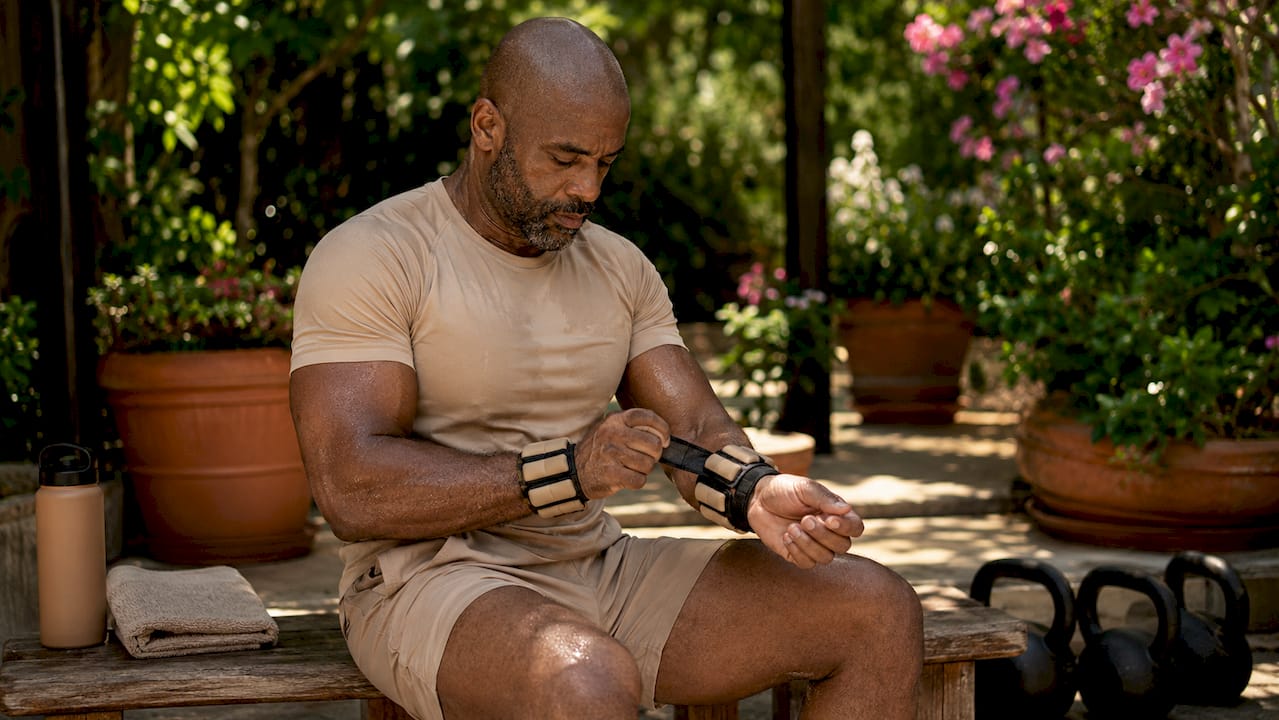
Your chronotype determines whether you are a morning type or an evening type. Morning types, often called larks, reach peak alertness and physical readiness earlier in the day. Evening types, called owls, hit their physiological stride later. A study of 51 endurance athletes found significant differences in VO2max scores based on whether athletes trained in alignment with their chronotype. The performance gap was statistically significant at p < .01. That is not a marginal difference. It is the kind of gap that separates a good session from a great one.
Misalignment between your chronotype and your workout time creates a measurable drag on performance. Your body is not primed for the demands you are placing on it. Energy feels lower, perceived effort feels higher, and recovery takes longer.
Key physiological factors influenced by circadian timing:
- Core body temperature, which affects muscle elasticity and reaction speed
- Cortisol and adrenaline levels, which govern energy availability and focus
- Cardiovascular efficiency, including resting heart rate and blood pressure
- Muscle glycogen utilisation and fat oxidation rates
- Hormonal recovery signals, including growth hormone release during sleep
Pro Tip: If you are unsure of your chronotype, track your natural wake time and peak energy window over two weeks without an alarm. That window is your biological performance peak.
What scientific evidence supports circadian rhythm fitness benefits?
The research on circadian timing and exercise outcomes has become compelling. A 2026 study found that people who exercised in alignment with their chronotype saw their systolic blood pressure drop by 11 mmHg. Those who trained at misaligned times saw only a 5.5 mmHg drop. That is a clinically meaningful difference for cardiovascular health.
The same research showed bad cholesterol dropped by 13.7 mg/dL in the aligned group, compared to 7.6 mg/dL in the misaligned group. Cholesterol reduction of that magnitude through exercise timing alone is a significant finding. It suggests that when you train matters as much as how hard you train.
"When you train may be as important as how hard you train." This principle, supported by molecular clock research, is reshaping how exercise science approaches personalised fitness programming.
The endurance athlete data reinforces this picture. Chronotype-dependent VO2max variations were recorded across morning and evening sessions, with athletes consistently performing better when their session matched their biological peak. VO2max is the gold standard measure of aerobic capacity. Improving it through timing, not just training volume, is a genuine performance advantage.
| Outcome measure | Aligned timing | Misaligned timing |
|---|---|---|
| Systolic blood pressure reduction | 11 mmHg | 5.5 mmHg |
| Bad cholesterol reduction | 13.7 mg/dL | 7.6 mg/dL |
| VO2max performance | Significantly higher | Significantly lower |
| Perceived exercise effort | Lower | Higher |
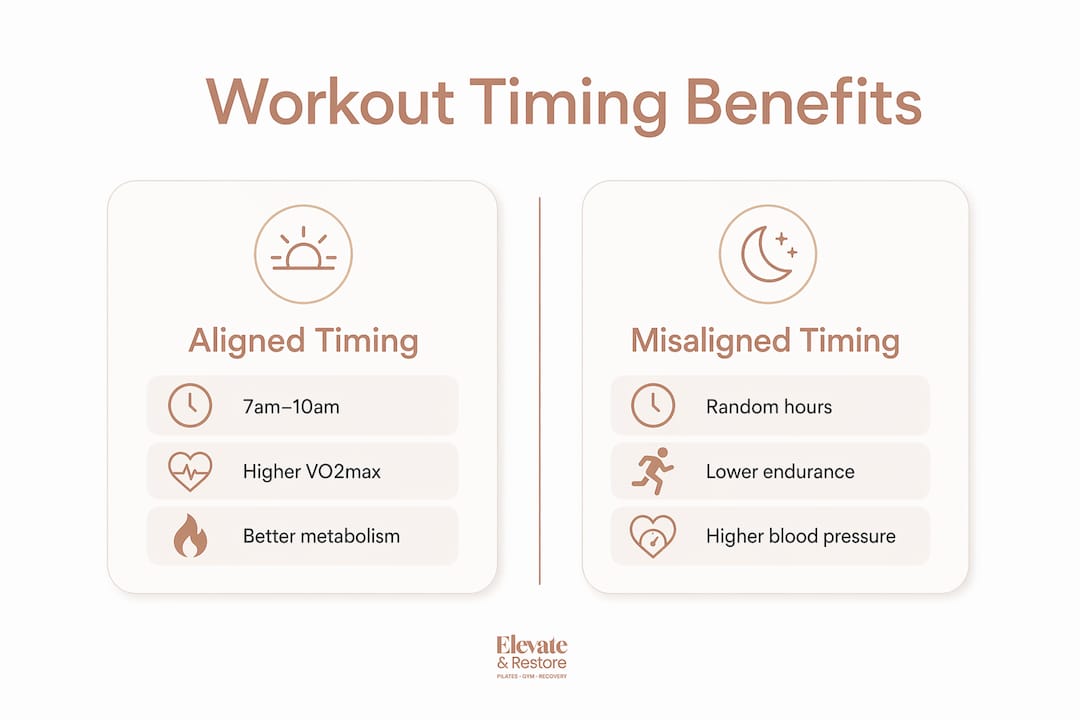
The pattern across all these measures points in the same direction. Circadian alignment amplifies the return on every hour you invest in training.
How can you align workouts with your circadian rhythm?
Identifying your chronotype is the starting point. You do not need a laboratory test. Your natural sleep and wake patterns, energy levels through the day, and when you feel most physically capable are reliable indicators. Most adults fall somewhere on a spectrum between strong morning types and strong evening types, with the majority sitting in the middle.
Once you know your peak window, structure your sessions accordingly:
- Morning types perform best between 7am and 10am. Schedule high-intensity cardio, strength work, or Pilates in this window. Keep afternoon sessions lighter, such as mobility work or walking.
- Evening types reach peak physical capacity between 4pm and 8pm. Use this window for your most demanding sessions. Avoid scheduling hard training in the early morning if you are a strong evening type.
- Intermediate types have more flexibility. Aim for mid-morning to early afternoon for your primary sessions and adjust based on how you feel over several weeks.
- Consistency matters more than perfection. Training at the same time each day conditions your muscle clocks to expect and adapt to exercise stress at that hour. Your body gets better at performing at that time, even if it is not your biological peak.
- Protect your sleep window. Avoid intense exercise less than 2 hours before bed. High-intensity training raises core temperature and heart rate in ways that interfere with sleep onset. A 2-hour buffer allows both to normalise.
Sleep quality also shapes how well circadian timing works for you. Sleep pressure accumulates through the day and makes evening workouts feel harder when you are poorly rested. If your sleep has been disrupted, a morning session is often the better choice regardless of your chronotype.
Pro Tip: Build your training schedule around your chronotype for four weeks without changing training volume or intensity. Compare how sessions feel and how quickly you recover. The difference is often noticeable within the first fortnight.
How does circadian rhythm fitness connect to overall wellness?
Exercise is one of several time cues, called zeitgebers, that help set and reset your internal clocks. Light exposure is the most powerful zeitgeber, but movement is as important as food for adjusting your body's timing. Regular physical activity at consistent times reinforces the signals your circadian system uses to stay calibrated.
The lifestyle habits that support circadian fitness extend well beyond the gym:
- Morning light exposure within 30 minutes of waking anchors your master clock and sets the timing of downstream hormonal events, including cortisol and melatonin.
- Meal timing influences peripheral clocks in the liver, gut, and muscle. Eating in alignment with your active phase supports metabolic health and complements your training schedule.
- Sleep hygiene is the foundation. Without consistent, quality sleep, your circadian system loses precision and your exercise timing benefits diminish.
- Recovery practices such as sauna, cold plunge, and compression therapy support the repair processes that circadian rhythms regulate overnight. These tools work best when used consistently after training, not randomly.
The connection between circadian fitness and mental health is also well established. Exercise timed to your biological peak improves mood, reduces anxiety, and supports cognitive function through the day. These effects are partly hormonal and partly tied to the quality of sleep that follows well-timed training. Functional fitness practices that respect circadian principles deliver benefits that go well beyond physical performance.
Exercise timing is emerging as a core dimension of personalised lifestyle medicine. The evidence now supports treating workout scheduling with the same care you give to nutrition and sleep.
Key takeaways
Circadian rhythm fitness works because aligning exercise timing with your chronotype amplifies cardiovascular, metabolic, and performance outcomes beyond what training volume alone can achieve.
| Point | Details |
|---|---|
| Chronotype determines peak timing | Morning and evening types perform measurably better when training matches their biological peak. |
| Cardiovascular gains nearly double | Aligned exercisers saw 11 mmHg blood pressure drops versus 5.5 mmHg in misaligned groups. |
| Consistency entrains muscle clocks | Training at the same time daily conditions muscle cells to perform better at that hour. |
| Sleep buffer protects recovery | Avoid intense training within 2 hours of bed to protect sleep quality and circadian function. |
| Lifestyle habits amplify results | Light exposure, meal timing, and recovery practices reinforce the benefits of circadian exercise timing. |
What I have learned from training people around their body clocks
Most people come to Elevateandrestore focused on what they are doing in their sessions. Sets, reps, resistance, pace. Very few have thought about when they are training and why that timing either works with or against their biology. Once we start paying attention to that, things shift quickly.
The most common mistake I see is the person who forces 5am sessions because they believe early mornings signal discipline. For an evening type, that approach creates chronic misalignment. They are training when their body temperature is low, their cortisol has not peaked, and their muscles are not ready. They feel flat, they do not progress the way they should, and they often conclude they are just not a morning person. They are right. And that is fine.
Regular exercise consistency matters more than perfect timing. That is the non-negotiable baseline. But once someone is exercising regularly, shifting their sessions to match their chronotype is one of the highest-return adjustments available. It costs nothing and requires no extra effort.
The people I have seen respond best to circadian awareness are those who treat it as a flexible tool. They know their peak window, they aim for it most of the time, and they do not stress when life gets in the way. That balance, consistency with awareness, is what produces lasting results. It is also what makes training feel less like a fight against your own body.
— Elevate
Circadian fitness at Elevateandrestore: train with your biology
At Elevateandrestore, small group sessions of six people mean your trainer actually knows how you move, when you perform best, and what your body needs to recover well.
Our recovery lounge in Melbourne includes sauna, cold plunge, hot tub, and compression boots. These tools are not extras. They are part of a programme designed to support the repair and reset your circadian system carries out overnight. Pair them with boutique fitness classes scheduled around your peak performance window and you have a training approach built on how your body actually works. Book a session at Elevateandrestore and start training with your biology, not against it.
FAQ
What is circadian rhythm fitness?
Circadian rhythm fitness is the practice of scheduling workouts to align with your body's natural 24-hour biological clock. It uses chronotype and internal molecular clock research to time exercise for maximum cardiovascular, metabolic, and performance benefits.
What are the best workout times based on circadian rhythm?
Morning types perform best between 7am and 10am, while evening types peak between 4pm and 8pm. Training consistently at the same time each day also entrains muscle clocks to perform better at that hour.
How does circadian rhythm affect exercise performance?
Your circadian rhythm controls core body temperature, cortisol levels, muscle glycogen use, and cardiovascular efficiency. Misalignment between your chronotype and training time raises perceived effort and reduces measurable outputs like VO2max and blood pressure improvement.
Does it matter if I cannot train at my ideal time?
Regular exercise outweighs perfect timing for overall health. Circadian alignment amplifies results, but consistency is the foundation. Train when you can, and shift toward your peak window when your schedule allows.
Can recovery practices support circadian fitness?
Yes. Tools like sauna, cold plunge, and compression therapy support the overnight repair processes that circadian rhythms regulate. Using them consistently after training reinforces the recovery signals your body clock depends on.