
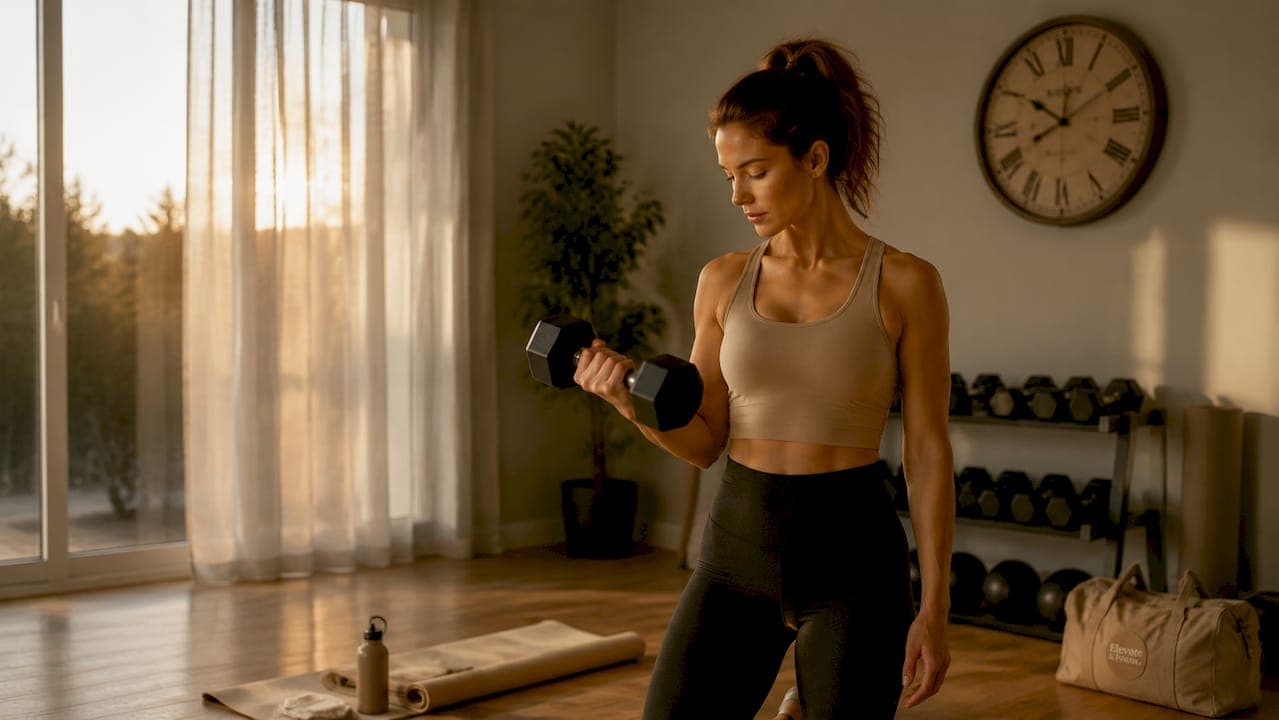
Resistance training is any exercise that makes your muscles contract against an opposing force, whether that's a dumbbell, a resistance band, or your own bodyweight. For women over 30, it is one of the most evidence-backed tools for protecting long-term health. The American College of Sports Medicine (ACSM) recommends at least two sessions per week, and recent research confirms that women who follow this guidance reduce their heart attack risk by 44%. Strength training, the industry's standard term for this practice, delivers benefits that go well beyond aesthetics.
What are the proven health benefits of resistance training for women over 30?
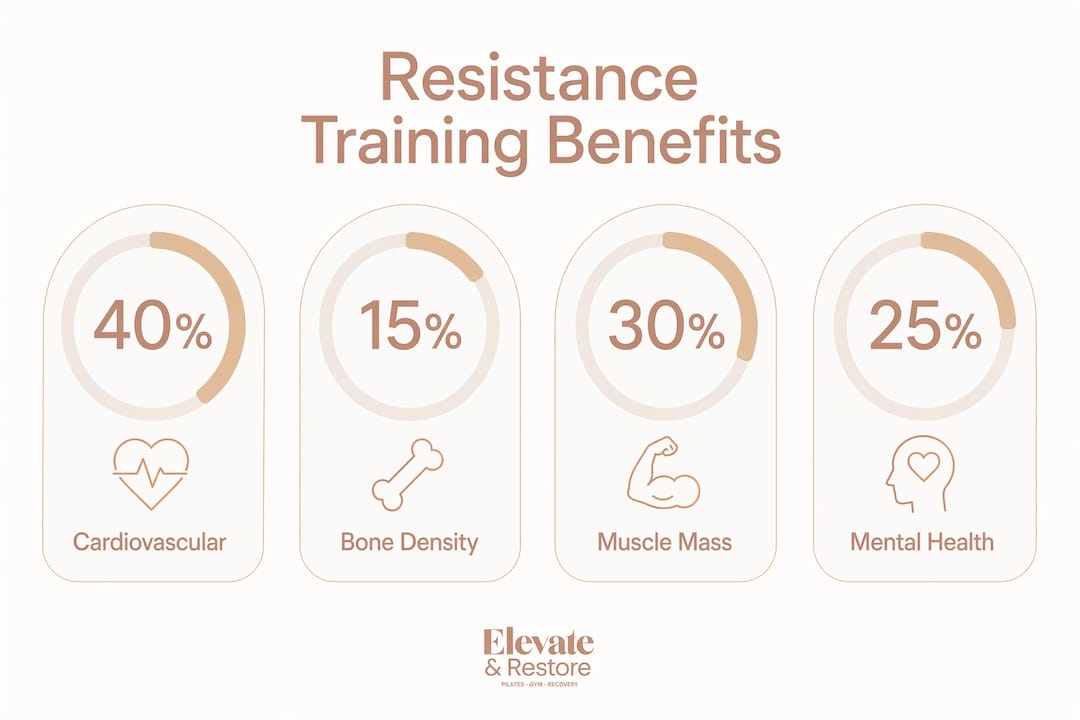
The cardiovascular case for strength training is stronger than most women realise. Women who complete at least 2 hours weekly reduce their risk of major cardiovascular disease by 20% and their heart attack risk by 44%. Each additional hour per week lowers cardiovascular risk by a further 5% and heart attack risk by 14%.
Bone health is equally significant. Resistance training improves bone mineral density in postmenopausal women, directly reducing fracture risk. This matters because bone loss accelerates after 30, and strength training is one of the few interventions that actively reverses that trend.
Muscle mass preservation is another critical benefit. Adults lose muscle mass progressively from their early 30s onward. Strength training two to three times per week lowers all-cause mortality risk by 26% in women, and a meta-analysis of 126 studies confirms that muscle and strength gains are achievable at any age.
The mental health benefits are substantial and often underestimated. Resistance training enhances self-efficacy and reduces depression symptoms, frequently outperforming aerobic exercise alone on psychological measures. Women who train consistently report higher motivation and a stronger sense of control over their health. The metabolic effects, including improved insulin sensitivity and a modest boost to resting metabolism, add further long-term value.
Are resistance training programmes for women different from men?
The short answer is no, not in any fundamental way. Recent 2025 research confirms that women and men exhibit similar muscle growth capacities and strength responses when training principles are applied consistently. Hormonal fluctuations across the menstrual cycle have minimal impact on overall muscle-building outcomes.
The myth that women need vastly different routines persists largely because of outdated assumptions, not science. The core principles that drive results are identical across sexes: progressive overload, adequate nutrition, and consistency. What should vary is the programme's alignment with individual goals, medical history, and lifestyle, not the person's sex.
Women sometimes avoid heavier loads out of concern about "bulking up." This concern is not supported by physiology. Women have significantly lower testosterone levels than men, which means heavy resistance training produces lean muscle definition rather than large muscle bulk. Choosing lighter weights and higher reps is a valid preference, but it is a stylistic choice, not a biological requirement.
- Progressive overload drives adaptation regardless of sex
- Nutrition, particularly adequate protein, supports muscle repair in everyone
- Consistency over weeks and months produces results; single sessions do not
- Individual goals (strength, bone health, aesthetics) should shape programme design
Pro Tip: If you track your workouts, even in a simple notebook, you will spot progression opportunities far more reliably than training by feel alone.
How should women over 30 start resistance training safely?
The ACSM recommends beginners perform 2 weekly sessions of compound movements lasting 20–30 minutes, completing 8–12 repetitions for 3–4 sets at a moderate-to-hard effort level. That is a manageable commitment for most schedules.
Follow these steps to build a safe, effective starting routine:
- Choose compound movements. Squats, lunges, push-ups, rows, and planks each work multiple muscle groups at once. Compound exercises maximise results within short sessions, making them ideal for beginners with limited time.
- Start at moderate effort. You do not need to train to failure to build muscle and bone strength. Moderate intensity improves adherence and reduces injury risk, particularly in the first few months.
- Apply progressive overload. Add one or two repetitions, or a small amount of resistance, every one to two weeks. Gradual increases are what drive continued adaptation. Without them, progress stalls.
- Warm up and cool down. Five minutes of light movement before and after each session prepares your joints and supports recovery. This is not optional padding; it reduces soreness and injury risk meaningfully.
- Prioritise recovery. Muscles rebuild during rest, not during the session itself. Two sessions per week with rest days between them gives your body time to adapt and grow stronger.
Pro Tip: Schedule your two weekly sessions like appointments. Women who block time in their calendar are far more likely to follow through than those who train "when they can."
What resistance training exercises work best for women?
The best exercises are the ones you will actually do. Accessibility matters, particularly when starting out. Household items like water bottles and chairs provide effective resistance for beginners, meaning no gym membership is required to start building strength.
Bodyweight exercises
Bodyweight movements require no equipment and build a strong foundation. Push-ups develop chest, shoulder, and tricep strength. Squats and sit-to-stand movements strengthen the legs and glutes. Planks build core stability, which supports every other movement you do. Step-ups on a stair or low chair add a balance challenge.
Free weights and resistance bands
Once bodyweight movements feel manageable, adding a set of light dumbbells or a resistance band increases the challenge without requiring a full gym setup. Chest presses, bent-over rows, and shoulder presses each target upper body muscle groups that bodyweight alone struggles to load adequately.
Compound versus isolation movements
Compound movements (squats, deadlifts, rows) work multiple joints and muscle groups simultaneously. Isolation movements (bicep curls, leg extensions) target a single muscle. For women over 30 with limited training time, compound movements deliver more return per minute. Isolation work is a useful addition once a base is established.
Pilates and functional strength training
Pilates and functional strength training complement resistance work by improving movement quality, balance, and injury resilience. These methods train the body to move well under load, which reduces the risk of common injuries like lower back strain and knee pain.
| Exercise type | Equipment needed | Primary muscles targeted |
|---|---|---|
| Bodyweight squats | None | Quads, glutes, hamstrings |
| Push-ups | None | Chest, shoulders, triceps |
| Resistance band rows | Resistance band | Upper back, biceps |
| Dumbbell chest press | Dumbbells | Chest, shoulders, triceps |
| Plank | None | Core, shoulders |
| Pilates reformer | Reformer machine | Full body, core focus |
How does resistance training fit with the rest of your fitness routine?
Resistance training works best alongside aerobic activity, not instead of it. Public health guidelines recommend 150 minutes of moderate aerobic exercise per week. Adding two strength sessions on top of that produces additive heart protection and metabolic benefits that neither modality achieves alone.
Recovery is the part most women underestimate. Muscles repair and strengthen during rest. Recovery methods like adequate sleep, hydration, and targeted recovery tools support this process and reduce the risk of overtraining. Skipping recovery does not make you tougher; it slows your progress.
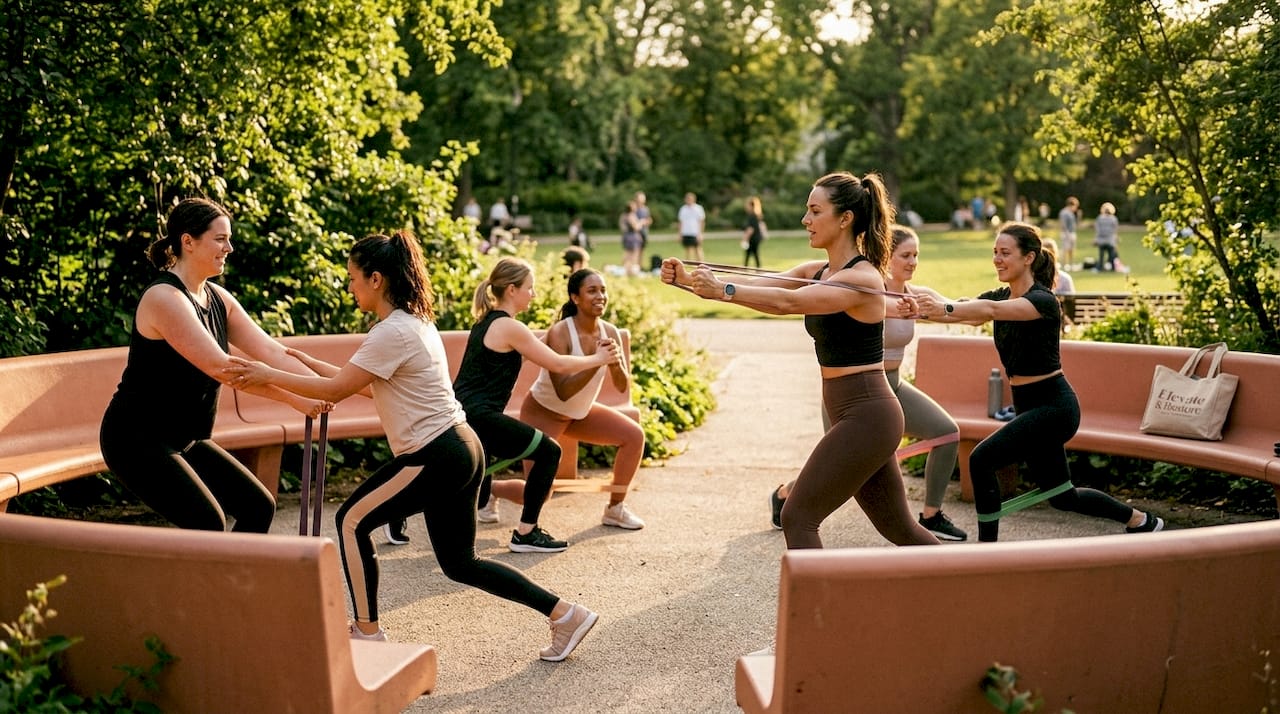
The social dimension of training also matters more than most fitness advice acknowledges. Group fitness increases accountability and enjoyment, two factors that predict long-term adherence far better than motivation alone. Training with others, even in a small group, makes consistency easier to maintain.
- Combine resistance training with 150 minutes of moderate cardio weekly for full cardiovascular benefit
- Schedule rest days between strength sessions to allow muscle repair
- Use recovery tools (sleep, hydration, compression, heat or cold therapy) to support adaptation
- Choose a training environment that feels supportive, not intimidating
Key takeaways
Resistance training is the single most effective tool women over 30 have for protecting muscle, bone, heart health, and mental well-being simultaneously.
| Point | Details |
|---|---|
| Start with two sessions weekly | ACSM recommends 20–30 minute sessions of compound movements, 8–12 reps, 3–4 sets. |
| Heart attack risk drops significantly | Women training 2+ hours weekly reduce heart attack risk by 44% and major CVD risk by 20%. |
| Women and men train the same way | Similar hypertrophy principles apply across sexes; individual goals matter more than sex. |
| Progressive overload is non-negotiable | Gradually increasing resistance or reps is what drives continued strength and bone health gains. |
| Recovery is part of the programme | Muscles rebuild during rest; combining training with recovery tools maximises long-term results. |
What I've seen coaching women through their first year of strength training
The biggest barrier I see is not physical. It is the belief that resistance training is complicated, intimidating, or "not for me." Women who walk into Elevateandrestore for the first time often expect to feel out of place. Within a few sessions, that changes completely.
What actually surprises most women is how quickly they feel stronger. Not just in the gym, but carrying groceries, climbing stairs, and moving through daily life with less effort. That functional shift is what keeps people coming back, not the aesthetics.
The other thing I have observed consistently is that women who train in small groups stick with it. Accountability is not a soft benefit. It is the mechanism that turns a two-week experiment into a two-year habit. At Elevateandrestore, our sessions cap at six people for exactly this reason. You are not anonymous, and that matters.
My honest advice: do not wait until you feel "ready." Start with two sessions per week, focus on compound movements, and give it eight weeks before you judge the results. The research backs this up, and so does every client I have coached through it.
— Elevate
Resistance training at Elevateandrestore in West Footscray
Elevateandrestore offers small-group functional training and Pilates sessions in West Footscray, with a maximum of six people per class. That size is deliberate. Every person gets coaching attention, not just a spot in a crowded room.
The gym at West Footscray is built around functional strength programming that suits women starting out and those looking to progress. Pilates sessions run alongside strength work, giving you the movement quality and injury resilience that makes training sustainable long-term. After your session, the recovery lounge includes a sauna, cold plunge, hot tub, and compression boots, everything your muscles need to rebuild properly. If you are ready to start strength training with real support around you, Elevateandrestore is the place to do it.
FAQ
What is resistance training for women?
Resistance training is any exercise where your muscles work against an opposing force, such as bodyweight, dumbbells, or resistance bands. For women, it builds muscle, strengthens bone, and reduces the risk of cardiovascular disease and all-cause mortality.
How often should women over 30 do resistance training?
The ACSM recommends two sessions per week for beginners, each lasting 20–30 minutes. This frequency is enough to produce measurable gains in strength, bone density, and metabolic health.
Will resistance training make women bulky?
No. Women have significantly lower testosterone levels than men, which means resistance training produces lean muscle definition rather than large muscle bulk. Heavier loads build strength and tone, not size.
What are the best resistance training exercises for beginners?
Compound movements are the most efficient starting point. Squats, push-ups, lunges, rows, and planks each work multiple muscle groups and deliver strong results within short sessions.
How does resistance training affect mental health in women?
Resistance training reduces depression symptoms and improves self-efficacy, often outperforming aerobic exercise alone on psychological measures. Women who train consistently report higher motivation and a stronger sense of control over their health.