
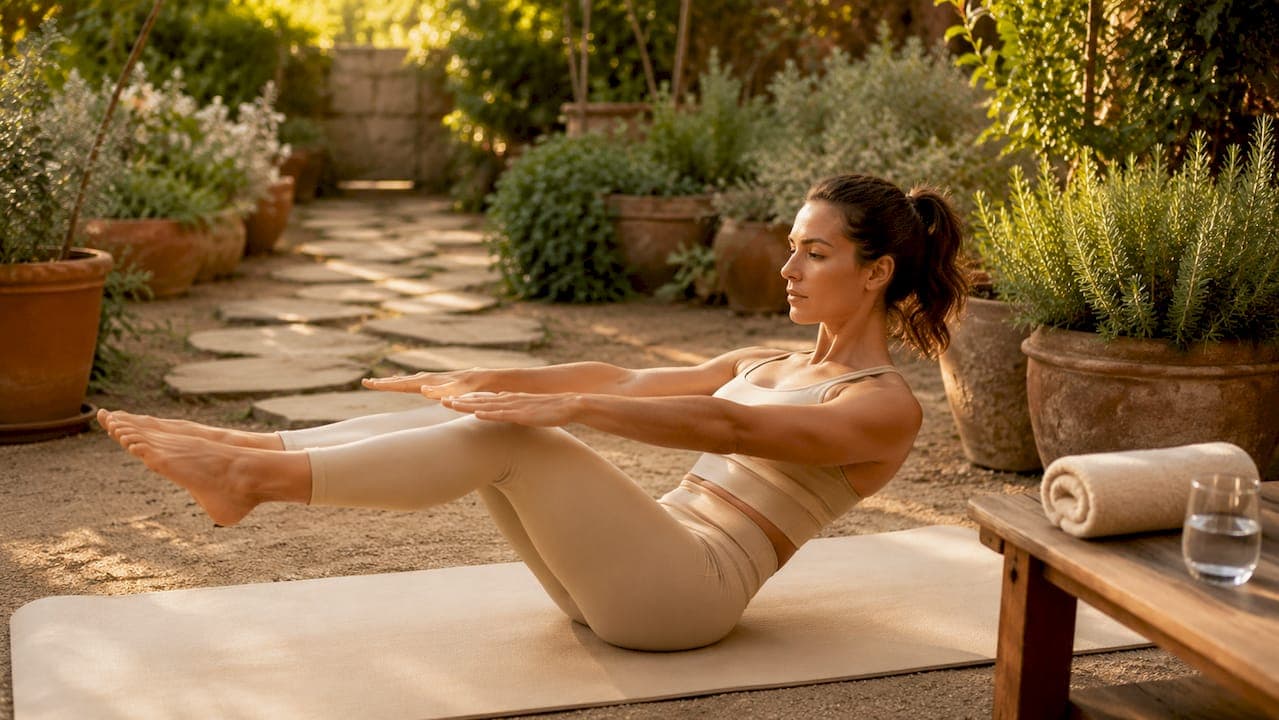
Pilates is a low-impact exercise method that builds core strength, improves flexibility, and supports pelvic floor health, making it one of the most well-suited fitness choices for women over 30. The reasons why women benefit from Pilates go well beyond a toned midsection. Research from MDPI meta-analyses, JAMA clinical trials, and Harvard Health confirms measurable gains in physical function, mental well-being, and daily quality of life. Unlike high-intensity training that taxes ageing joints, Pilates adapts to your body's changing needs while delivering progressive, functional results. This guide covers the physical and mental evidence, compares Pilates with other fitness forms, and gives you a practical plan to make it stick.
What are the main physical benefits of Pilates for women over 30?
Pilates produces measurable physical results that matter most to women navigating their 30s, 40s, and beyond. Core strength, posture, pelvic floor health, and back pain relief are the four areas where the evidence is strongest.
Back pain relief
Low back pain is one of the most common complaints in women over 30, and Pilates addresses it more effectively than most other exercise forms. A 2025 meta-analysis published in Frontiers in Physiology, covering 2,132 participants across 35 trials, found that Pilates delivers the highest analgesic effect for low back pain of any exercise modality tested, with a standardised mean difference of SMD = −1.14. That figure means Pilates outperformed walking, stretching, and general exercise for pain reduction. The same analysis recorded a meaningful drop in disability scores on the Oswestry Disability Index and the Roland–Morris Disability Questionnaire. The key driver is Pilates' focus on spinal stabilisation and functional movement rather than passive stretching alone.
Core strength and posture
Pilates builds long, functional muscles rather than bulk. Every movement pattern in a Pilates session recruits the deep stabilising muscles of the trunk, including the transverse abdominis and multifidus, which are the muscles most responsible for upright posture and spinal support. Improved posture reduces fatigue during desk work, reduces neck tension, and carries over into everyday activities like carrying groceries or sitting through long meetings.
Pelvic floor health
The pelvic floor is an area most general fitness programmes ignore entirely. A JAMA Network Open randomised clinical trial found that structured pelvic floor exercise programmes reduced postpartum stress urinary incontinence incidence to 8.7% in the exercise group compared to 13.9% in the control group. That is a clinically significant difference. Pilates incorporates pelvic floor engagement into nearly every exercise, making it one of the few fitness methods that actively conditions this area. Women over 30 dealing with postpartum recovery or early signs of pelvic floor weakness benefit directly from this focus. For a deeper look, the pelvic floor Pilates guide at Elevateandrestore covers the specific exercises and progressions in detail.
Physical function with chronic conditions
A systematic review of 18 studies and 812 participants found that Pilates improves physical function significantly in people with chronic conditions, with a Hedges' g of 0.85. That is a large effect size. Women managing conditions like fibromyalgia, arthritis, or chronic fatigue will find Pilates builds functional capacity without the injury risk of higher-impact training.
Key physical benefits at a glance:
- Reduces low back pain and disability scores more than walking or general exercise
- Strengthens deep core and postural muscles for lasting spinal support
- Conditions the pelvic floor, reducing incontinence risk
- Improves physical function in women with chronic health conditions
- Adapts to different fitness levels through mat, reformer, or chair formats
How does Pilates support mental health and well-being in women over 30?
The mental health case for Pilates is strong, though it is more nuanced than the physical evidence. The clearest gains are in quality of life and self-esteem, not necessarily in anxiety or depression scores.
A systematic review and meta-analysis published in Sports (MDPI), drawing on 32 trials and 1,264 participants, found that Pilates significantly improves quality of life and self-esteem with an effect size of g = 0.393. That is a consistent, meaningful result across both remote and in-person delivery formats. The same review noted that effects on anxiety and depressive symptoms were variable across studies, meaning Pilates is not a guaranteed treatment for clinical anxiety or depression. What it reliably delivers is a better sense of self and improved daily functioning.
The mechanism behind these gains is the mind-body connection built into every Pilates session. Breath control, precise movement cues, and focused attention on alignment pull your nervous system out of a stress response and into a regulated state. The role of breathwork in Pilates is particularly relevant here, as controlled breathing directly activates the parasympathetic nervous system.
"Exercise-related psychosocial mechanisms likely drive the psychological benefits of Pilates, though variability in outcomes means managing expectations is key for women focusing on mental health." — MDPI Meta-Analysis, 2024
The practical takeaway is this: approach Pilates as a consistent practice for well-being, not a quick fix for mood disorders. Women who attend regularly report feeling more capable, more confident in their bodies, and less reactive to daily stress. Those outcomes are real and worth pursuing.
How does Pilates compare to yoga and walking for women over 30?
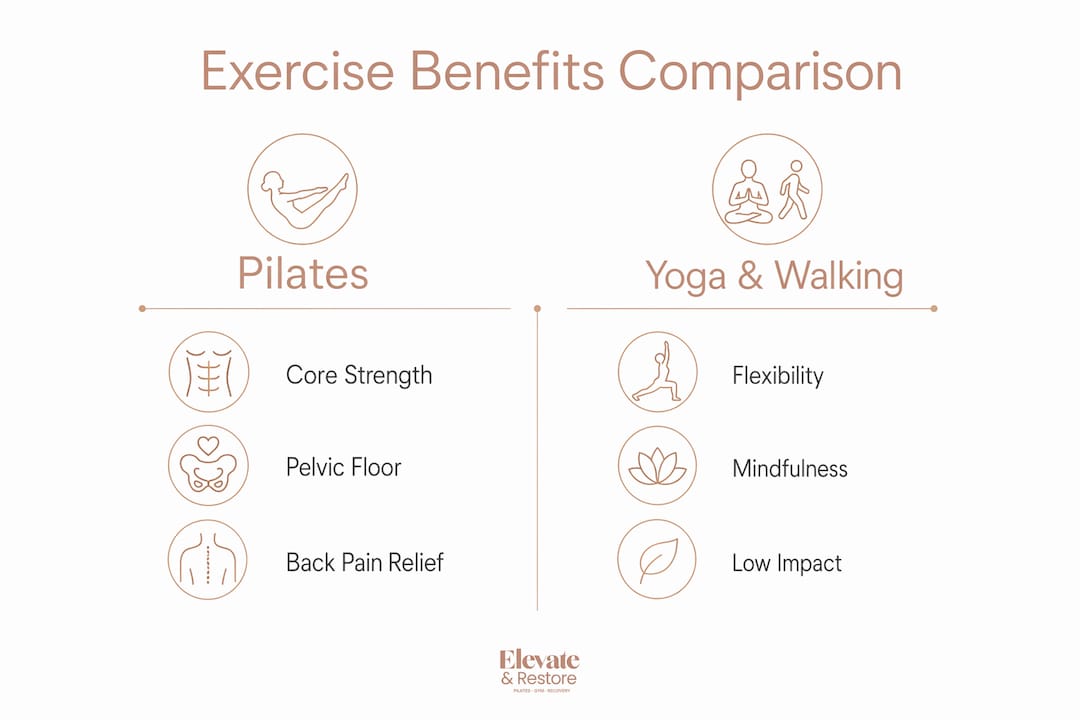
Women over 30 often weigh up Pilates against yoga, walking, or gym-based training. Each has genuine merit, but Pilates occupies a distinct position because it combines strength, flexibility, pelvic floor conditioning, and mental focus in a single method.
| Fitness method | Core strength | Pelvic floor | Back pain relief | Mental well-being | Joint impact |
|---|---|---|---|---|---|
| Pilates | High | High | Highest (SMD −1.14) | Strong (QoL, self-esteem) | Low |
| Yoga | Moderate | Low | Moderate | Strong (anxiety) | Low |
| Walking | Low | Low | Moderate | Moderate | Low to moderate |
| Gym training | High | Low | Variable | Moderate | Moderate to high |
Yoga prioritises flexibility and mindfulness but does not systematically address the pelvic floor or spinal stabilisation in the way Pilates does. Walking is excellent for cardiovascular health and mood but builds very little core or pelvic floor strength. Gym training builds strength but carries higher injury risk for women with existing back pain or pelvic floor issues. For a detailed side-by-side breakdown, the Pilates vs yoga comparison at Elevateandrestore is worth reading.
Harvard Health confirms that Pilates is adaptable for older ages, including chair and reformer options that accommodate women managing age-related joint changes or reduced mobility. That adaptability is what makes it sustainable as a long-term fitness practice rather than a short-term programme.
Pro Tip: If you have osteoporosis or low bone density, choose reformer or chair Pilates over mat work. These formats allow you to load the body safely without the spinal flexion movements that can increase fracture risk.
The structured, progressive nature of Pilates also sets it apart. Unlike yoga, where you can attend the same class indefinitely without advancing, Pilates builds neuromuscular skills in a deliberate sequence. Breath control comes first, then core engagement, then alignment, then complex movement patterns. That progression keeps the practice challenging and the results compounding over time.
How can women over 30 integrate Pilates into their fitness routine?
Getting the most from Pilates comes down to frequency, supervision, and progression. Here is what the research and practical experience support.
-
Start with two to three sessions per week. Research consistently shows that structured, supervised programmes with progressive neuromuscular skill development produce the best outcomes. Two sessions per week is enough to build the foundational skills. Three sessions accelerates progress.
-
Prioritise supervised instruction early. The technique demands of Pilates are higher than they appear. Breath timing, neutral spine position, and pelvic floor engagement all require coaching to perform correctly. A poorly supervised class can reinforce compensatory movement patterns rather than correcting them.
-
Progress the neuromuscular skills, not just the exercises. The goal is not to do harder exercises. The goal is to perform each movement with better breath control, deeper core engagement, and cleaner alignment. That internal progression is what drives the physical and mental benefits.
-
Do not treat Pilates as only a core workout. Women new to Pilates after 30 often focus entirely on abdominal work and miss the balance, total body control, and postural endurance components. Integrating balance and body control transfers directly to everyday activities like stair climbing, carrying loads, and sitting for long periods.
-
Combine Pilates with complementary recovery. Pilates works best as part of a broader wellness routine. Pairing it with sauna, cold plunge, or compression recovery accelerates muscle repair and reduces soreness, which keeps you consistent.
Pro Tip: Track your sessions for the first eight weeks. Women who log their attendance and note how they feel after each session are far more likely to stay consistent past the initial motivation phase.
Key takeaways
Pilates is the most effective low-impact exercise for women over 30 seeking core strength, pelvic floor health, back pain relief, and improved quality of life, all supported by clinical research.
| Point | Details |
|---|---|
| Back pain relief | Pilates delivers the strongest analgesic effect for low back pain of any exercise modality tested. |
| Pelvic floor health | Structured pelvic floor training in Pilates reduces stress urinary incontinence risk significantly. |
| Mental well-being | Pilates consistently improves quality of life and self-esteem, though effects on anxiety vary. |
| Adaptability | Reformer, chair, and mat formats make Pilates accessible across fitness levels and age-related changes. |
| Progression matters | Supervised, progressive programmes produce the best physical and mental outcomes over time. |
What I have seen working with women over 30 at Elevateandrestore
The research confirms what we see on the reformer every week. Women who come to Elevateandrestore in their 30s and 40s are not looking for punishment. They want a practice that makes them feel capable, strong, and less broken by the end of the day. Pilates delivers that, but only when it is taught with proper progression.
The biggest misconception I encounter is that Pilates is easy or purely restorative. It is neither. When you are working at the right level with correct breath timing and genuine core engagement, it is genuinely demanding. The difference is that the demand is placed on the right muscles, not the joints. That distinction matters enormously for women managing back pain, postpartum recovery, or the early signs of perimenopause.
The mental shift is just as real as the physical one. Women who stick with Pilates for eight weeks or more consistently report feeling more confident in their bodies and less reactive to stress. That is not a placebo effect. It is the result of a nervous system that has been trained to regulate itself through breath and movement. The community fitness benefits of training in a small group amplify this further. There is something about moving alongside other women who are working through the same challenges that builds a kind of quiet confidence you do not get from training alone.
My honest advice: do not wait until you have more time or less pain to start. The practice meets you where you are. Start supervised, progress deliberately, and give it at least eight consistent weeks before you judge the results.
— Elevate
Pilates classes for women over 30 at Elevateandrestore
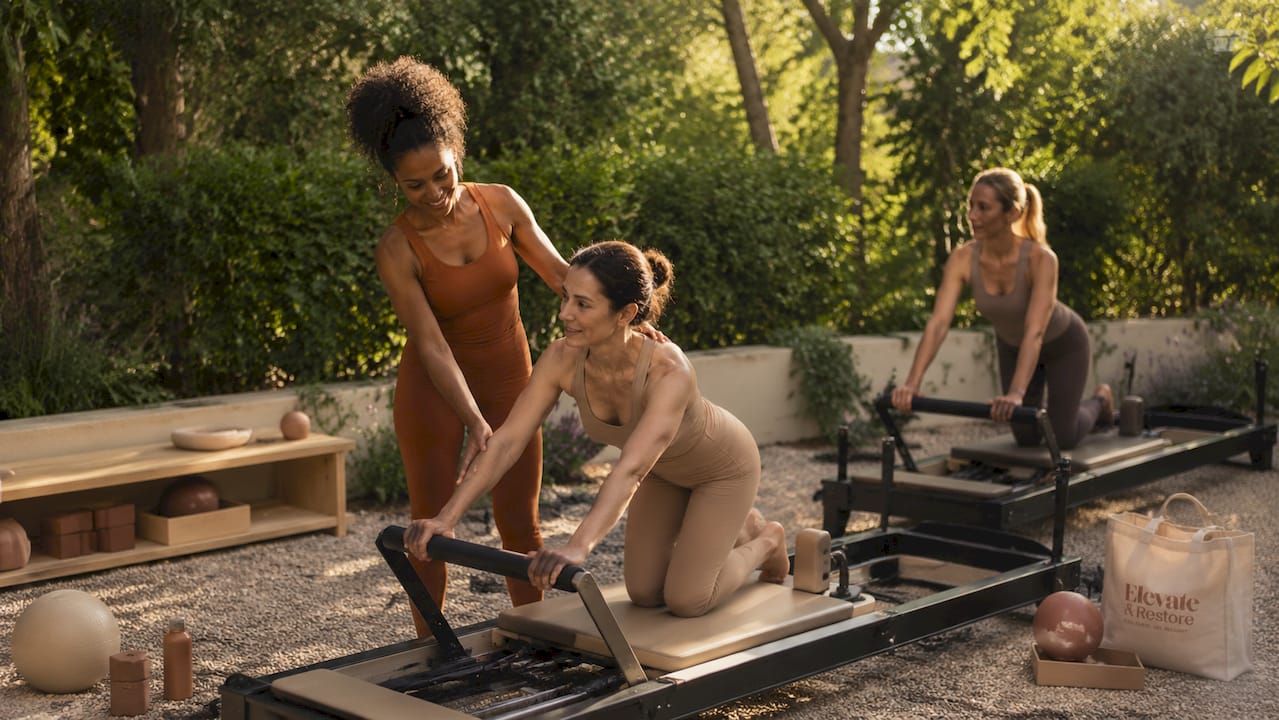
Elevateandrestore runs small-group reformer Pilates classes in West Footscray with a maximum of six people per session. That format means every participant gets genuine coaching attention, not just a spot in a crowded room.
Classes are structured for progressive neuromuscular development, which is exactly what the research supports for lasting results. Beginners are welcomed and placed in appropriate sessions from day one. The studio also includes a recovery hub with sauna, cold plunge, hot tub, and compression boots, so you can pair your Pilates sessions with proper recovery and keep your body performing at its best. If you are ready to build a fitness practice that actually fits your life after 30, Elevateandrestore is the place to start.
FAQ
What makes Pilates particularly good for women over 30?
Pilates combines core strength, pelvic floor conditioning, and back pain relief in a single low-impact method. These are the three physical areas most affected by the hormonal and structural changes women experience after 30.
How often should women over 30 do Pilates to see results?
Two to three supervised sessions per week is the evidence-supported starting point. Structured programmes with progressive neuromuscular skill development produce the strongest and most consistent outcomes.
Does Pilates help with back pain better than other exercises?
A 2025 meta-analysis of 35 trials found Pilates delivers the highest pain relief effect for low back pain of any exercise modality, outperforming walking, stretching, and general exercise.
Is reformer Pilates better than mat Pilates for women over 30?
Reformer Pilates offers more adaptability for women with joint issues, back pain, or reduced mobility. The reformer allows load and resistance to be adjusted precisely, making it safer and more progressive than mat work for most beginners.
Can Pilates improve mental health in women over 30?
Pilates consistently improves quality of life and self-esteem across multiple studies. Effects on clinical anxiety and depression are less consistent, so Pilates works best as a complement to, not a replacement for, professional mental health support.