
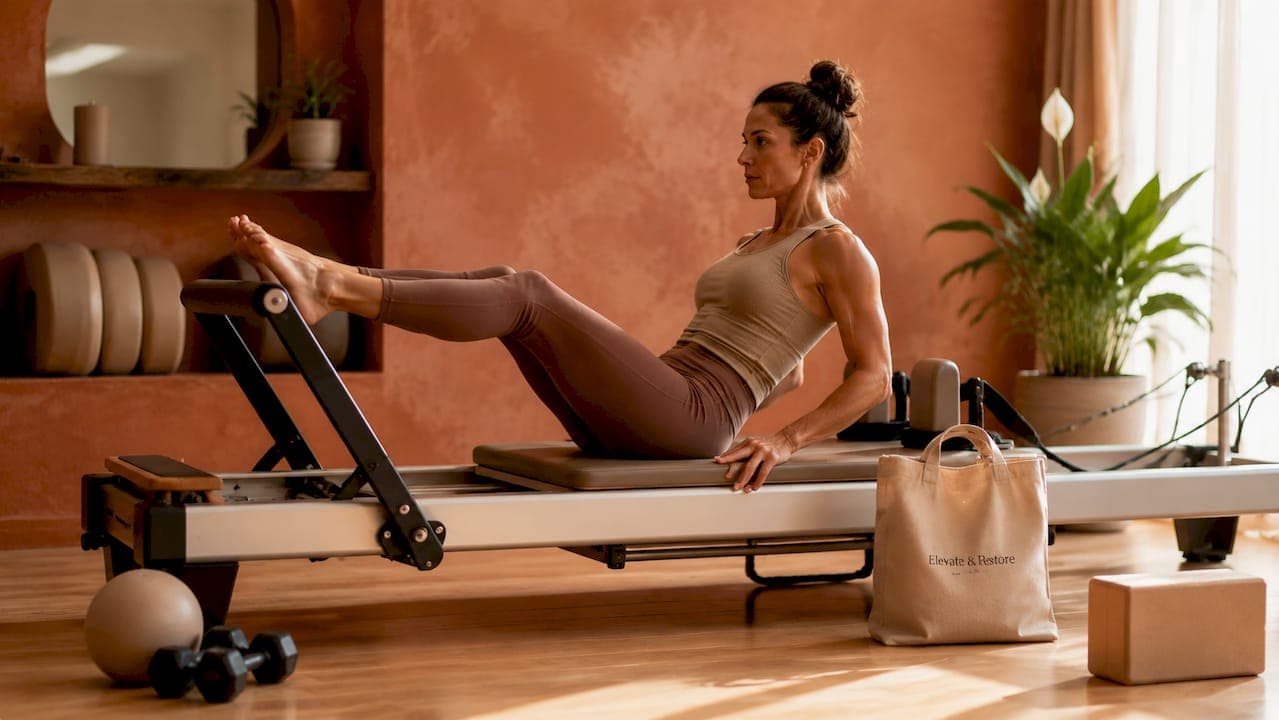
Pilates is a proven strength-building method that uses bodyweight, spring resistance, and controlled loading to develop functional muscle strength. Consistent Pilates training produces an average strength increase of 27% across major muscle groups, making it far more than a flexibility or recovery tool. For adults over 30, the method targets stabiliser muscles, neuromuscular control, and postural alignment — three areas that conventional gym programmes routinely neglect. If you want to increase strength through Pilates, the evidence is clear: it works, provided you train with the right exercises, structure, and progression.
What Pilates exercises and equipment best increase strength after 30?
The reformer is the most effective piece of Pilates equipment for building strength. It uses spring resistance and eccentric loading to create progressive tension through a full range of motion. Unlike free weights, the reformer challenges muscles during both the push and the pull phase, which is exactly the stimulus that builds functional strength in adults over 30.
The exercises that deliver the most strength gains
The following exercises target the muscle groups most relevant to strength and stability after 30:
- Footwork series (reformer): Targets quads, glutes, and calves through controlled pressing against spring resistance. Adjust spring tension to increase load progressively.
- Long stretch and down stretch: Builds anterior chain strength and deep core activation simultaneously. These are harder than they look and expose any weakness in shoulder stability.
- Short box series: Develops spinal extensors, hip flexors, and trunk endurance. The deep stabilisers — transversus abdominis, multifidus, and pelvic floor — are the primary targets.
- Side-lying leg series: Isolates hip abductors and external rotators, which are chronically weak in most adults who sit for long periods.
- Rowing series: Develops upper back, scapular stabilisers, and posterior shoulder strength using spring resistance.
Mat-based work with resistance bands and small balls adds variety and keeps neuromuscular demand high when reformer access is limited.
| Equipment | Primary strength target | Progression method |
|---|---|---|
| Reformer springs | Full body, eccentric control | Increase spring tension or reduce assistance |
| Resistance bands | Upper body, hip stabilisers | Increase band resistance or lever length |
| Stability ball | Core, trunk endurance | Reduce base of support |
| Mat (bodyweight) | Core, glutes, posterior chain | Slow tempo, longer lever arms |
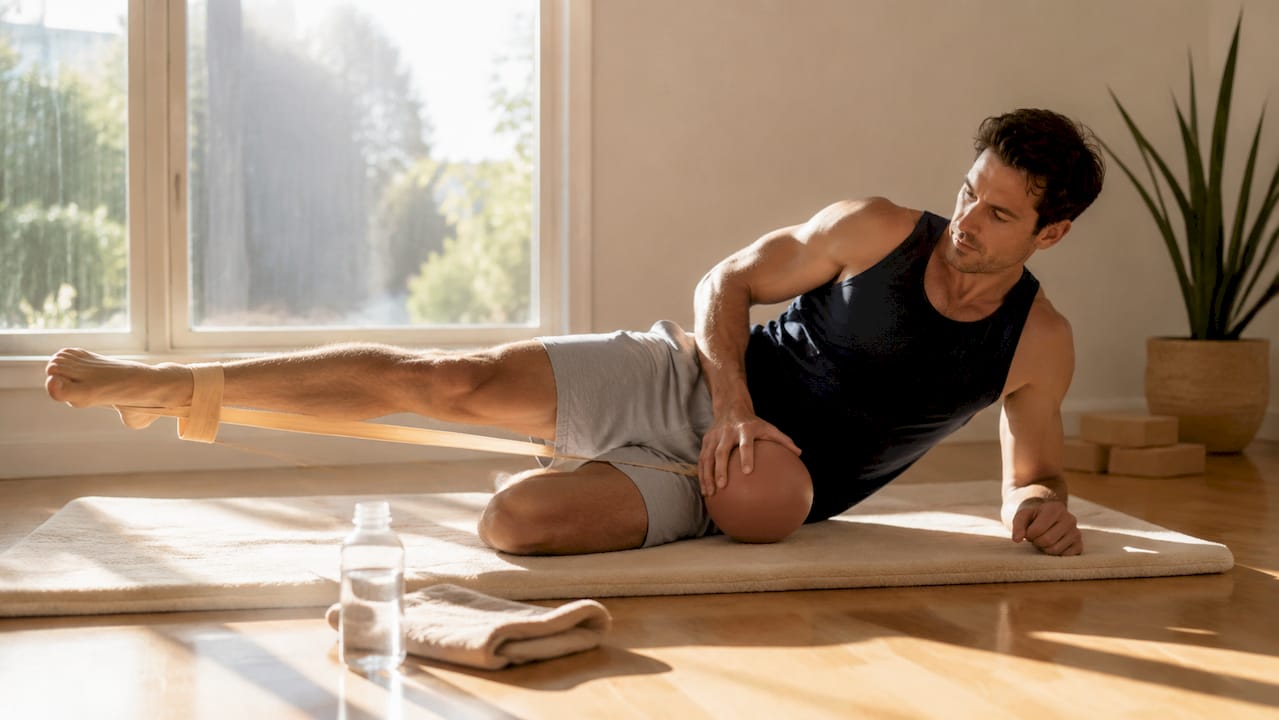
Pro Tip: Add one spring of resistance to footwork every two weeks rather than jumping to maximum load. Gradual increases protect joints and maintain movement quality, which matters more after 30.
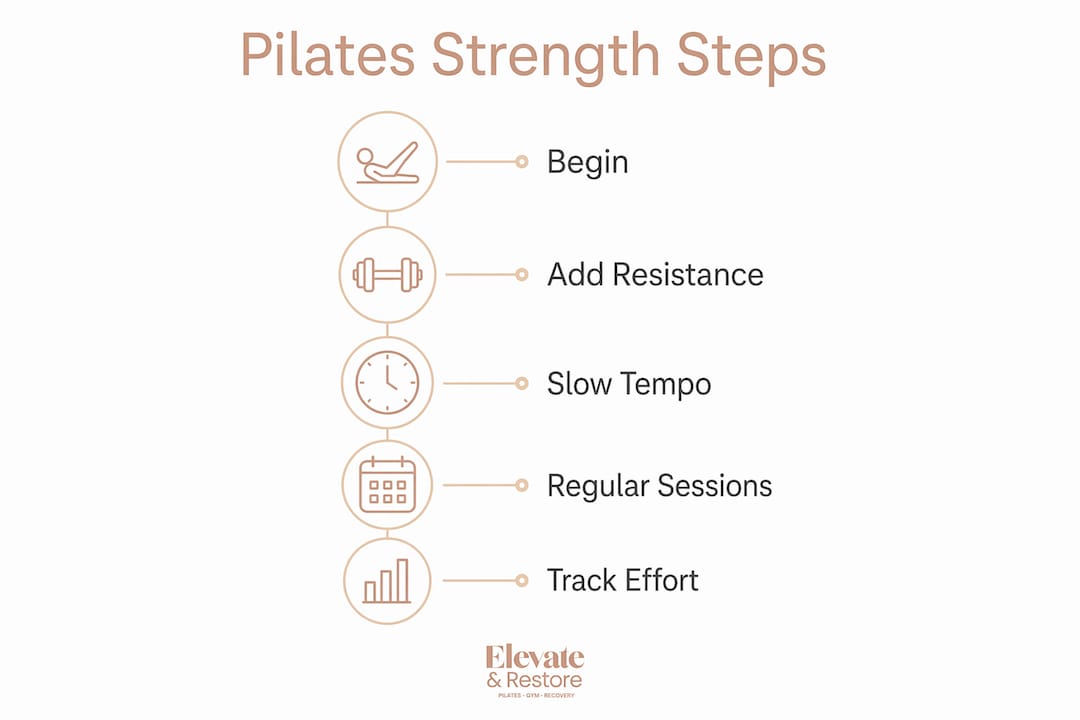
How to structure a Pilates programme to build strength consistently
An 8–12 week programme with 2–3 sessions per week produces measurable strength improvements in core stability, lower limb strength, and neuromuscular control. That frequency is the minimum effective dose. Fewer than two sessions weekly produces maintenance at best, not progression.
Structure your programme using these four principles:
- Start with movement quality, not load. Spend the first two weeks learning the breath pattern, neutral spine, and basic footwork. Rushing to heavy springs before mastering form creates compensation patterns that limit strength gains later.
- Progress through complexity before adding resistance. Progression in Pilates happens through longer lever arms, slower tempo, and increased movement complexity rather than simply adding weight. A single-leg long stretch is harder than a double-leg version, even at the same spring tension.
- Emphasise the eccentric phase. Pilates improves eccentric muscle control better than most traditional exercises. Slowing the return phase of every movement by two to three seconds increases time under tension and builds real-world strength resilience.
- Log your sessions. Track spring settings, exercise variations, and perceived effort. Without external load as a reference point, a written log is the clearest way to confirm you are progressing and not repeating the same stimulus week after week.
Pro Tip: Use a perceived effort scale of 1–10 for each exercise. If you rate an exercise below 6 for two consecutive sessions, it is time to increase the challenge through tempo, lever length, or spring tension.
Does Pilates replace or complement traditional strength training?
Pilates builds stabiliser and functional strength. Traditional barbell and dumbbell training builds maximal load capacity and hypertrophy. Neither method alone covers everything adults over 30 need. The most effective approach combines both.
Combining 2–3 days of strength training with 2–3 days of Pilates produces better overall strength and mobility outcomes than either method in isolation. Pilates addresses the movement quality gaps that heavy lifting creates or ignores. Traditional lifting provides the progressive overload stimulus that Pilates alone struggles to sustain long term for hypertrophy.
| Attribute | Pilates | Traditional strength training |
|---|---|---|
| Stabiliser muscle development | High | Low to moderate |
| Maximal hypertrophy potential | Moderate | High |
| Eccentric control | High | Moderate |
| Injury risk with poor form | Low | Moderate to high |
| Neuromuscular control | High | Moderate |
| Progression tracking | Complexity and tempo | Load increments |
Pilates also identifies what coaches call energy leaks: inefficient movement patterns that heavy lifting can mask. A deadlift with poor hip hinge mechanics still moves the bar. A Pilates single-leg exercise with poor hip hinge mechanics collapses immediately. That feedback is invaluable for adults over 30 who want to lift heavy without accumulating injury.
Strength athletes over 30 benefit from Pilates to correct functional imbalances that develop from years of load-focused training. If you lift three times per week, adding two Pilates sessions is not a compromise. It is the missing layer that makes the lifting safer and more productive. Read more about combining Pilates with lifting for a practical weekly structure.
Common mistakes when increasing strength through Pilates
Most adults over 30 make the same errors when they start Pilates for strength. Recognising them early saves months of wasted effort.
- Misreading muscle trembling as weakness. Shaking during Pilates is a sign of neuromuscular recalibration, not failure. The nervous system is learning to coordinate muscle tension more efficiently. Stopping the exercise when trembling starts means stopping exactly when adaptation is happening.
- Expecting load-based progression. Adults used to adding weight plates each week find Pilates progression invisible. It is not. Progression through tempo, lever length, and complexity is real and measurable. It just requires a different way of tracking.
- Skipping the deep stabiliser work. The exercises that feel least impressive — pelvic floor engagement, transversus abdominis activation, multifidus control — produce the greatest functional strength returns. Skipping them to get to the "harder" exercises is counterproductive.
- Inconsistent attendance. Two sessions per week is the minimum for strength adaptation. Dropping to one session when life gets busy shifts the outcome from strength building to maintenance.
- Prioritising range of motion over control. Moving through a large range with poor control does not build strength. Moving through a smaller range with full neuromuscular engagement does.
"The goal is not to do more. The goal is to do less, better, until better becomes your baseline."
Pro Tip: If you plateau after six weeks, change one variable: add a half-spring of resistance, slow your tempo by two seconds, or switch to a single-limb variation. One change at a time makes it clear what drove the improvement.
If you are new to Pilates and unsure where to start, the beginner guide for over 30s covers the foundational movement patterns before you progress to strength-focused work.
Key takeaways
Pilates builds genuine functional strength through neuromuscular control, stabiliser development, and eccentric loading, and adults over 30 who train 2–3 times weekly for 8–12 weeks see measurable results.
| Point | Details |
|---|---|
| Strength gains are real | Consistent Pilates produces an average 27% increase in muscle strength across major groups. |
| Programme structure matters | Train 2–3 sessions weekly for 8–12 weeks to produce measurable strength improvements. |
| Progress differently | Increase lever length, slow tempo, and add complexity before increasing spring resistance. |
| Combine with lifting | Pairing 2–3 Pilates sessions with 2–3 strength sessions produces better results than either alone. |
| Trembling is progress | Muscle shaking signals neuromuscular adaptation, not weakness. Stay in the exercise. |
What I have seen working with clients over 30 at Elevateandrestore
The clients who get the most out of Pilates for strength are almost never the ones who come in expecting a hard workout. They are the ones who come in curious. They slow down, pay attention to what their body is actually doing, and then they get strong in ways that surprise them.
I have watched people who have lifted weights for years discover that they cannot stabilise their pelvis through a single-leg footwork series. That is not a failure. That is information. And once they address it, their squat improves, their lower back stops complaining, and they can train harder across the board.
The combination of Pilates and traditional strength training is not a compromise between two methods. It is a more complete version of strength training than either method offers alone. The Pilates work primes the nervous system and closes the movement gaps. The lifting builds the load capacity. Together, they produce the kind of strength that holds up in real life, not just in the gym.
Consistency is the variable that matters most. Two sessions per week, done well, over three months, produces a different body than sporadic intense efforts. For adults over 30, that consistency also means fewer injuries and faster recovery. That is the return on investment that keeps people coming back.
— Elevate
Reformer Pilates at Elevateandrestore: built for strength after 30
Elevateandrestore runs small-group reformer Pilates classes in West Footscray with a maximum of six people per session. That size means your coach can actually watch your movement, correct your form, and progress your programme at the right pace for your body.
Every session is designed with strength and function in mind, not just flexibility or relaxation. After class, the recovery hub is available with sauna, cold plunge, hot tub, and compression boots to support muscle repair and keep you training consistently. If you want to build strength through Pilates with proper instruction and a programme that evolves as you do, Elevateandrestore is the place to start.
FAQ
Can Pilates really increase muscle strength?
Yes. Consistent Pilates training produces an average muscle strength increase of 27% across major muscle groups after an 8-week programme done three times weekly. The method builds strength through spring resistance, bodyweight loading, and neuromuscular control.
How many times per week should I do Pilates to build strength?
Two to three sessions per week is the minimum effective dose for strength adaptation. Research shows that 8–12 week programmes at this frequency produce measurable improvements in core stability, lower limb strength, and neuromuscular control.
Is reformer Pilates better than mat Pilates for strength?
Reformer Pilates produces greater strength gains because spring resistance allows for progressive overload and controlled eccentric loading. Mat Pilates builds strength effectively but has a lower ceiling for resistance progression.
Should I combine Pilates with weight training?
Combining 2–3 days of Pilates with 2–3 days of traditional strength training produces better overall strength and mobility outcomes than either method alone. Pilates addresses stabiliser muscles and movement quality that lifting alone does not develop.
Why do my muscles shake during Pilates?
Shaking during Pilates signals neuromuscular recalibration, not weakness. The nervous system is learning to coordinate muscle tension more efficiently. This adaptation is a sign the exercise is working at the right level of challenge.