
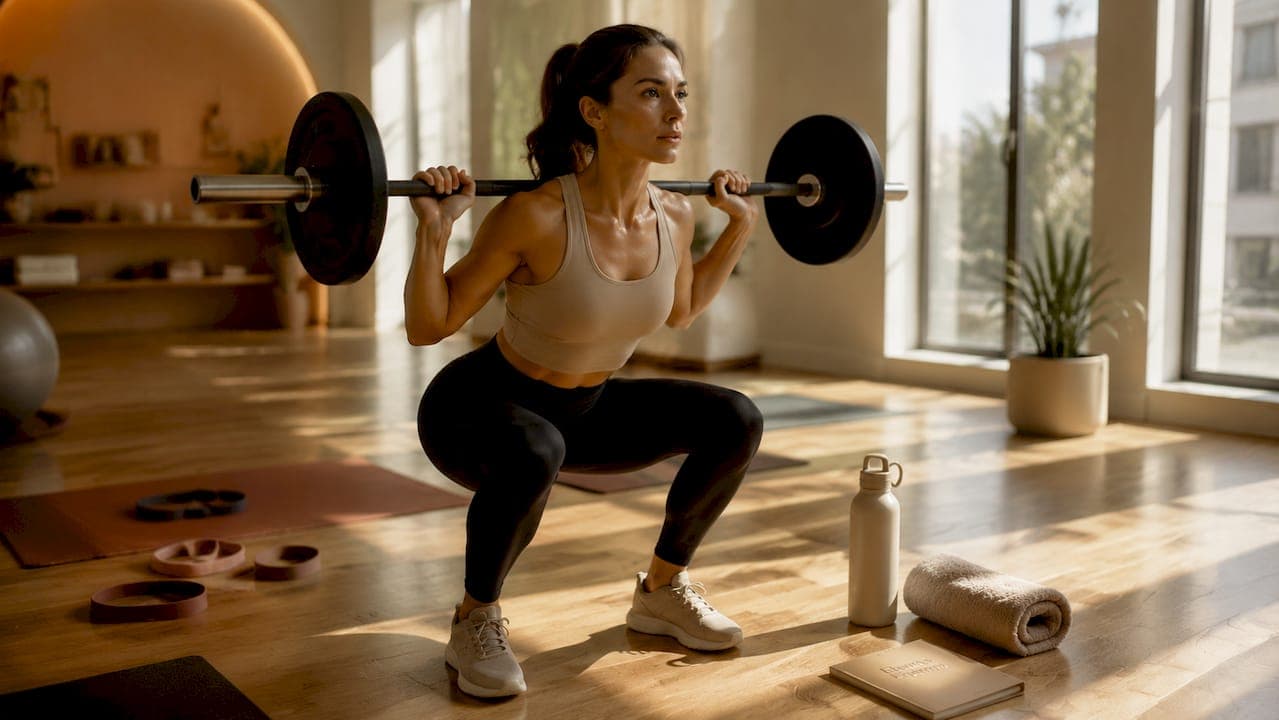
Strength training is the practice of using resistance to build muscle, protect bone, and support long-term health. For women over 30, it is one of the most evidence-backed tools available for staying strong, independent, and well. Lean muscle declines with age, and without resistance training to counter that loss, body fat percentage tends to rise even when body weight stays the same. The good news is that you do not need hours in a gym to see real results. Research from Mayo Clinic, Harvard Health, and BBC Future all confirm that modest, consistent effort delivers significant gains.
Why women need strength training: the core case
Resistance training, the standard term used by exercise scientists and organisations like the American College of Sports Medicine (ACSM), covers any exercise where muscles work against a force. That includes free weights, resistance bands, bodyweight movements, and gym machines. The term "strength training" is widely used and perfectly accurate for everyday conversation.
The case for women over 30 is clear. Muscle and bone strength decline progressively from the mid-30s onward. That decline accelerates around menopause. Resistance training directly counters both processes, making it a cornerstone of women's health at this life stage, not an optional add-on.
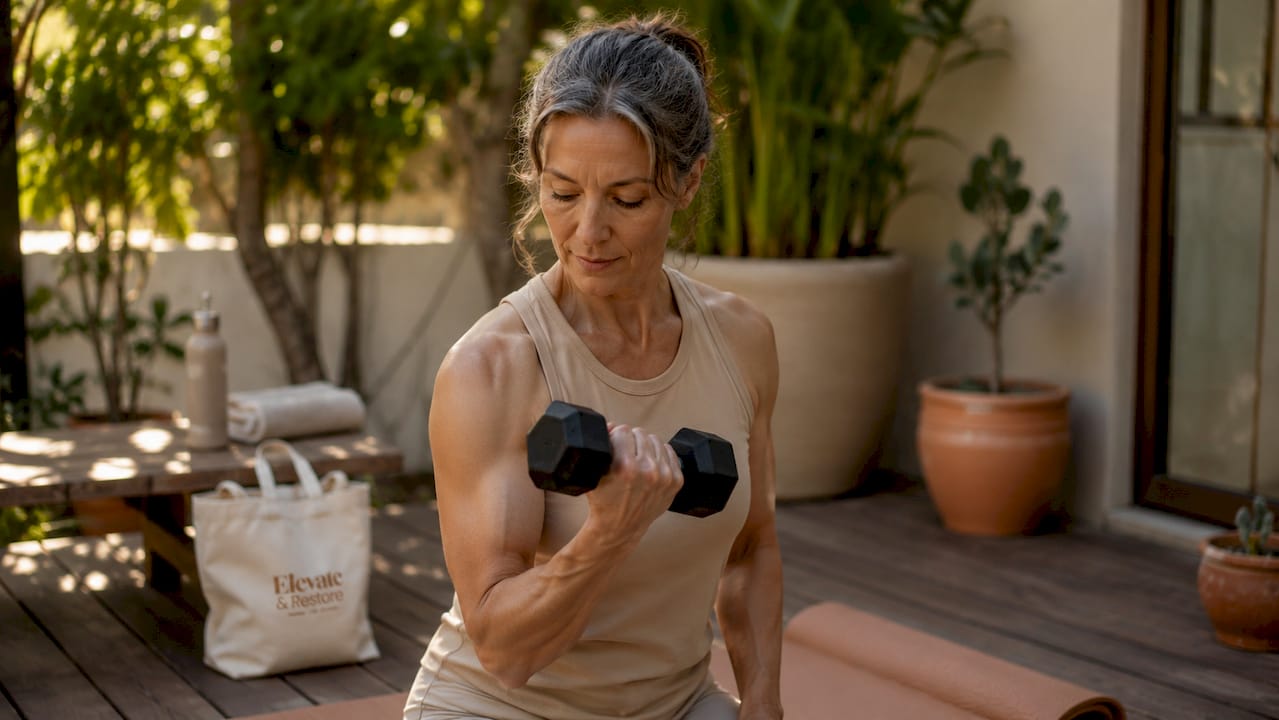
One framing that resonates with many women is thinking of strength training as a pension contribution for your body. Every session builds a reserve of muscle and bone density that pays dividends decades later. That shift in perspective moves the goal from aesthetics to longevity, which is far more motivating over the long term.
What are the main health benefits of strength training for women?
The benefits of strength training for women span physical health, mental wellbeing, and functional independence. They are not theoretical. They are measurable and well-documented.
Physical health benefits:
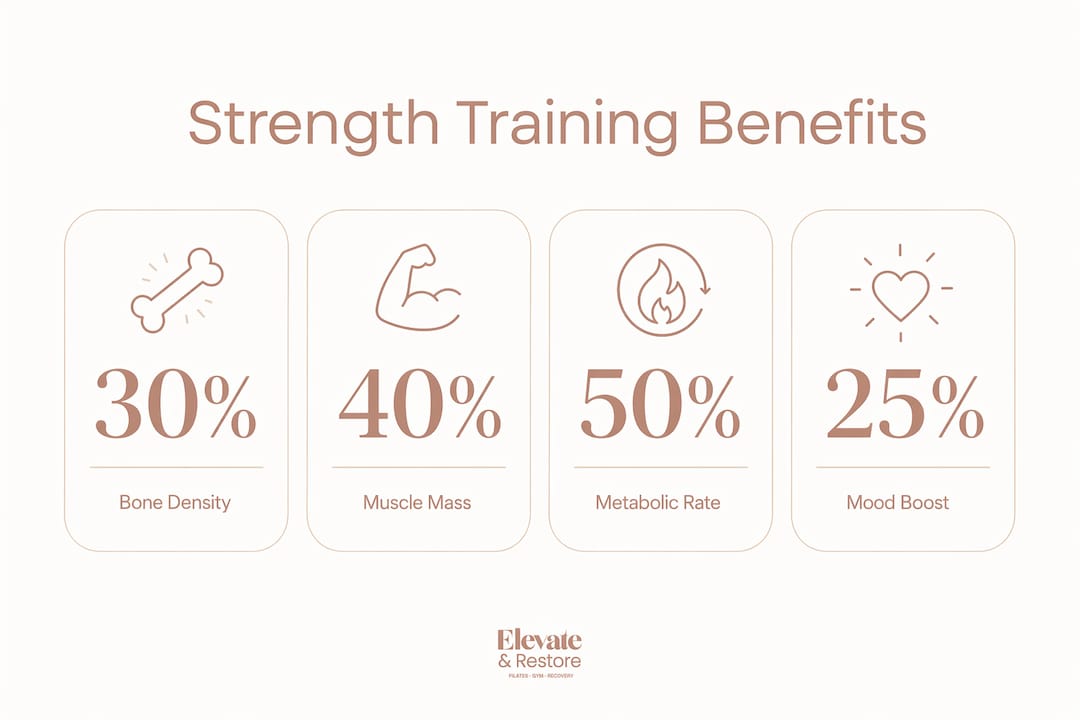
- Muscle mass. Resistance training maintains and increases lean muscle, which directly counters age-related sarcopenia (muscle loss). Without it, body fat percentage rises even when the scales do not change.
- Bone density. Weight-bearing resistance exercise stimulates bone formation, reducing the risk of osteoporosis. This is particularly relevant for women approaching and post-menopause.
- Cardiovascular health. Women doing two or more hours per week of resistance training have a 20% lower risk of major cardiovascular disease and a 44% lower risk of heart attack. That is a striking reduction from a relatively modest time investment.
- Weight management. Muscle tissue burns more energy at rest than fat tissue. Building muscle raises your resting metabolic rate, making weight management more sustainable over time.
- Longevity. 30–60 minutes per week of muscle strengthening activity is linked to a 10–17% reduction in all-cause mortality. That is a meaningful lifespan benefit from less than one hour a week.
Functional and mental health benefits:
- Balance and fall prevention. Strength exercises support joint protection and improve balance, directly lowering fall risk. Falls are a leading cause of injury and loss of independence in older women.
- Mood and cognitive clarity. Gym sessions release physical tension and reduce anxiety, with consistent training linked to improved mood and sharper thinking.
The breadth of these benefits is why resistance training sits at the centre of women's fitness recommendations, not cardio, not flexibility work alone.
How often should women strength train, and how hard?
The most common barrier women cite is not motivation. It is confusion about how much training is actually needed. The answer is simpler than most expect.
Two sessions per week of 20–30 minutes, using a weight that fatigues your muscles around 12–15 repetitions, is enough to produce real health benefits. One set per major muscle group can be sufficient when you are starting out. You do not need to train to failure every session, and ACSM research confirms that moving from no training to some training produces the biggest gains. Perfection is not the entry point.
Here is a practical starting framework:
- Choose your equipment. Bodyweight exercises (squats, push-ups, lunges) require nothing. Resistance bands are affordable and portable. Free weights and gym machines add variety and load as you progress.
- Set your intensity. Pick a weight or resistance level where the last two or three reps of a set feel genuinely challenging. If you finish 15 reps and feel you could do 10 more, the load is too light.
- Apply progressive overload. Gradually increasing weight or reps over time drives continued gains and reduces the risk of burnout and injury. Add a small amount of load or one extra rep each week or fortnight.
- Cover the major muscle groups. Legs, hips, back, chest, shoulders, and arms. You do not need a separate exercise for every muscle. Compound movements like squats, deadlifts, rows, and presses cover multiple groups at once.
- Rest between sessions. Allow 48 hours between sessions targeting the same muscle groups. Recovery is where adaptation happens. For guidance on structuring your rest days, the recovery methods after 30 guide covers this in detail.
Pro Tip: Start with two sessions per week and stick to that for six weeks before adding a third. Consistency across months beats intensity across days.
The biggest myth in women's fitness is that strength training requires significant time or specialist knowledge to begin. It does not. Two focused sessions a week, done consistently, outperform sporadic intense efforts every time.
Strength vs power training: what is the difference and why does it matter?
Most women have heard of strength training. Fewer have heard of power training, and the distinction matters more as you age.
| Strength training | Power training | |
|---|---|---|
| Definition | Building the maximum force a muscle can produce | Training muscles to produce force quickly |
| Example movements | Squats, deadlifts, rows | Jump squats, medicine ball throws, fast step-ups |
| Primary benefit | Muscle mass, bone density, metabolic health | Reaction speed, fall prevention, agility |
| Rate of decline with age | Gradual | Faster than strength |
| Where to start | Here, as the foundation | After building a strength base |
Women aged 63–99 with higher muscular strength have lower mortality risk, and that effect is independent of other physical activity. Strength alone carries a longevity signal. Power training adds a second layer: the ability to react quickly when you stumble, catch yourself on uneven ground, or move fast in an unexpected situation.
The practical approach is to build strength first. Once you have a solid foundation of two to three months of consistent resistance training, you can introduce power elements. Fast bodyweight squats, light medicine ball work, or quick step-ups are accessible starting points. For a deeper look at how functional strength training applies to daily life, that resource covers the specifics well.
How does lifting weights support women's wellbeing beyond the physical?
The mental and emotional benefits of resistance training are real, measurable, and often the reason women keep going long after the initial motivation fades.
- Self-esteem and body image. Visible strength gains shift the focus from how your body looks to what it can do. That is a meaningful psychological shift, and it tends to be more durable than appearance-based motivation.
- Anxiety reduction. Physical exertion metabolises stress hormones. Regular training creates a reliable outlet for tension that accumulates through work, family, and daily demands.
- Functional confidence. Carrying groceries, lifting children, moving furniture, climbing stairs without fatigue. These are the daily wins that compound into a sense of capability and independence.
- Social connection. Training in a group setting adds accountability and community. Research on community fitness benefits for women over 30 consistently shows that social context improves adherence and enjoyment.
"Strength training gave me back a sense of control over my body that I did not realise I had lost." This is one of the most common things women say after six months of consistent resistance training. It is not about aesthetics. It is about agency.
The importance of weight lifting for women extends well beyond the gym floor. A woman who trains consistently is more likely to sleep well, manage stress, maintain a healthy weight, and stay independent as she ages. These outcomes compound. The earlier you start, the larger the reserve you build.
Key takeaways
Strength training is the single most effective physical intervention women over 30 can make for long-term health, function, and independence.
| Point | Details |
|---|---|
| Start with two sessions a week | Two 20–30 minute sessions weekly produce measurable health gains for beginners. |
| Muscle loss is reversible | Resistance training rebuilds lean muscle and raises resting metabolism at any age. |
| Heart health benefit is significant | Women doing 2+ hours of resistance training weekly have a 20% lower cardiovascular disease risk. |
| Strength before power | Build a strength base first, then add power training to protect against falls. |
| Mental gains are real | Consistent training reduces anxiety, improves mood, and builds functional confidence. |
Strength training at 30+: what I have seen work
The myth I encounter most often is that strength training is complicated, time-consuming, or only for younger women. Neither is true. The women who make the most lasting progress are not the ones who train the hardest. They are the ones who train consistently, recover well, and stop treating rest as laziness.
What I have seen at Elevateandrestore is that small group settings change everything. When you train alongside five other women at a similar stage of life, the accountability is built in. The competition disappears. The support stays. Women who struggled to maintain a solo gym habit for more than a few weeks often find that a structured group environment is the missing piece.
The other thing worth saying plainly: injury prevention matters more than intensity. A woman who trains at moderate intensity for three years builds far more strength and bone density than one who trains hard for three months and then stops due to pain. Functional training that prevents injury is not a compromise. It is the smarter path.
Start where you are. Use what you have. Add load gradually. Recover properly. That is the whole programme.
— Elevate
Strength training and recovery at Elevateandrestore
Elevateandrestore is a functional training and Pilates studio in West Footscray, Melbourne, built specifically for small groups of six. Every session is structured, coached, and designed for women who want real results without the noise of a large commercial gym.
The gym at West Footscray offers strength and functional training sessions tailored for women over 30, with progressive programming that builds from the ground up. The reformer Pilates classes complement strength work by targeting stability, pelvic floor, and mobility. After training, the recovery hub includes a sauna, cold plunge, hot tub, and compression boots, so your body gets the recovery time it needs to adapt and grow stronger.
FAQ
What is strength training and why does it matter for women?
Strength training is resistance-based exercise that builds muscle, improves bone density, and supports metabolic health. For women over 30, it is the most effective way to counter age-related muscle and bone loss.
How often should women over 30 do strength training?
Two sessions per week of 20–30 minutes each is enough to produce real health benefits, according to Mayo Clinic guidance. Consistency over months matters more than session frequency when starting out.
Will strength training make women bulky?
No. Women have significantly lower testosterone levels than men, which limits the degree of muscle hypertrophy possible without specific high-volume programming. Resistance training builds lean, functional muscle, not bulk.
What is the difference between strength and power training?
Strength training builds the maximum force a muscle can produce. Power training develops how quickly that force is applied. Both decline with age, but power declines faster, making it worth adding once a strength base is established.
Can strength training improve mental health?
Yes. Regular resistance training reduces anxiety, improves mood, and supports cognitive clarity by metabolising stress hormones and creating a reliable physical outlet for daily tension.