
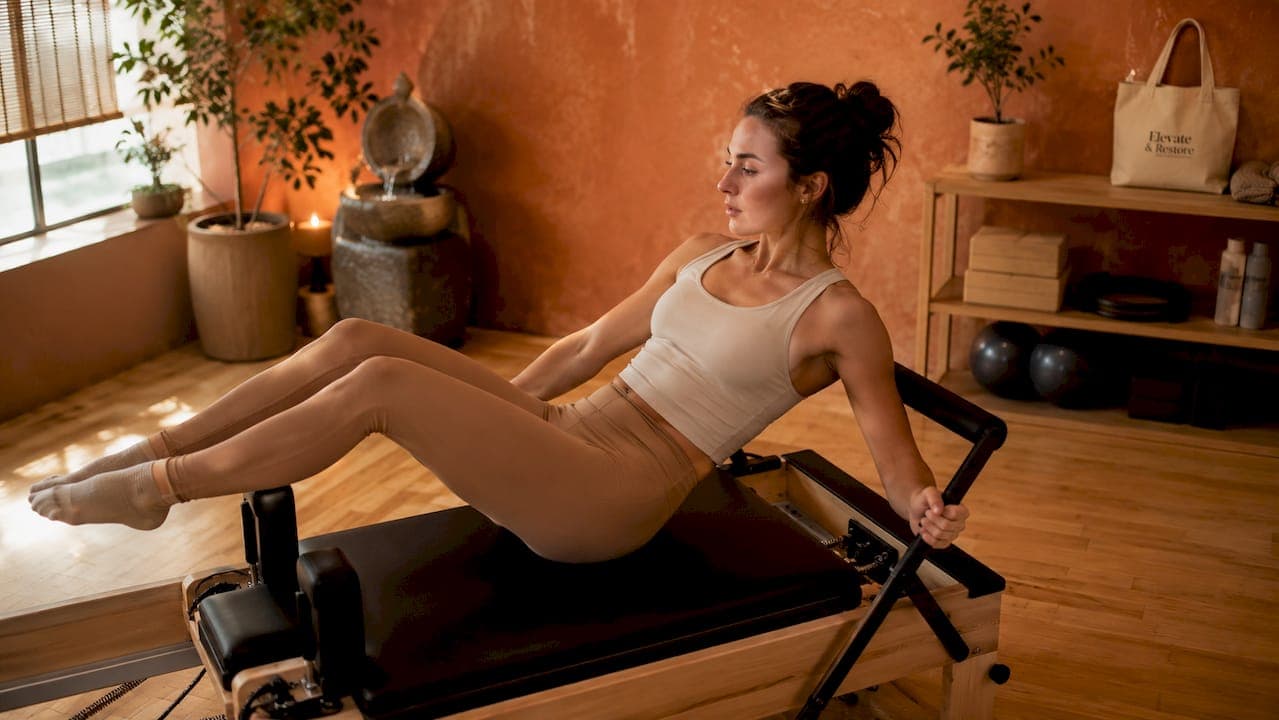
Injury resilience is your body's capacity to absorb load, recover from stress, and resist breakdown over time. Pilates builds that capacity by training core stability, joint alignment, and movement control simultaneously. A 2026 meta-analysis of 25 studies covering 10,124 participants confirmed that integrative neuromuscular training protocols similar to Pilates significantly reduce injury risk in adults. That finding matters because it shifts Pilates out of the "gentle stretching" category and into evidence-based injury prevention. For women over 30, whose connective tissue and hormonal environment change with age, building this kind of physical resilience is not optional. It is foundational.
How does Pilates build injury resilience?
Pilates builds injury resilience by correcting the small movement errors that accumulate into tissue damage over months and years. Many injuries result not from a single traumatic event but from repeated micro-stresses caused by poor alignment, limited mobility, and weak force transfer through joints. Pilates slows the movement system down, giving your body the chance to identify and correct these patterns before they cause real harm.
Core stability and spinal control
The foundation of Pilates injury prevention is core muscle activation, specifically the deep stabilisers including the multifidus, transverse abdominis, and pelvic floor. Maintaining a neutral spine rather than flattening the lumbar curve is the single most important technical principle. Flattening the lumbar spine inhibits the multifidus, the muscle most responsible for protecting spinal segments, which raises the risk of lumbar disc problems. Neutral spine keeps that muscle active and the spine protected. This is why core stability training is the entry point for every effective Pilates programme.
Neuromuscular control and proprioception
Pilates trains the nervous system, not just the muscles. Each controlled movement requires your brain to coordinate timing, sequencing, and force output across multiple muscle groups. That process builds proprioception, your body's ability to sense where it is in space. Better proprioception means faster reactive stabilisation when you trip, land awkwardly, or change direction quickly. These are the exact moments when injuries happen. Pilates trains your body to respond before the damage occurs.
Mobility paired with strength
Most fitness methods treat mobility and strength as separate goals. Pilates combines them in every exercise. Hip circles, spinal articulation, and scapular stability work all require you to move through a full range while maintaining muscular control. Small alignment errors, limited mobility, and poor force transfer are the primary contributors to injury risk. Pilates addresses all three at once, which is why it outperforms isolated stretching or isolated strengthening for injury prevention.
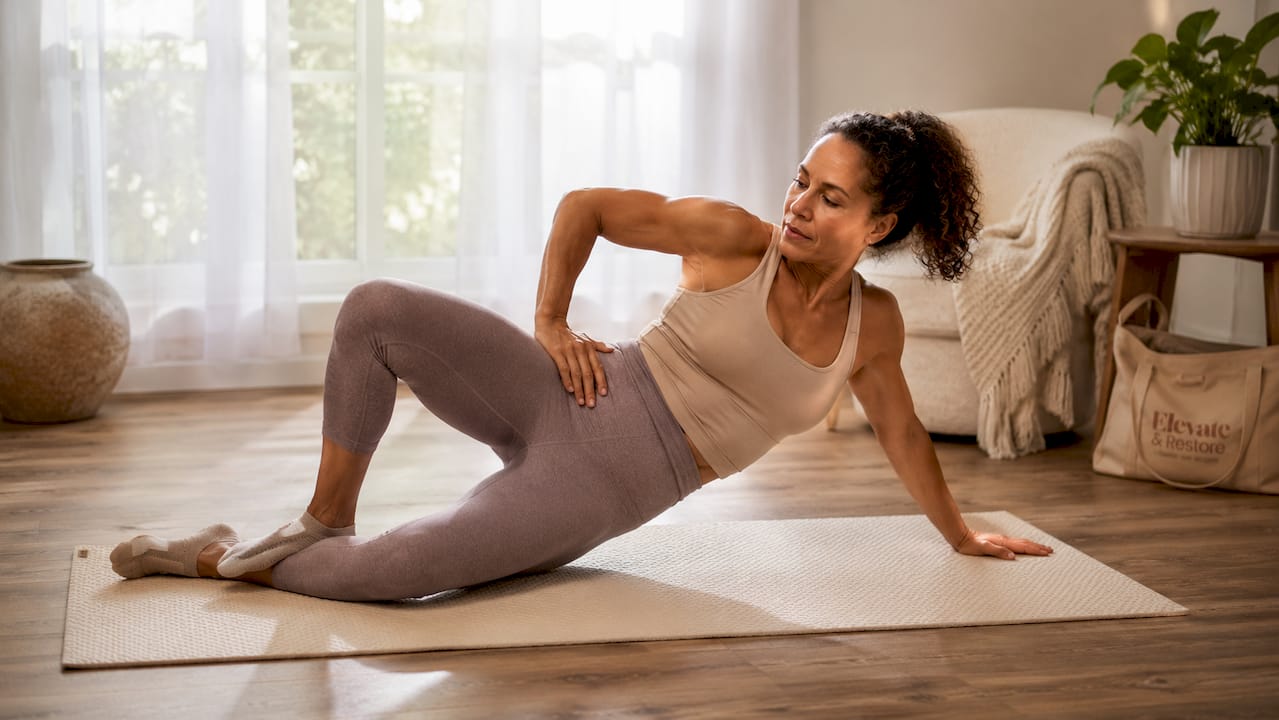
Pro Tip: If you are new to Pilates, focus entirely on neutral spine and breathing for your first four sessions. Getting those two things right creates the foundation for every other technique.
What is the optimal Pilates routine for injury resilience?
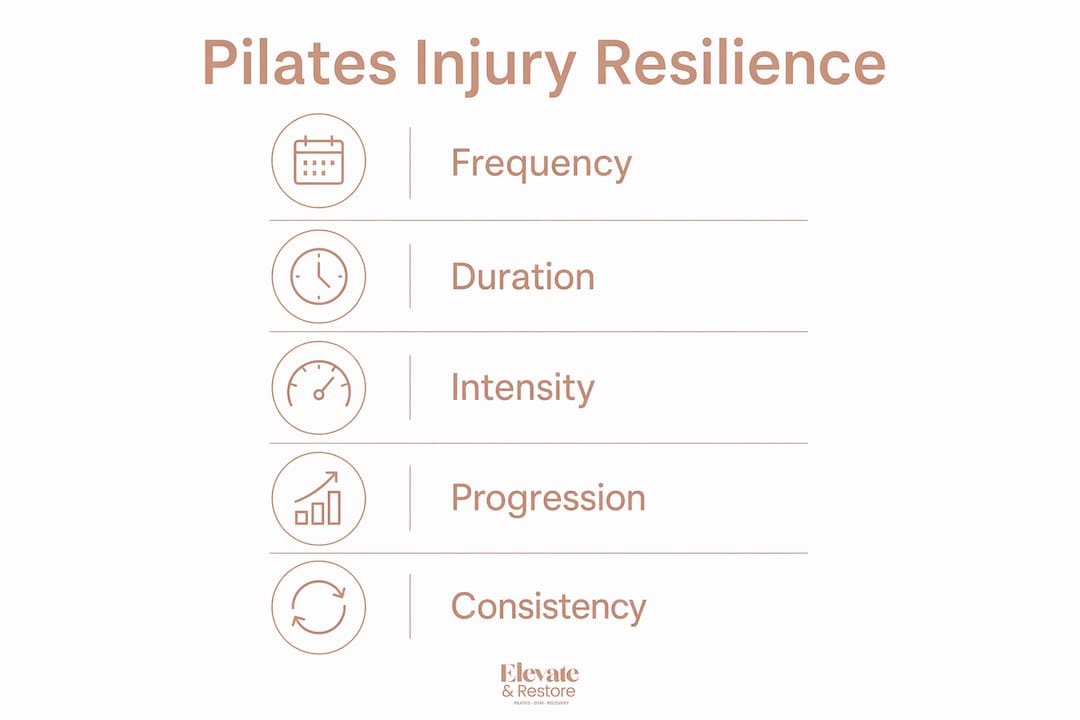
The evidence on training frequency is specific. Protocols using three or more sessions per week, each lasting more than 30 minutes, produce the most significant reductions in injury risk. Doing one class a week produces some benefit, but it does not create the neuromuscular adaptation needed for genuine resilience. Think of it like learning a language. Occasional exposure maintains awareness. Regular practice builds fluency.
Session structure that works
A well-structured Pilates session for injury resilience follows a clear progression:
- Breathwork and body scan (5 minutes): Activate the diaphragm, connect to the pelvic floor, and establish neutral spine. Breathwork in Pilates is not a warm-up ritual. It is the mechanism that activates deep core stabilisers before load is applied.
- Spinal articulation (10 minutes): Segmental rolling, cat-cow variations, and thoracic rotation. This restores joint mobility and identifies stiff or restricted segments before they are loaded.
- Hip and scapular stability work (15 minutes): Clam shells, single-leg bridges, and shoulder blade packing exercises. These address the two most common compensation patterns in women over 30: hip abductor weakness and upper trapezius dominance.
- Functional integration (10 minutes): Exercises that combine core control with limb movement, such as the Pilates hundred, leg circles, or reformer footwork. This is where resilience is actually built.
- Cool-down and release (5 minutes): Gentle hip flexor stretching and thoracic extension over a roller.
Pro Tip: Integrate Pilates into your existing physiotherapy or fitness plan rather than replacing it. Pilates works best as a complement to resistance training and cardio, not as a standalone programme.
The table below summarises the evidence-based parameters for an effective injury resilience programme.
| Parameter | Recommendation |
|---|---|
| Session frequency | 3 or more sessions per week |
| Session duration | More than 30 minutes per session |
| Class size | 6–10 people maximum for adequate instructor feedback |
| Progression timeline | 4 weeks to see clinical improvements in pain and function |
| Integration | Combine with physiotherapy or functional training for best results |
How can Pilates be safely adapted for injury recovery?
Pilates is most effective for chronic lower back pain, non-specific neck pain, and knee osteoarthritis when used as an adjunct within physiotherapy frameworks. Clinical evidence as of 2026 is clear that Pilates works best alongside professional guidance, not as a replacement for it. For women over 30 managing existing injuries, this distinction matters enormously.
A 4-week Pilates programme produces significant improvements in pain levels, sleep quality, quality of life, and disability scores in people with chronic low back pain. That is a meaningful result in a short timeframe. The mechanism is not primarily about changing muscle tone. The same research found no significant changes in erector spinae or rectus abdominis stiffness after four weeks. The benefit comes from improved movement patterns, reduced fear of movement, and better neuromuscular coordination.
Modifications that protect rather than limit
Safe adaptation in Pilates is about precision, not reduction. These principles apply whether you are recovering from an injury or preventing one:
- Respect the pain signal. Pain during an exercise means the load or range exceeds your current capacity. Reduce range before reducing load.
- Prioritise neutral spine over range of motion. A smaller movement performed in neutral is always safer than a larger movement that forces lumbar flattening.
- Watch for compensation patterns. If your hip hikes during a leg raise, your core has lost control. Stop, reset, and reduce the lever arm.
- Progress slowly and deliberately. Moving from basic alignment exercises to intermediate work takes most people 6–8 weeks. Rushing this progression is the most common cause of Pilates-related setbacks.
- Use functional training principles alongside Pilates to build the load tolerance that Pilates alone does not always provide.
"Pilates-based rehabilitation supports core stability and functional mobility across multiple musculoskeletal injury types, used in post-surgical recovery and chronic pain settings to improve strength, reduce pain, and accelerate healing." — Clinical evidence summary, 2026
What are the common mistakes that reduce Pilates effectiveness?
The most damaging mistake in Pilates is misunderstanding spinal positioning. Flattening the lumbar spine feels like "engaging your core" to most beginners. It is not. Lumbar flattening inhibits the multifidus and creates the very instability Pilates is designed to prevent. A qualified instructor can identify this error in seconds. In a large group class, it goes unnoticed for months.
The class size problem
Large classes of 30 or more people limit an instructor's ability to correct form and alignment. Unnoticed compensations accumulate session after session. What starts as a subtle hip hike becomes a habitual movement pattern. That pattern then transfers into daily life and sport. Pilates in small groups of 6–10 people, or in private sessions, gives instructors the visibility to catch these errors early.
Pro Tip: Ask your instructor to watch your neutral spine position specifically during the hundred and single-leg stretch. These two exercises expose the most common alignment errors in beginners.
Other common mistakes include:
- Rushing through exercises. Speed removes the neuromuscular challenge. Slow, controlled movement is the point.
- Skipping breathwork. Breath is the mechanism that activates the deep core. Skipping it means the stabilisers are not engaged when load is applied.
- Inconsistent attendance. Neuromuscular adaptation requires repetition. Attending once a week produces awareness, not resilience.
- Ignoring pain signals. Pain during Pilates is information. Pushing through it without assessment creates injury, not resilience.
Key takeaways
Pilates builds injury resilience by training core stability, neutral spine mechanics, and neuromuscular control at a frequency of three or more sessions per week within small, supervised class settings.
| Point | Details |
|---|---|
| Frequency matters | Three or more sessions per week, each over 30 minutes, produces the strongest injury risk reduction. |
| Neutral spine is non-negotiable | Lumbar flattening inhibits the multifidus and increases spinal injury risk. Neutral spine must be maintained throughout. |
| Small classes produce better outcomes | Groups of 6–10 allow instructors to catch alignment errors before they become injury patterns. |
| Clinical benefits appear quickly | A 4-week programme improves pain, sleep, and quality of life in chronic pain sufferers without requiring changes in muscle tone. |
| Pilates works best as an adjunct | Pair Pilates with physiotherapy or functional training for the most complete injury resilience programme. |
Why I think most women over 30 are underestimating Pilates
Most people come to Pilates after an injury. They arrive cautious, a little sceptical, and expecting something gentle. What surprises them every time is how demanding precise, controlled movement actually is. The first time you hold a single-leg stretch with a truly neutral spine and coordinated breath, you realise your core has been largely absent from your movement life.
What I have seen at Elevateandrestore, working with women in our small group reformer classes, is that the biggest shift is not physical. It is attentional. Pilates teaches you to notice your body. You start catching the hip hike before it happens. You feel the moment your lower back starts to compensate. That awareness carries into everything else you do, from lifting your kids to running to sitting at a desk.
The clinical evidence now backs what practitioners have known for decades. Four weeks of consistent Pilates practice changes how people experience pain, sleep, and movement. That is not a minor outcome. For women over 30 navigating hormonal shifts, reduced connective tissue elasticity, and accumulated movement habits, Pilates is one of the most direct paths to physical longevity available.
The mistake I see most often is treating Pilates as a phase. Something to do while recovering, then abandon when feeling better. The women who get the most from it treat it as a permanent foundation. They do not stop when the pain goes. They continue because they understand that resilience is built through repetition, not recovered through rest.
— Elevate
Pilates at Elevateandrestore: built for injury resilience
Elevateandrestore runs reformer Pilates classes in West Footscray with a maximum of six people per session. That class size is not a marketing point. It is a clinical decision. With six people, instructors can watch every spine, every hip, and every breath pattern in real time.
Classes are structured around the injury prevention principles covered in this article, with progressions designed for women over 30 who want to build genuine physical resilience. After class, the recovery lounge includes sauna, cold plunge, hot tub, and compression boots, giving your body the recovery conditions that make training adaptation possible. If you are ready to build a body that holds up, book your first session at Elevateandrestore in West Footscray.
FAQ
How often should I do Pilates to prevent injuries?
Three or more sessions per week, each lasting more than 30 minutes, produces the most significant reduction in injury risk according to a 2026 meta-analysis of 25 studies. Fewer sessions build awareness but do not create the neuromuscular adaptation needed for genuine resilience.
Can Pilates help with lower back pain?
A 4-week Pilates programme significantly improves pain, sleep quality, and disability levels in people with chronic lower back pain. Clinical evidence supports Pilates as an adjunct within physiotherapy frameworks for lower back, neck, and knee conditions.
What is the most common Pilates technique mistake?
Flattening the lumbar spine instead of maintaining neutral spine is the most common and most damaging error. Lumbar flattening inhibits the multifidus muscle, which is the primary spinal stabiliser, and increases the risk of disc injury.
Is Pilates safe for women recovering from injury?
Pilates is safe and effective for injury recovery when practised in small groups or private sessions with qualified instruction. Large classes reduce instructor visibility and increase the risk of undetected compensation patterns.
How does Pilates differ from regular core exercises?
Pilates combines mobility, strength, and neuromuscular control in every movement, rather than isolating muscles. This approach corrects the alignment errors, mobility restrictions, and poor force transfer patterns that cause most injuries over time.