

Preventive health fitness practices are the daily and weekly habits that protect your body from chronic disease, slow age-related decline, and extend healthy, functional years. The US Department of Health and Human Services recommends at least 150 minutes of moderate-intensity aerobic activity per week, plus two or more days of muscle-strengthening work. Dr Eric Topol, one of the world's leading cardiologists, calls exercise the single best medical intervention for healthy ageing. The good news is that building these habits does not require hours in a gym. It requires a clear plan, the right mix of movement, and a few lifestyle shifts that compound over time.
1. What are the core preventive health fitness practices?
The four pillars of a complete preventive fitness routine are aerobic exercise, strength training, flexibility work, and balance training. Harvard Health identifies these four as the most important exercise types for long-term health. Skipping any one of them leaves a gap that the others cannot fill.
Each pillar serves a distinct purpose:
- Aerobic exercise (brisk walking, cycling, swimming) strengthens your heart, improves lung capacity, and reduces the risk of type 2 diabetes and cardiovascular disease.
- Strength training (resistance bands, free weights, bodyweight exercises) preserves muscle mass and bone density, both of which decline from your 30s onward.
- Flexibility work (static stretching, yoga, Pilates) maintains range of motion, reduces injury risk, and eases the stiffness that builds up from desk-based work.
- Balance training (single-leg stands, heel-to-toe walking, stability exercises) protects against falls and keeps your nervous system sharp. Balance exercises should be tailored with professional input for anyone with a fall risk, using both static and dynamic movements.
Pro Tip: If you are new to strength training, start with two sessions per week using bodyweight movements like squats and push-ups before adding external load. Consistency across all four pillars matters far more than intensity in any single session.
2. How much exercise do you actually need each week?
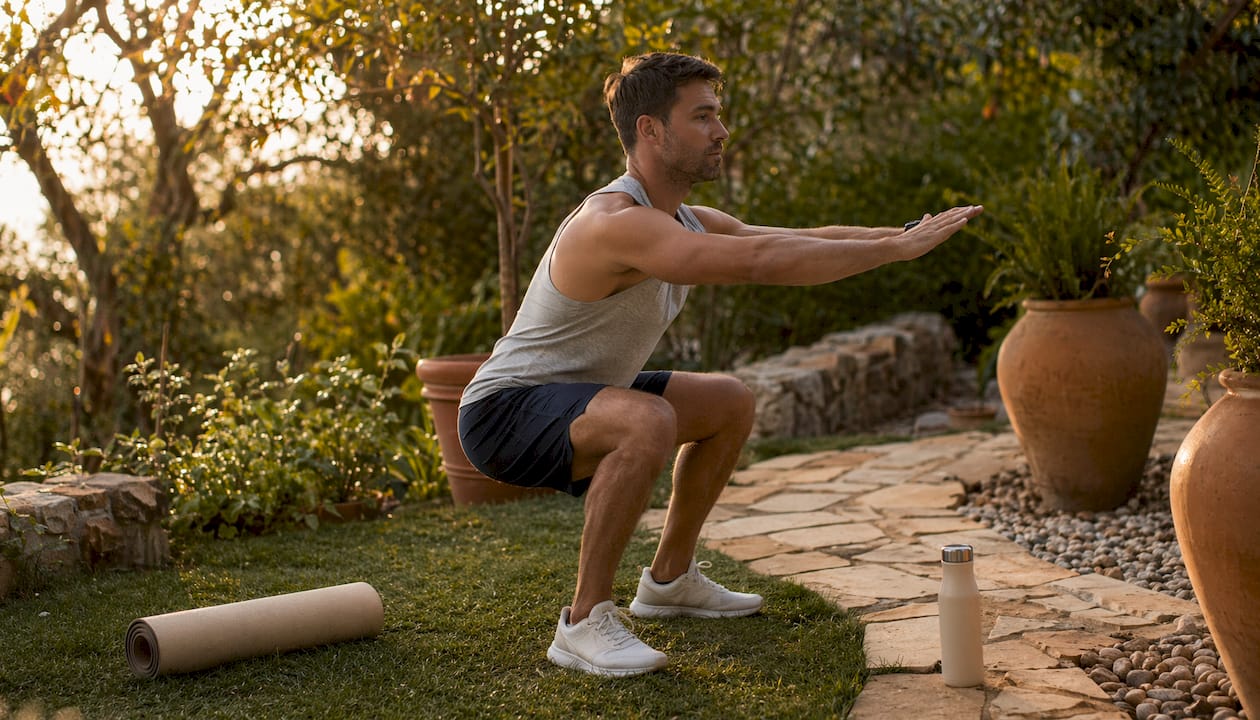
The evidence-based target is 150 minutes of moderate activity or 75 minutes of vigorous activity per week, plus at least two days of muscle-strengthening. That works out to roughly 30 minutes of moderate movement on five days. This is a minimum, not a ceiling.
The good news is that splitting activity into shorter sessions works just as well. Multiple short bouts of exercise throughout the day deliver the same health benefits as one longer session. Three 10-minute walks produce the same cardiovascular benefit as a single 30-minute walk. That single fact removes the most common excuse for skipping exercise on busy days.
3. How lifestyle-integrated movement boosts your fitness
Formal gym sessions alone are not enough for most people. Fewer than half of adults meet physical activity guidelines through leisure-time exercise alone. The gap is filled by lifestyle-integrated movement, which means building activity into the structure of your day rather than treating it as a separate event.
Practical examples include:
- Walking or cycling to work instead of driving
- Taking the stairs instead of the lift
- Holding walking meetings rather than seated ones
- Parking further from your destination
- Doing housework, gardening, or active errands with purpose and pace
Habit stacking is the most reliable method for making these behaviours automatic. You attach a new movement habit to an existing routine, such as doing calf raises while the kettle boils or a five-minute stretch after brushing your teeth. Over weeks, these micro-habits accumulate into meaningful daily activity.
Pro Tip: Making movement the default choice reduces decision fatigue. Lay out your walking shoes the night before, schedule your sessions like appointments, and build healthy defaults into your environment so the easier option is always the active one.
For adults over 30 who spend long hours at a desk, low-impact exercise options like walking, swimming, and reformer Pilates are particularly effective for accumulating daily movement without stressing joints.
4. What nutrition and wellness habits support preventive fitness?
Exercise delivers its full benefit only when supported by the right nutrition, sleep, and stress management. These are not optional extras. They are the foundation that makes your training stick.
Nutrition for adults over 30
The Mediterranean diet pattern, which centres on vegetables, legumes, whole grains, fish, and olive oil, reduces systemic inflammation and supports cardiovascular health. Adults over 40 need 1.0–1.2 grams of protein per kilogram of body weight daily to counteract the muscle loss that accelerates with age. Most Australians eat well below this target. Avoiding ultra-processed foods also reduces inflammation and supports immune function as you age.
Sleep and recovery
Consistent sleep is one of the most underrated health maintenance activities. Going to bed and waking at the same time each day, even on weekends, improves deep sleep quality and accelerates muscle repair after training. Adults who prioritise sleep recover faster, perform better, and maintain healthier body composition over time.
Stress management and social connection
Chronic stress raises cortisol, which breaks down muscle tissue and disrupts sleep. Strong social connections reduce the risk of depression and cognitive decline, two conditions that directly undermine physical fitness motivation. Regular meditation, time in nature, and community-based fitness all serve as practical stress management tools.
Preventive screening
Early health monitoring in your 30s, 40s, and 50s detects chronic risks before they become problems. Blood pressure, blood glucose, cholesterol, and bone density checks give you the data to adjust your fitness and nutrition plan before symptoms appear.
5. Common pitfalls that derail preventive fitness habits
Most people who start a new fitness routine quit within the first few months. The reason is almost always the same: they start too hard, too fast, and without a recovery plan.
-
Starting at full intensity. The walk-first approach works. Begin with short bouts of five minutes multiple times a day, then increase duration before you increase intensity. This prevents injury and builds the habit before the physical challenge escalates.
-
Skipping recovery days. Muscle-strengthening requires at least one full day of rest between sessions for the same muscle group. Skipping recovery does not accelerate progress. It stalls it, and often causes injury.
-
Ignoring progressive overload. Doing the same workout at the same weight for months produces no adaptation. You need to gradually increase load, reps, or complexity to keep improving. Functional training is particularly effective here because it builds strength through movement patterns your body actually uses, reducing injury risk as load increases.
-
All-or-nothing thinking. Missing one session is not a reason to abandon the week. A 10-minute walk on a bad day still counts. Flexibility in execution protects the long-term habit.
-
Neglecting strength training after 40. Many adults over 30 focus on cardio and skip resistance work entirely. This accelerates muscle and bone loss. Two sessions of strength-focused training per week is the minimum needed to maintain lean mass as you age.
Pro Tip: Set a minimum viable session for days when motivation is low. Even five minutes of movement keeps the habit alive. The session you almost skipped is often the one that matters most for long-term consistency.
Key takeaways
The most effective preventive health fitness practices combine all four exercise pillars, lifestyle movement, quality nutrition, and consistent recovery into a sustainable weekly routine.
| Point | Details |
|---|---|
| Four exercise pillars | Aerobic, strength, flexibility, and balance training each serve a distinct purpose and cannot replace one another. |
| Weekly activity target | Aim for 150 minutes of moderate aerobic activity plus two strength sessions per week as a minimum. |
| Lifestyle movement fills the gap | Fewer than half of adults meet guidelines through leisure exercise alone; daily movement habits close the shortfall. |
| Nutrition and sleep are non-negotiable | Adults over 40 need higher protein intake and consistent sleep to support muscle repair and healthy ageing. |
| Start gradually to stay consistent | Short bouts, rest days, and progressive overload prevent the injury and burnout that end most new fitness routines. |
What I have learned coaching adults through preventive fitness
The biggest shift I see at Elevateandrestore is not physical. It is the moment someone stops treating fitness as a punishment and starts treating it as maintenance. That mindset change is what separates people who sustain healthy habits from those who cycle through them.
What surprises most people over 30 is how quickly the body responds when all four pillars are in place. Strength, flexibility, and balance work together in ways that cardio alone never achieves. I have seen people in their 40s and 50s move better than they did at 25, simply because they started training with intention rather than just effort.
The hardest part is not the exercise. It is the recovery. People resist the sauna, the cold plunge, and the rest days because they feel passive. They are not. Recovery is where adaptation happens. The training session creates the stimulus. The recovery session is where the body actually changes.
Community matters more than most fitness advice acknowledges. Training alongside others, even in a small group of six, creates accountability that no app or personal goal can replicate. The social dimension of fitness is not a bonus. It is a retention mechanism.
— Elevate
Elevateandrestore: where preventive fitness becomes a practice
Elevateandrestore is a functional training and Pilates studio in West Footscray built specifically for adults who want to train with purpose and recover properly. Sessions run in small groups of six, which means every person gets real coaching attention, not just a spot in a crowded class.
The reformer Pilates programme builds strength, flexibility, and postural control in a single session, making it one of the most time-efficient preventive fitness tools available for adults over 30. After training, the recovery lounge offers sauna, cold plunge, hot tub, and compression boots to accelerate muscle repair and reduce inflammation. This is preventive health fitness as a complete system, not a collection of disconnected habits.
FAQ
What are preventive health fitness practices?
Preventive health fitness practices are regular exercise, nutrition, sleep, and wellness habits that reduce the risk of chronic disease and support healthy ageing. They include aerobic activity, strength training, flexibility work, and balance exercises, supported by quality nutrition and consistent recovery.
How many days a week should adults over 30 exercise?
Adults should aim for at least five days of moderate aerobic activity totalling 150 minutes per week, plus two days of muscle-strengthening exercises, with at least one rest day between strength sessions for the same muscle group.
Does splitting exercise into short sessions still count?
Multiple short bouts of exercise throughout the day deliver the same health benefits as a single longer session. Three 10-minute walks produce equivalent cardiovascular benefit to one 30-minute walk.
What is the best diet to support preventive fitness after 30?
A Mediterranean-style diet rich in vegetables, legumes, whole grains, fish, and olive oil reduces inflammation and supports heart health. Adults over 40 should also increase protein intake to 1.0–1.2 grams per kilogram of body weight daily to maintain muscle mass.
How does recovery fit into a preventive fitness routine?
Recovery is where physical adaptation actually occurs. Consistent sleep, rest days between strength sessions, and active recovery tools like sauna and cold water immersion all reduce injury risk and improve long-term training outcomes.