
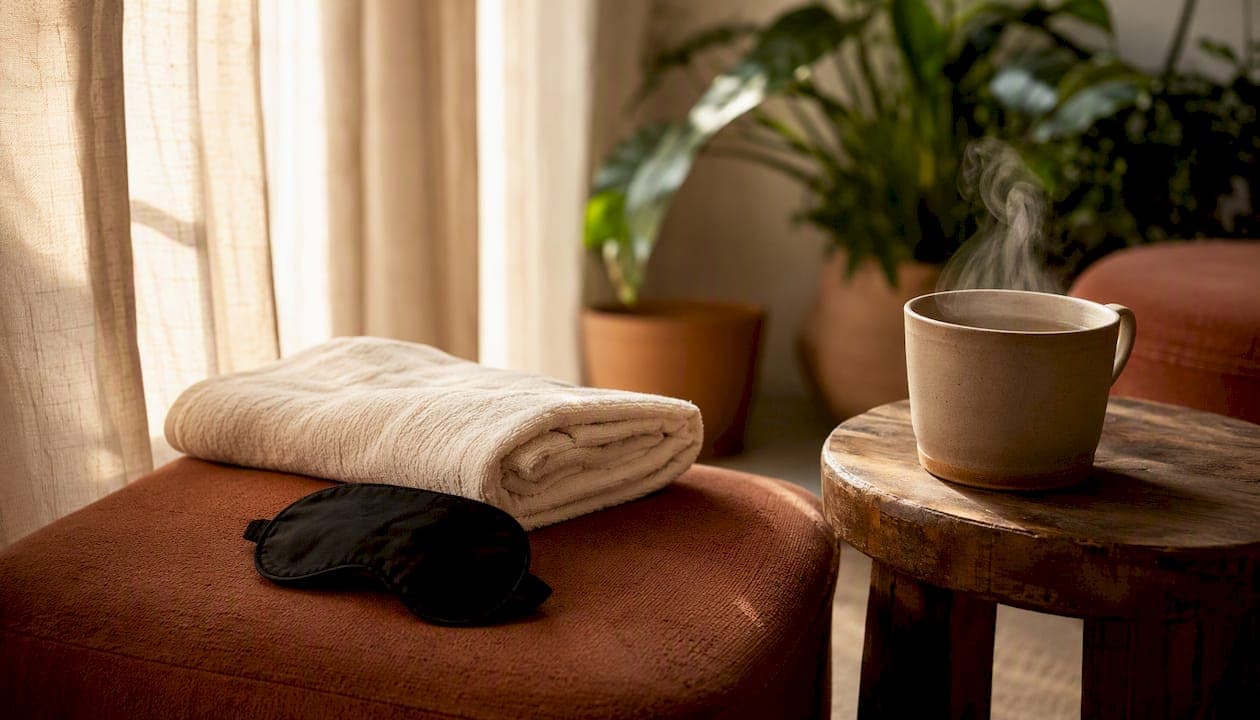
Set a fixed wake time tonight, drop your bedroom to 16–19°C, and block out light completely. That single combination does more for sleep quality and physical recovery than most gadgets on the market. Add a wearable tracker like Oura or Whoop to measure the effect, and consider a structured recovery session at a studio like Elevate & Restore to stack thermoregulation benefits on top.
Tonight's checklist:
- Set tomorrow's alarm for the same time you'll use every day this week
- Cool your bedroom to 16–19°C before bed, using a fan, AC, or cooling mattress pad, as this is the evidence-based range for optimal sleep onset and quality
- Hang blackout curtains or use a sleep mask to eliminate light
- Use earplugs or a white noise source at 50–60 dB to mask ambient noise
- Avoid caffeine after 2 PM and dim overhead lights two hours before bed
- If you trained hard today, consider a warm shower 60–90 minutes before sleep to accelerate body-temperature drop
This week's priority: nail the consistent wake time first. Everything else compounds on top of it, but without a circadian anchor, no tool delivers its full benefit.
Key takeaways
Consistent sleep hygiene and targeted recovery tools produce measurable improvements in physical recovery within one to four weeks, with a fixed wake time and a cooled, darkened bedroom delivering the highest return for the least cost.
| Point | Details |
|---|---|
| Fix your wake time first | A consistent wake time is the most effective circadian anchor, more reliable than any bedtime target. |
| Cool and darken your room | Bedroom temperature of 16–19°C and full blackout are the highest-ROI environmental changes available. |
| Use trackers as trend tools | Oura and Whoop are useful for patterns over weeks; cross-check with a CMJ or soreness rating daily. |
| Time studio modalities carefully | Sauna 2–3 hours before bed; cold plunge in the morning; hot tub 60–90 minutes before bed. |
| Elevate & Restore recovery lounge | Infrared sauna, cold plunge, hot tub, and compression boots, sequenced for sleep-focused recovery in Melbourne. |
Table of Contents
- Why sleep is the most powerful recovery tool you have
- How much sleep do athletes and active adults actually need?
- What sleep hygiene and circadian anchors actually do
- Which recovery tools genuinely support better sleep?
- How studio modalities affect sleep and when to schedule them
- A one-week plan to test your sleep tools
- What the research supports and when to see a clinician
- The Elevate & Restore approach to sleep and recovery
- Recovery sessions that support your sleep, available now
- Sources
Why sleep is the most powerful recovery tool you have
Sports physiologists consider sleep the single most effective physiological and psychological recovery tool available to athletes and active adults. No modality, supplement, or piece of technology replaces what happens in a full night of quality sleep. Understanding the mechanism makes it easier to see why the tools in this article work the way they do.
Sleep is not a single state. It cycles through four stages roughly every 90 minutes:
- N1 (light sleep): transition phase, brief, minimal recovery value on its own
- N2 (light-to-moderate sleep): autonomic restoration, heart rate and body temperature drop, memory consolidation begins
- N3 (deep/slow-wave sleep): the repair stage. Growth hormone is released in its largest daily pulse, cellular repair accelerates, and glycogen stores are replenished in muscle tissue
- REM: skill consolidation, emotional regulation, and cognitive recovery; reaction time and decision-making depend heavily on adequate REM
Most of the first half of the night is weighted toward N3 sleep. The second half tilts toward REM. Cut sleep short and you disproportionately lose REM. Go to bed late and you compress N3. Both matter for recovery and strength gains.
What the research shows: A comprehensive PMC review found that sleep extension improves sprint times, serving accuracy, and reaction time in athletes, and that sleep hygiene interventions produce measurable performance gains across cognitive and physical tasks.
Poor sleep cuts in the other direction just as sharply. Reaction time degrades, perceived exertion rises for the same workload, and muscle protein synthesis slows. For anyone training more than three sessions per week, chronic short sleep is one of the most consistent performance limiters.
How much sleep do athletes and active adults actually need?
Most active adults need 7–9 hours per night to complete four to five full 90-minute sleep cycles. Athletes in heavy training blocks often sit at the upper end of that range or beyond. The key number is cycles, not just hours: four cycles gives you roughly two rounds of N3 and two of REM; five cycles adds a third REM period, which is where much of the cognitive and skill-based recovery happens.
Nap guidance:
- A 20–30 minute nap in the early afternoon can restore alertness and reaction time without causing sleep inertia.
- Keep naps under 30 minutes to avoid entering N3, which produces grogginess on waking
- Avoid napping after 4 PM as it delays nighttime sleep onset and fragments the following night
Timeline: when will you notice a difference?
- Night 1: subjective sleep quality often improves immediately with environmental changes (cooling, blackout, noise masking)
- Week 1: resting heart rate typically stabilises, perceived soreness decreases, and mood improves noticeably
- Weeks 2–4: measurable gains in reaction time, countermovement jump (CMJ) height, and training output become apparent
Sleep extension protocols produce measurable performance gains in athletes, but the research also notes that benefits can decay without ongoing reinforcement. A one-week trial typically allows you to feel the difference; maintaining the habit is the harder and more important task.
For active adults over 30, recovery timelines can run slightly longer. The recovery methods guide for strength training after 30 covers how adaptation slows with age and why sleep quality matters even more in that context.
What sleep hygiene and circadian anchors actually do
Before spending money on tools, get the behaviours right. They are free, they work, and they make every tool more effective.
Morning habits:
- Wake at the same time every day, including weekends. This is the single most effective circadian anchor, more reliable than any bedtime target
- Get bright outdoor light within 30 minutes of waking. Even five minutes outside on a cloudy Melbourne morning is enough to set your cortisol peak and anchor your circadian clock
- Pair your wake time with a short movement ritual (a walk, five minutes of mobility) to reinforce the cue
Evening habits:
- Dim overhead lights two hours before bed. Bright overhead lighting suppresses melatonin production; use lamps or warm-toned lighting instead
- Avoid caffeine after 2 PM. Caffeine's half-life lasts approximately five to six hours, so a 3 PM coffee can still have stimulant effects at 8 PM.
- Keep screens at arm's length or use blue-light filtering after 8 PM
- Cool the room before you get into bed, not after you're already lying there
For athletes specifically:
- Evening training sessions raise core body temperature and cortisol. Allow at least 90 minutes between a hard session and bed
- A warm shower or bath 60–90 minutes before bed triggers a thermoregulatory response: body temperature rises briefly, then drops sharply, accelerating sleep onset
- Avoid large meals within two hours of sleep, but a small casein-rich snack (cottage cheese, Greek yoghurt) can support overnight muscle protein synthesis
Pro Tip: Tie your wake time to a non-negotiable external cue, not just an alarm. Walking outside to get the letterbox, making coffee on the balcony, or doing five minutes of stretching by a window all reinforce the habit and add light exposure simultaneously. The circadian rhythm and fitness guide covers how to align training timing with your body clock for compounding benefit.
A narrative review in Current Sleep Medicine Reports confirms that a consistent wake time anchors the circadian rhythm more effectively than enforcing a fixed bedtime, and that individualised approaches outperform universal prescriptions.
Which recovery tools genuinely support better sleep?
The honest answer is that environmental control often delivers higher returns than complex trackers alone. Start cheap, add complexity only when you have a baseline to measure against.
Environmental tools (low cost, high ROI)
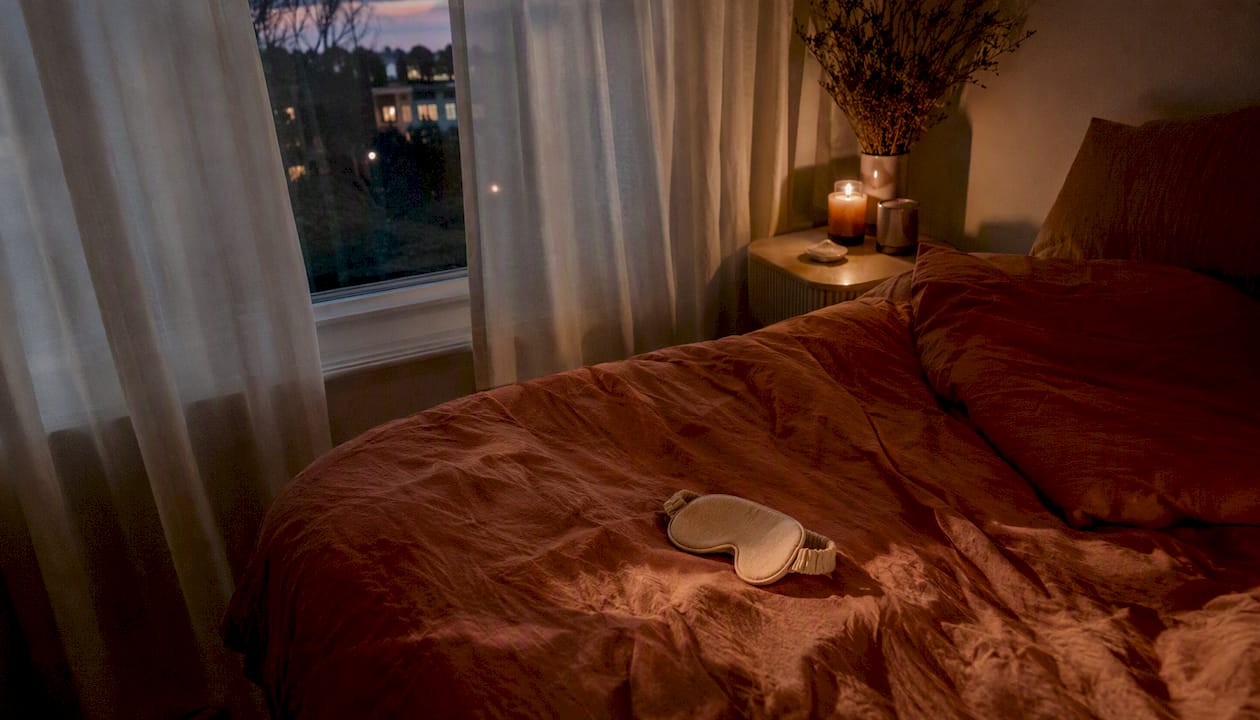
Blackout curtains or a sleep mask are the single most cost-effective sleep aid available. Light at any intensity suppresses melatonin and fragments sleep architecture. A quality set of blackout curtains in Australia is affordable; a contoured sleep mask is a lower-cost alternative.
Earplugs or white noise. Environmental noise above roughly 50 dB causes microarousals, many of which you won't consciously remember but which degrade sleep quality measurably. Foam earplugs (under $10) reduce noise by 25–33 dB. A white noise machine or app running at 50–60 dB masks variable ambient noise effectively. Both work; the choice is personal.
Cooling mattress pads. Core body temperature needs to fall approximately 1–2°C to initiate and maintain sleep. A cooling pad or a breathable wool/bamboo mattress topper supports this passively. Cooling mattress pads range from moderately priced options to higher-end premium water-cooled systems.
Weighted blankets (around 7–12% of body weight) have a modest evidence base for reducing anxiety and improving sleep onset, particularly for people who find the pressure calming. The evidence is not strong enough to recommend them universally, but for the right person they are a low-risk addition.
Wearables and trackers
Oura (ring form factor) and Whoop (wristband with subscription) are the two most widely used consumer sleep trackers among athletes and active adults in Australia. Both estimate sleep stages, resting heart rate, HRV, and readiness scores. Oura typically costs several hundred dollars for the hardware; Whoop operates on a subscription model with monthly fees and no upfront hardware cost.
What they do well: trend tracking over weeks, flagging nights where recovery was genuinely poor, and making the abstract (sleep quality) concrete enough to act on.
What they don't do well: consumer wearable sleep metrics should be cross-checked with objective neuromuscular readiness tests like CMJ because subjective readiness scores and actual physical performance can diverge significantly. A green readiness score does not mean you're ready to max out; a red score doesn't always mean you should skip training.
Pro Tip: Use your tracker's trend data over a minimum of two weeks before drawing conclusions. A single night's data is noise; a pattern is signal. The most useful metric for athletes is HRV trend, not a single-day readiness score.
Supplements with evidence
On supplements: the evidence base varies considerably. Prioritise behaviour and environment first. Supplements are a marginal gain, not a foundation.
Low-dose melatonin (0.5–1 mg) taken 30–60 minutes before the target sleep time is effective for sleep onset, particularly for shift workers, travellers, or anyone whose schedule has shifted. Higher commercial doses (3–10 mg) can unpredictably phase-shift circadian timing and cause next-day grogginess. Stick to physiological-range doses.
Magnesium glycinate or threonate (200–400 mg) has a reasonable evidence base for reducing sleep onset latency and improving subjective sleep quality. It is well-tolerated and low-risk for most adults.
Tart cherry juice or concentrate contains naturally occurring melatonin precursors and has shown modest benefits for sleep duration and muscle soreness recovery in small trials. Not a primary intervention, but a low-risk addition for athletes.
Pre-sleep casein protein (20–40 g from cottage cheese, Greek yoghurt, or a casein powder) sustains overnight muscle protein synthesis and is one of the most consistently supported nutritional strategies for overnight recovery. This is not a sleep aid per se, but it works during the sleep window.
Note: melatonin is available over the counter in Australia in doses up to 2 mg. Higher doses require a prescription. Always check with a GP or pharmacist before adding supplements, particularly if you take other medications.
For a broader look at how tension relief techniques support sleep quality, including breathing and relaxation approaches, that guide covers practical pre-sleep wind-down strategies.
How studio modalities affect sleep and when to schedule them
Infrared sauna, cold plunge, hot tub, and compression boots each interact with sleep physiology in distinct ways. Timing matters as much as the modality itself.
Infrared sauna
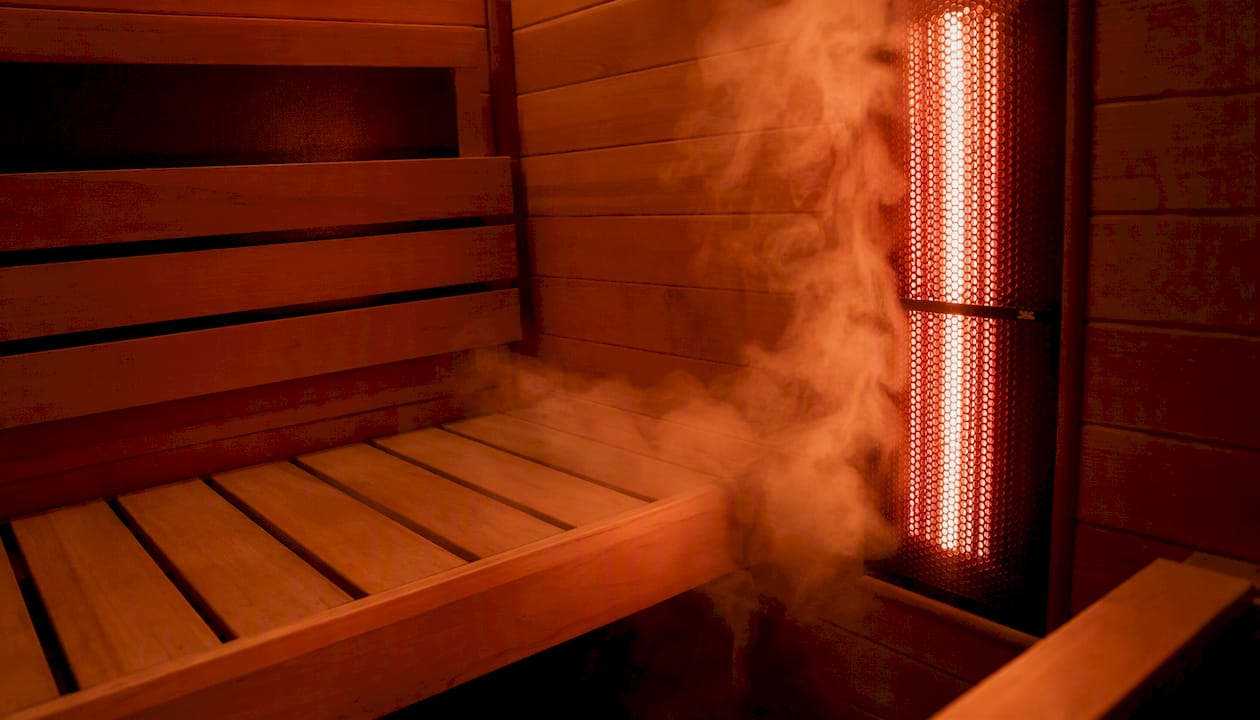
Sauna raises core body temperature significantly. The subsequent cooling phase, which begins 30–60 minutes after the session ends, mirrors the thermoregulatory drop that initiates sleep. Used 2–3 hours before bed, a sauna session can accelerate sleep onset and increase slow-wave sleep depth. Used within 90 minutes of bed, the residual heat elevation can delay sleep onset instead.
For strength and conditioning athletes, the sauna recovery guide covers how to sequence sessions around training loads.
Cold plunge
Cold water immersion reduces acute inflammation and muscle soreness, which supports recovery. The catch for sleep is that cold exposure activates the sympathetic nervous system, raising alertness and cortisol transiently. Done in the morning or early afternoon, this is a feature. Done within two hours of bed, it can delay sleep onset for some people.
The practical rule: cold plunge before sauna in a contrast protocol, and finish the full session at least two hours before your target sleep time.
Hot tub
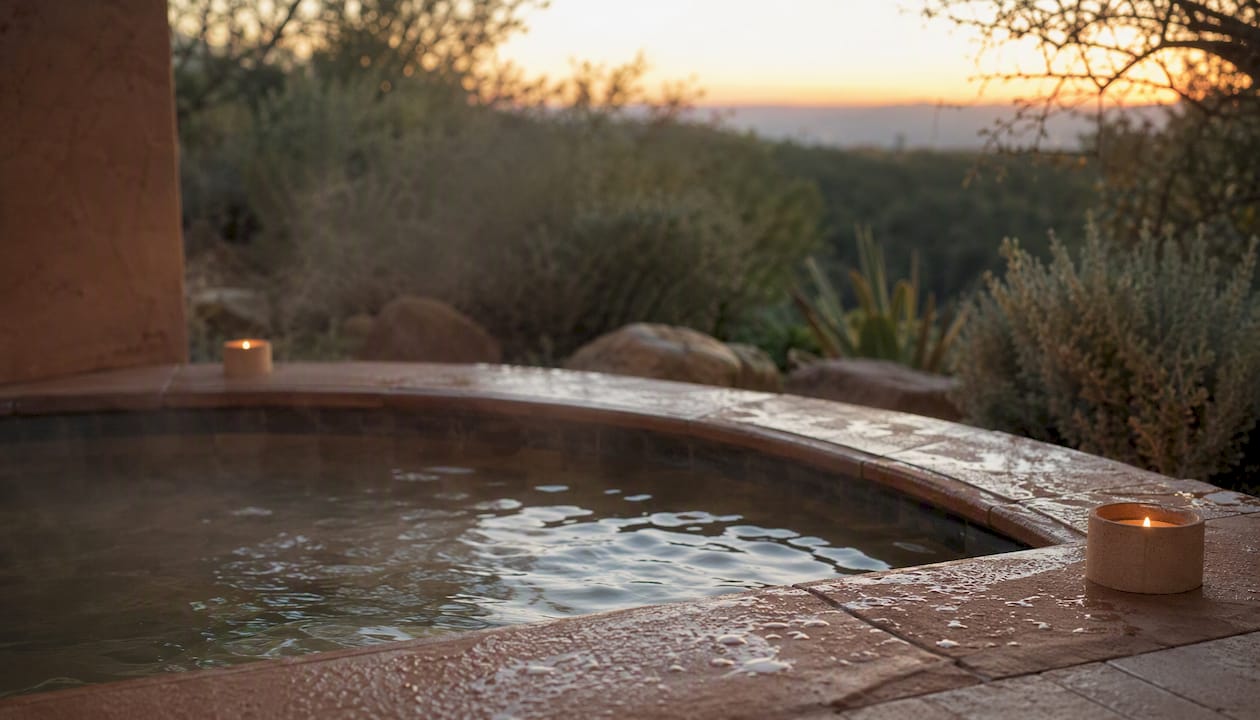
A hot tub session functions similarly to a warm bath: it raises peripheral temperature, then the cooling that follows promotes sleep onset. The thermoregulation research supports a warm soak 60–90 minutes before bed as one of the more reliable pre-sleep interventions. At Elevate & Restore, the hot tub is available as part of the recovery lounge sequence and works well as a final step before heading home for the evening.
Compression boots
Pneumatic compression (NormaTec-style boots) improves venous return and reduces lower-limb swelling and soreness after training. There is no direct stimulant effect on the nervous system, making compression one of the few modalities that can be used close to bedtime without disrupting sleep onset. A 20–30 minute session post-training or in the early evening is practical and well-tolerated.
Timing summary: sauna 2–3 hours before bed; cold plunge in the morning or early afternoon; hot tub 60–90 minutes before bed; compression boots any time, including early evening.
Pro Tip: For evening training athletes, the most effective studio sequence is: training → compression boots (20–30 min) → cold plunge → sauna → hot tub → home. This sequences the activating modalities first and the warming/cooling modalities last, so you arrive home in the thermoregulatory window that supports sleep onset.
Safety screening. Before using cold plunge or sauna, anyone with cardiovascular disease, uncontrolled hypertension, or a history of syncope should consult their GP first. Cold plunge is contraindicated in pregnancy. If you feel dizzy, nauseous, or experience chest discomfort during any modality, exit immediately and seek medical advice.
A one-week plan to test your sleep tools
The goal of this plan is to isolate variables so you know what's actually working. Change one thing at a time, keep your wake time fixed, and track the same metrics each day.
Days 1–7: daily structure
- Wake time: same time every day, no exceptions, including weekends
- Morning: 5–10 minutes of outdoor light within 30 minutes of waking
- Afternoon: no caffeine after 2 PM; nap only between 1–3 PM if needed (20–30 minutes maximum)
- Evening: dim lights by 8 PM; cool bedroom to 16–19°C before bed; blackout and noise masking in place
- Tool trial: introduce one new tool on Day 1 (e.g., cooling pad or white noise) and keep it consistent for the full week before adding another
- Bedtime window: aim for the same 30-minute window each night, but do not force it if you are not sleepy
Pro Tip: Keep a simple notes app entry each morning: one number for sleep quality (1–10), one for soreness (1–10), and one for energy (1–10). Three numbers, 30 seconds. That is enough data to see a pattern by Day 7.
Tracking table
| Metric | How to measure | Target direction |
|---|---|---|
| Subjective sleep score | Self-rated 1–10 on waking | Trending upward by Day 4–5 |
| Sleep duration | Wearable or phone app | Approaching 7–9 hours |
| Resting HR | Wearable (morning) | Stable or declining |
| HRV | Oura or Whoop (morning) | Stable or trending up |
| CMJ or hop test | Max effort standing jump, note height or feel | Consistent or improving |
| Perceived soreness | Self-rated 1–10 | Declining by Day 3–5 |
At the end of the week, compare Day 1–2 averages with Day 6–7 averages across each metric. If two or more metrics improved, the tool is earning its place. If nothing shifted, the variable you changed is not the limiting factor for you. Move to the next one.
For guidance on how to structure recovery days within a training week, the active recovery day guide covers how to plan rest and light activity without undermining adaptation.
What the research supports and when to see a clinician
The evidence base for sleep and physical recovery is stronger than for almost any other recovery intervention. A few claims are well-supported; others are more tentative.
Well-supported:
- Sleep extension improves sprint times, accuracy, and reaction time in athletes (multiple controlled studies, PMC review)
- A consistent wake time is a highly effective circadian anchor, more reliable than a fixed bedtime alone
- Bedroom cooling to 16–19°C and pre-bed warming strategies improve sleep onset and quality
- Short naps of 20–30 minutes between 1–3 PM restore alertness without disrupting nighttime sleep
- Low-dose melatonin (0.5–1 mg) is effective for sleep onset with fewer side effects than higher doses
Tentative or limited evidence:
- Weighted blankets: modest benefit for anxiety-related sleep disruption; not universally effective
- Tart cherry: small trials, promising signal, not yet definitive
- Consumer tracker accuracy: useful for trends, but wearable sleep metrics diverge from objective neuromuscular readiness and should not replace performance testing
On inter-individual variability: sleep responses to tools vary considerably between people. What produces a clear HRV improvement in one athlete may do nothing for another. The one-week trial plan above exists precisely because no universal prescription works for everyone.
When to see a GP or sleep clinic:
- Loud snoring, gasping, or witnessed breathing pauses during sleep (possible sleep apnoea)
- Persistent insomnia (difficulty falling or staying asleep more than three nights per week for more than three weeks) despite consistent sleep hygiene
- Excessive daytime sleepiness that does not resolve with adequate nighttime sleep
- Syncope or near-fainting during cold plunge or sauna
- Restless legs, frequent night waking, or sleep that never feels restorative
This article provides general information only and is not a substitute for professional medical advice. If you have concerns about your sleep or health, consult a GP or accredited sleep clinician.
The Elevate & Restore approach to sleep and recovery
At Elevate & Restore, the recovery hub is not a standalone add-on. It is sequenced deliberately around the training schedule, particularly for clients who train in the evening and need to protect their sleep window.
The studio's small-group format (maximum six people per session) means the transition from training to recovery is unhurried. Evening clients typically move from a Pilates or functional training class into compression boots, then through a contrast protocol (cold plunge followed by infrared sauna), finishing with the hot tub before heading home. That sequence takes roughly 45–60 minutes and is timed to end at least 90 minutes before the client's target sleep time.
The team consistently observes that clients who use the recovery lounge two to three times per week alongside their training report lower perceived soreness by mid-week and describe sleeping more soundly on training nights compared with nights they skip recovery. These are subjective observations, not clinical outcomes, but they align with what the thermoregulation and contrast therapy research would predict.
One practical note from the studio floor: the clients who see the most consistent benefit are those who treat recovery sessions as a fixed weekly ritual rather than an optional extra. Sleep and recovery improvements from tools and modalities tend to decay without ongoing reinforcement. Scheduling a recovery session the same way you schedule a class is the simplest way to maintain the habit.
Recovery sessions that support your sleep, available now
Sleep-focused recovery is not something you have to piece together alone. Elevate & Restore's recovery lounge in Melbourne gives you access to infrared sauna, cold plunge, hot tub, and compression boots in a single session, sequenced to support thermoregulation and sleep quality rather than just tick boxes.
Unlike a gym with a spa tacked on, the recovery hub at Elevate & Restore is built around the physiology covered in this article: the contrast protocol, the cooling window, the timing relative to training. First-time visitors receive a brief screening and timing recommendation so the session works with your sleep schedule, not against it. Sessions run approximately 45–60 minutes. Memberships, class packs, and casual bookings are all available.
If you want to pair recovery with training, small-group reformer Pilates classes run alongside the recovery hub, with a maximum of six people per class. Book a recovery session or a class at Elevateandrestore and arrive knowing exactly what to expect.
Sources
The recommendations in this article draw on peer-reviewed research and practitioner guidance. The distinction matters: controlled studies and systematic reviews carry more weight than product reviews or editorial roundups. Both types appear below, labelled accordingly.
Peer-reviewed research and clinical reviews:
- Sleep Hygiene for Optimizing Recovery in Athletes: Review and Recommendations - PMC
- How to Enhance Sleep for Athletes? A Narrative Review of Sleep Hygiene and Sleep Extension Practices | Current Sleep Medicine Reports | Springer Nature Link
- Best Sleep Tech 2026 - Forbes Vetted
- Sleep Better for Training Recovery: 7 Strategies | PoinT GO | PoinT GO Research
- Pmc
Practitioner and evidence-informed guidance: