
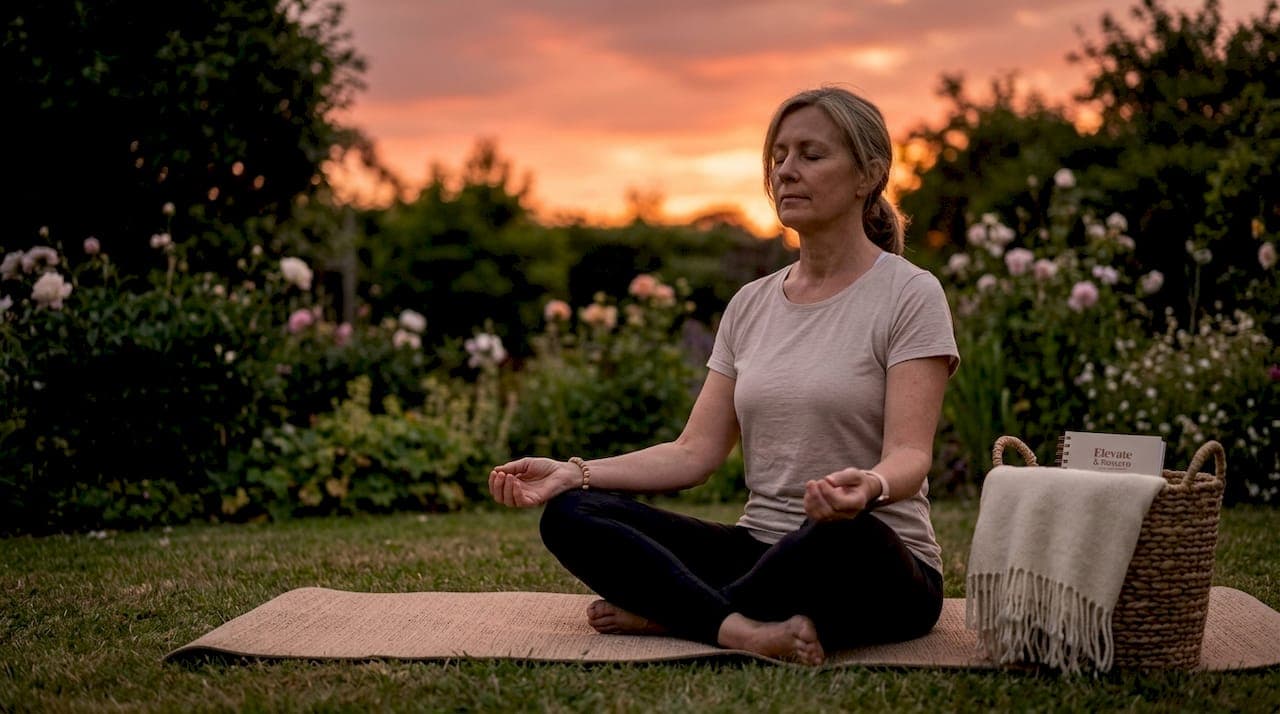
Breathing techniques are controlled respiratory practices that directly activate the parasympathetic nervous system to trigger rest, repair, and regeneration. This is the core reason why breathing techniques improve recovery from physical stress. When you slow your breath deliberately, you stimulate the vagus nerve, suppress cortisol output, and reduce inflammatory markers like IL-1β. These are not subtle effects. A 2026 randomised controlled trial on 22 athletes found that coherent breathing at 6 breaths per minute produced significant improvements in RMSSD (a key measure of parasympathetic activity), cortisol, and sleep quality within 8 days. Elevateandrestore integrates breathwork into its recovery programme precisely because the physiology is this clear.
Why breathing techniques improve recovery: the physiology
Controlled breathing shifts your autonomic nervous system from sympathetic (fight-or-flight) to parasympathetic (rest-and-repair) mode. This shift is the foundation of every recovery benefit breathwork produces.
The primary pathway runs through the vagus nerve. Extended exhalations activate the vagus nerve, pulling the nervous system out of high-alert and into the repair state your body needs after hard training or surgery. That repair state is where protein synthesis, hormonal regulation, and tissue healing actually happen.
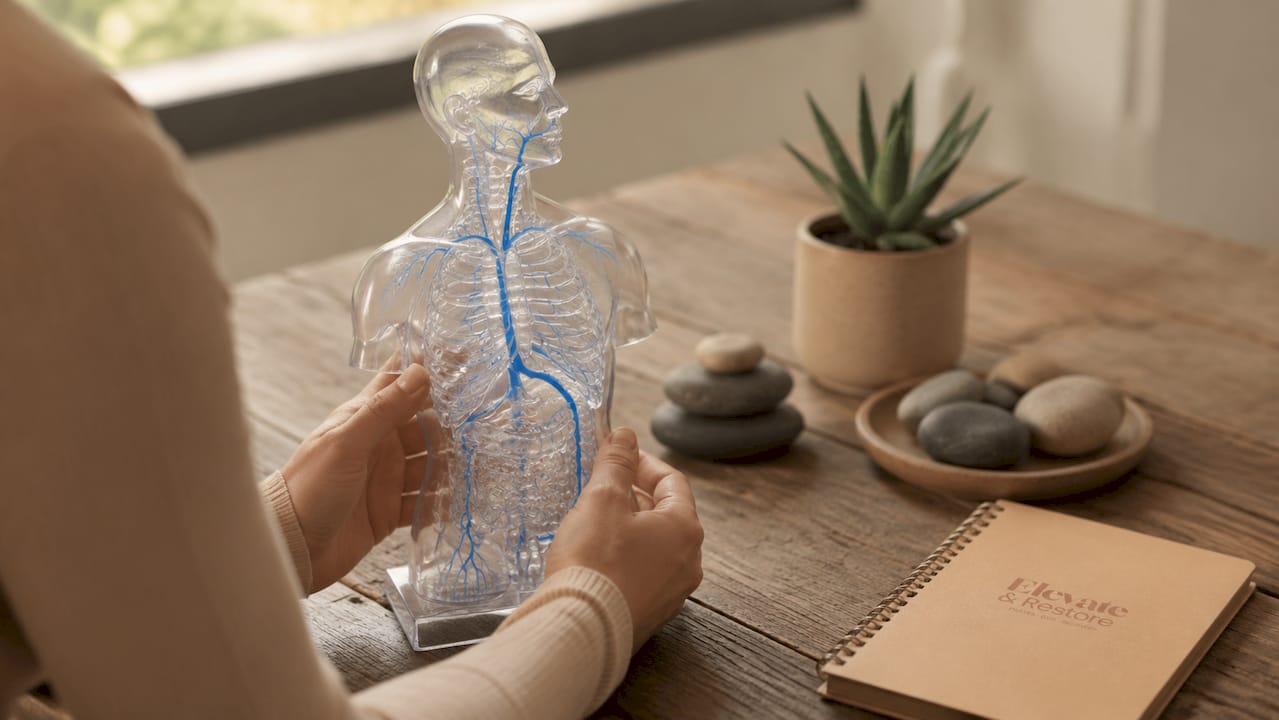
The second pathway involves the hypothalamic-pituitary-adrenal (HPA) axis. Slow, deliberate breathing suppresses HPA activity, which reduces cortisol. Lower cortisol means less catabolic stress on muscle tissue and a better environment for recovery. The 2026 coherent breathing trial confirmed this with a p<0.01 result for cortisol stabilisation across 8 days of practice.
Oxygen delivery is the third mechanism. The Active Cycle of Breathing Technique (ACBT) increases arterial oxygen saturation significantly in post-surgical patients, with p<0.001 across multiple sessions. Better oxygen saturation means more fuel for cellular repair and faster clearance of metabolic waste.
Pro Tip: Prioritise the exhale. A longer out-breath compared to your in-breath is the fastest way to activate parasympathetic mode. Try a 4-count inhale and a 6-count exhale as your starting point.
| Physiological marker | Before breathing intervention | After breathing intervention |
|---|---|---|
| RMSSD (parasympathetic activity) | Low | Significantly increased (p<0.01) |
| Cortisol | Elevated | Stabilised (p<0.01) |
| IL-1β (inflammatory marker) | Elevated | Reduced (p<0.05) |
| Arterial oxygen saturation | Reduced post-surgery | Significantly increased (p<0.001) |
| Sleep quality | Poor | Improved (p<0.01) |
What does recent research say about specific techniques?
The evidence base for breathwork in recovery has grown sharply. Multiple 2026 randomised controlled trials now confirm benefits across very different populations, from elite athletes to post-surgical patients.
Here is what the research shows for each major technique:
- Coherent breathing (6 breaths per minute): In 22 athletes over 8 days, this technique improved RMSSD, cortisol, IL-1β, and sleep quality with p<0.01 for the primary markers. This is the most studied rhythm-based method for athletic recovery.
- Pranayama (yoga-based breathing): Practised twice daily before and after colorectal surgery in 80 adult patients, pranayama reduced fatigue and improved sleep quality with p=.012 and p=.033 respectively. The effect held even in a high-stress surgical context.
- Box breathing and prolonged exhalation: Tested in 66 participants before an acute stress task, both techniques attenuated heart rate, state anxiety, and salivary alpha-amylase compared to normal breathing, with p values below 0.05. Salivary alpha-amylase is a direct marker of sympathetic nervous system activation.
- Active Cycle of Breathing Technique (ACBT): In post-cardiac surgery patients, ACBT reduced pain and anxiety significantly (p<0.01) and raised arterial oxygen saturation (p<0.001). This makes it particularly relevant for anyone recovering from injury or procedure.
The pattern across all four techniques is consistent. Slower, more controlled breathing reduces stress markers, improves oxygenation, and supports sleep. The specific mechanism varies by technique, but the direction of effect does not.
Slow breathing works similarly to mindfulness meditation by regulating autonomic responses and overriding stress-triggered rapid respiration. This means the benefits of breathwork are not limited to physical recovery. They extend to mental and emotional recovery as well.
How do different breathing techniques compare for recovery?
Not all breathing techniques target the same pathway. Choosing the right method depends on what your body needs at a given point in recovery.
Rhythm-focused techniques like coherent breathing and box breathing work primarily through autonomic nervous system regulation. They slow your respiratory rate to around 0.1 Hz, which is the frequency that produces the strongest vagal response. These are your best tools for post-exercise recovery, pre-sleep wind-down, and managing acute stress before a competition or procedure.
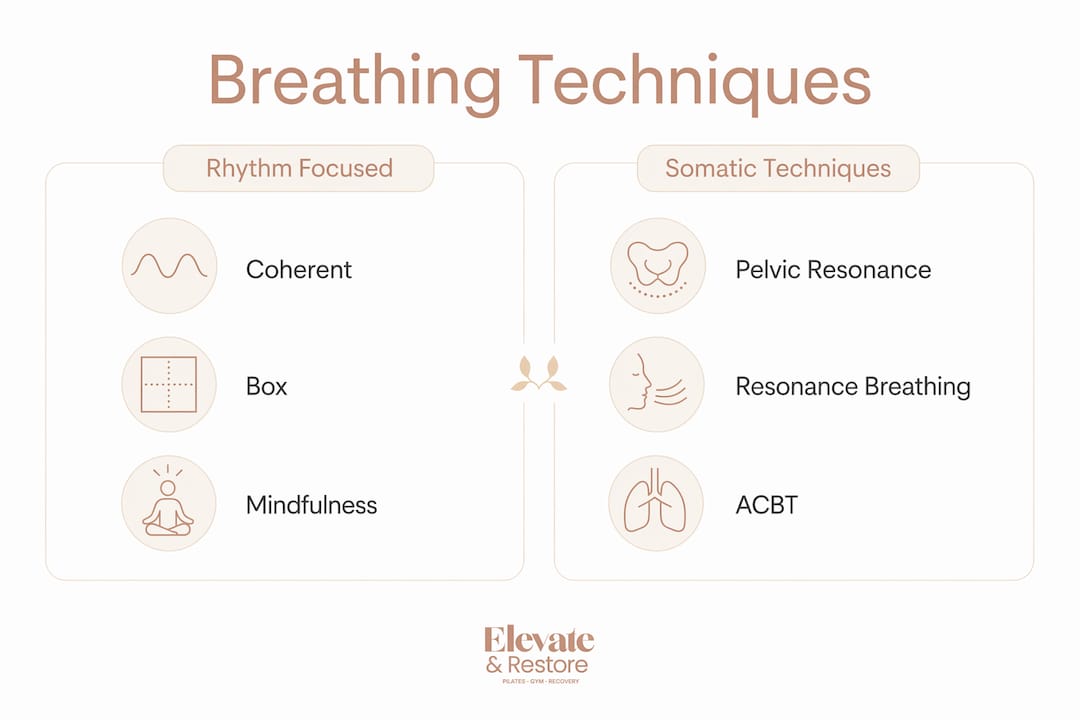
Somatic techniques like Pelvic Floor Resonance Breathing (PRB) target distinct pathways compared to standard Resonance Breathing (RB). Different breathwork practices activate unique physiological mechanisms, meaning there is no single technique that covers every recovery need. PRB adds a musculoskeletal and pelvic floor dimension that rhythm-only methods miss.
| Technique | Primary target | Ideal use case |
|---|---|---|
| Coherent breathing | Autonomic regulation, cortisol, sleep | Athletic recovery, 8+ day programmes |
| Box breathing | Acute stress reduction, heart rate | Pre-competition, pre-procedure, stress spikes |
| Prolonged exhalation | Vagal activation, sympathetic suppression | Post-exercise, pre-sleep |
| Pranayama | Fatigue, sleep quality, self-efficacy | Perioperative care, chronic fatigue |
| ACBT | Oxygen saturation, pain, anxiety | Post-surgical, respiratory recovery |
| Pelvic Floor Resonance Breathing | Musculoskeletal and somatic recovery | Pelvic health, injury rehabilitation |
Combining techniques addresses more recovery pathways than any single method alone. A practical approach is to use box breathing or prolonged exhalation immediately after training, then transition to coherent breathing or pranayama in the 30 minutes before sleep.
Pro Tip: Never practise breathwork when you are rushed or distracted. Anxious or hurried breathing activates the sympathetic system and cancels the recovery effect entirely. Give yourself a minimum of 5 minutes in a seated or lying position before you begin.
How can you integrate breathwork into your recovery routine?
Consistency matters more than complexity. You do not need an elaborate programme to get measurable results from breathing exercises for healing.
- Start post-exercise. The 10–20 minutes after training is when your nervous system is most primed to benefit from a parasympathetic shift. Spend 5–10 minutes on coherent breathing or prolonged exhalation immediately after your session. This is also the window where recovery methods for strength training benefit most from breathwork support.
- Use box breathing for stress spikes. When you feel acute stress before a hard session, a presentation, or a medical procedure, 4–6 rounds of box breathing (4 counts in, 4 hold, 4 out, 4 hold) will measurably reduce heart rate and anxiety within minutes.
- Build a pre-sleep routine. Pranayama or coherent breathing for 5–10 minutes before bed improves sleep quality, which is the single most important recovery variable. Poor sleep undoes every other recovery effort.
- Layer breathwork with other recovery tools. Breathwork is a force-multiplier, not a replacement. Consistent breathing practice re-wires nervous system baseline when it sits alongside adequate nutrition, sleep, and physical recovery methods like heat, cold, and compression.
- Progress gradually. Begin with 6 breaths per minute coherent breathing for 5 minutes daily. Add duration before adding complexity. Once that feels natural, introduce box breathing or pranayama as a second daily session.
Pro Tip: Set a recurring 5-minute block in your calendar immediately after your training sessions. Habit stacking breathwork onto an existing routine is the most reliable way to make it stick.
The importance of breathwork in recovery is not that it replaces sleep or nutrition. It is that it makes both more effective by lowering the physiological cost of stress. Controlled breathing calms the nervous system and lowers stress hormones, which creates the conditions where every other recovery input works better. For anyone exploring types of breathwork fitness classes, understanding this mechanism first makes the practice far more purposeful.
Key takeaways
Breathing techniques improve recovery because they activate the parasympathetic nervous system, reduce cortisol and inflammation, and improve oxygen delivery, making every other recovery input more effective.
| Point | Details |
|---|---|
| Parasympathetic activation | Extended exhales stimulate the vagus nerve, shifting the body into repair mode after physical stress. |
| Cortisol and inflammation | Coherent breathing at 6 breaths per minute reduces cortisol and IL-1β within 8 days of consistent practice. |
| Oxygen saturation | ACBT significantly raises arterial oxygen saturation, supporting cellular repair and pain reduction post-surgery. |
| Technique selection matters | Rhythm-based methods suit autonomic recovery; somatic techniques like PRB address musculoskeletal pathways. |
| Breathwork as a force-multiplier | Consistent practice re-wires autonomic baseline and amplifies the benefits of sleep, nutrition, and physical recovery. |
The recovery tool hiding in plain sight
At Elevateandrestore, we see people invest heavily in cold plunges, saunas, and compression boots, and then completely overlook the one tool they carry everywhere: their breath. That gap surprises me every time.
The research is not ambiguous. Breathing is a physiological master switch. It signals safety to the brain and activates the repair processes that every other recovery method depends on. When you skip breathwork, you are leaving the switch in the wrong position.
The most common mistake I see is treating breathwork as occasional. People do a few deep breaths when they feel stressed, then forget about it for a week. That approach does not re-wire anything. The nervous system responds to consistent input, not sporadic effort. Five minutes daily beats 30 minutes once a week, every time.
The second mistake is rushing it. Anxious, hurried breathing activates the sympathetic system. You have to actually slow down and mean it. Pair it with something you already do, whether that is lying in the sauna, sitting in the hot tub, or the 10 minutes after a Pilates session. The context matters because it makes the habit stick.
Breathwork does not replace the other pillars of recovery. It makes them work better. That is the insight most people miss.
— Elevate
Recovery support at Elevateandrestore
Breathwork is most effective when it sits inside a broader recovery structure, not in isolation.
At Elevateandrestore, the Recovery Lounge in Melbourne combines sauna, cold plunge, hot tub, and compression boots in a single session. Each modality works through the same parasympathetic pathways that breathwork activates, which means pairing them produces compounding results. The small-group Pilates classes at Elevateandrestore also build breath control directly into movement, reinforcing the nervous system benefits you get from dedicated breathwork practice. If you want guided support integrating breathing techniques into a real recovery routine, the Pilates and recovery services at Elevateandrestore are built for exactly that.
FAQ
Why do breathing techniques improve recovery?
Breathing techniques activate the parasympathetic nervous system via vagus nerve stimulation, which reduces cortisol, lowers inflammatory markers like IL-1β, and creates the physiological conditions needed for tissue repair and sleep.
What is the best breathing technique for post-exercise recovery?
Coherent breathing at 6 breaths per minute is the most research-supported method for post-exercise recovery, with demonstrated improvements in RMSSD, cortisol, and sleep quality within 8 days.
How long should a breathwork session be for recovery benefits?
A session of 5–10 minutes is sufficient to produce measurable parasympathetic effects. Consistency across daily sessions matters more than session length.
Can breathing exercises help with pain and anxiety after surgery?
Yes. The Active Cycle of Breathing Technique (ACBT) significantly reduces pain and anxiety in post-surgical patients (p<0.01) and raises arterial oxygen saturation (p<0.001), supporting faster recovery and early mobilisation.
Is breathwork a replacement for sleep and nutrition in recovery?
Breathwork is not a replacement for sleep or nutrition. It functions as a force-multiplier, re-wiring autonomic baseline so that sleep, nutrition, and physical recovery methods all work more effectively.