

An active recovery day is a deliberately low-intensity day whose single goal is to restore your readiness for the next hard session. You move, but gently enough that you add no meaningful training stress. Think of it as the opposite of pushing through fatigue. The Cleveland Clinic and WHOOP both frame it the same way: the purpose is to restore, not to do more.
Use an active recovery day after strenuous training, during a taper week, or when delayed onset muscle soreness (DOMS) is present but you are not injured. If you have acute pain, swelling, or an unresolved injury, passive rest wins. For most healthy adults in Melbourne training three or more times a week, at least one active recovery day per week is worth building in.
- When to use it: after hard training, during taper, or when DOMS is present without injury
- What it is not: easy cardio, a bonus session, or a way to burn extra calories
- Core goal: restore readiness so your next hard session is actually productive
Table of Contents
- Why does active recovery reduce soreness?
- What should you actually do on an active recovery day?
- How do sauna, cold plunge, hot tub, and compression fit in?
- How to structure your active recovery day
- Signs your active recovery day is making things worse
- Key takeaways
- The Elevateandrestore approach to active recovery
- Try an active recovery day at Elevateandrestore
- Useful sources
Why does active recovery reduce soreness?
Low-intensity active recovery is generally more effective than complete inactivity at reducing DOMS because it keeps blood moving without adding significant mechanical stress to already-taxed tissue. More blood flow means faster clearance of metabolic waste, better joint lubrication, and a gentle priming of the nervous system for what comes next.
A 2018 study and subsequent reviews found active recovery can improve circulation and metabolic waste clearance, though evidence that it improves long-term athletic performance is mixed. That nuance matters. Active recovery is not a performance hack. It is a restoration tool, and treating it as anything else tends to backfire.
Statistic to know: NASM recommends keeping active recovery intensity at 30–60% of maximum heart rate, and notes that short active cooldowns of 6–10 minutes after hard sessions are enough to meaningfully aid immediate recovery and reduce soreness.
Pro Tip: A 6–10 minute active cooldown at the end of a hard session, rather than stopping abruptly, is one of the highest-return habits you can build. It costs almost nothing and consistently reduces next-day soreness.
For a deeper look at the science, the active recovery and performance explainer on the Elevateandrestore blog covers the physiological mechanisms in detail.
What should you actually do on an active recovery day?
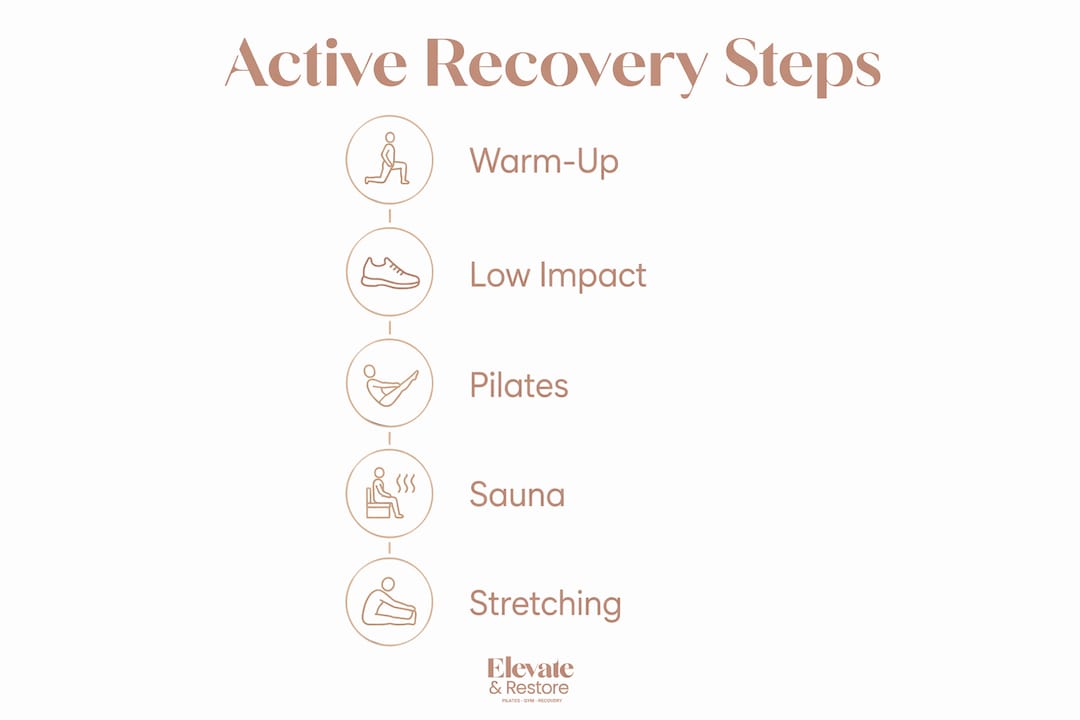
The best active recovery workouts share one quality: they use movement patterns that differ from whatever you trained hard the day before. Practitioners advise varying movement patterns specifically to avoid reloading fatigued muscle groups. If you did heavy lower-body strength work on Tuesday, Wednesday's recovery session should lean upper-body mobility or a full-body low-load option like swimming.
Commonly recommended options include:
- Walking (20–40 minutes at a comfortable pace)
- Easy cycling (flat terrain, low resistance)
- Gentle reformer Pilates or mat-based mobility work
- Swimming (easy laps, no intervals)
- Yoga or tai chi
- Foam rolling and targeted mobility drills
- Breathing sessions (diaphragmatic or box breathing)
The effort rule is simple: if you cannot hold a full conversation, you are working too hard. NASM's talk test and Zone 1/2 heart-rate bands (30–60% max HR) are the practical guides practitioners use because individual fitness and fatigue levels vary too much for fixed pace or power targets.
Sample 45-minute active recovery routine:
- 5 minutes of slow walking or gentle marching to warm the joints
- 15 minutes of mobility drills (hip circles, thoracic rotation, ankle CARs)
- 10 minutes of gentle Pilates-based core work or cat-cow progressions
- 10 minutes of easy aerobic movement (walking, light cycling, or easy swim)
- 5 minutes of diaphragmatic breathing or guided relaxation
Pro Tip: Pilates is one of the best active recovery options for adults who train hard, because it loads the body through controlled range of motion without the compressive forces of weights. The injury resilience benefits of Pilates extend well beyond the recovery day itself.
How do sauna, cold plunge, hot tub, and compression fit in?
Pairing low-intensity movement with passive modalities is where boutique recovery hubs earn their keep. The Cleveland Clinic notes that combining movement-based active recovery with environmental modalities, such as sauna, cold plunge, and compression, provides systemic recovery benefits that movement alone cannot deliver, managing inflammation and systemic fatigue without adding mechanical load.
What each modality does:
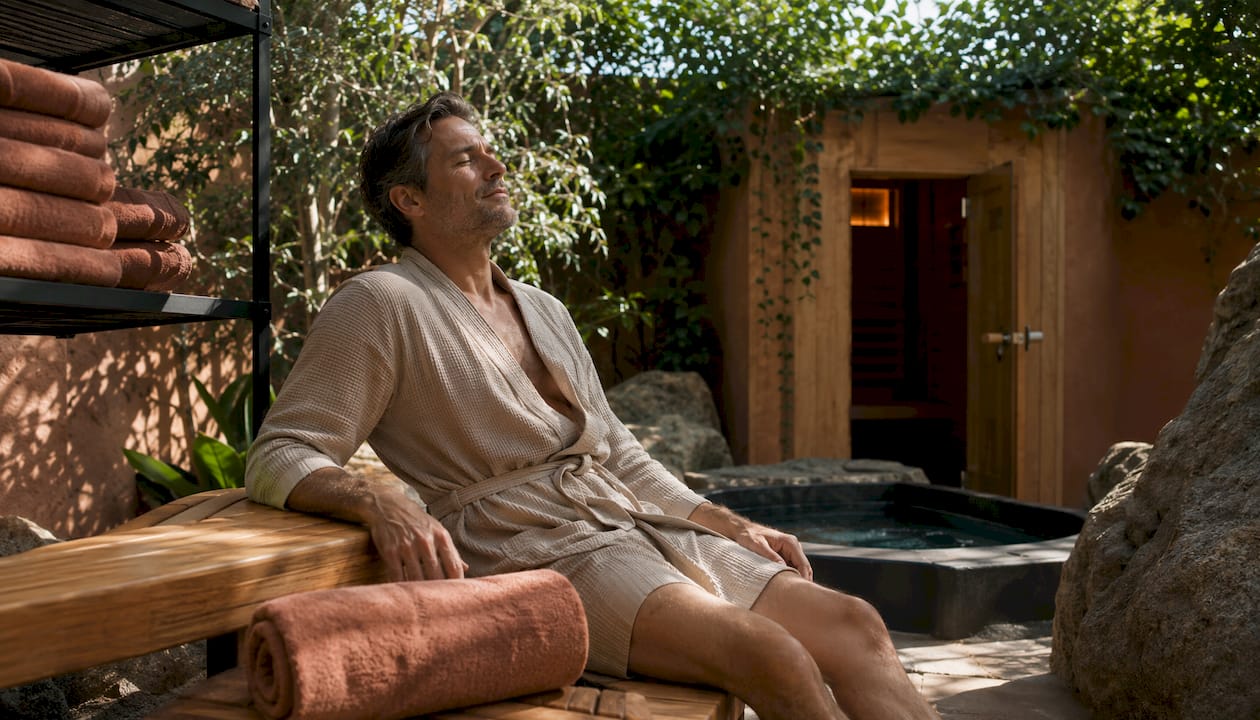
- Infrared sauna: raises core temperature, promotes circulation, and supports deep muscle relaxation. Detailed guidance on sauna use for strength training is worth reading before your first session.
- Cold plunge: controls acute inflammation and reduces perceived soreness; most effective in the 24–48 hours after hard training.
- Hot tub: warm immersion loosens tight tissue and improves circulation, particularly useful before mobility work.
- Compression boots: promote lymphatic drainage and reduce swelling with zero mechanical load on muscles or joints.
Ideal sequencing: light movement first, then compression or cold plunge, then sauna or hot tub depending on your goal. If you want to reduce acute inflammation, cold comes before heat. If your goal is relaxation and tissue warmth, heat is the closer.
Safety note: avoid immersion modalities if you have an acute injury, uncontrolled hypertension, or are pregnant. Start with shorter durations (5–10 minutes) and exit immediately if you feel lightheaded or nauseous.
Pro Tip: For people training at high volumes, passive modalities that add no mechanical load, particularly compression and immersion, are especially valuable. They allow systemic recovery without stressing already-taxed muscles or joints.
Recovery is also not just physical. The mental reset from a structured recovery session, particularly one that includes breathwork or heat, compounds over a training week.
How to structure your active recovery day
Intensity and duration rules of thumb:
- Keep intensity at 30–60% of maximum heart rate
- Pass the talk test: full sentences, no breathlessness
- Aim for 20–40 minutes of low-intensity movement, or spread it across the day
- Stop if you feel more fatigued at the end than at the start
| Element | Guideline | Stop if… |
|---|---|---|
| Intensity | 30–60% max HR, talk test | You cannot hold a conversation |
| Duration | 20–40 minutes total movement | Fatigue increases during the session |
| Modality time | 5–15 minutes per passive modality | Lightheadedness, nausea, or sharp pain |
| Frequency | 1–2 days per week | Soreness worsens 24 hours later |
Sample routines:
- 20–40 minutes total movement, broken into mobility, aerobic movement, and relaxation.
- Passive modalities (compression, sauna, hot tub) can be added for 5–15 minutes each.
- Optionally, split the day: shorter movement in the morning and a 30-minute recovery block later.
Pro Tip: Alternating active recovery days with full passive rest days works well for busy schedules. You do not need to fill every non-training day with movement.
Signs your active recovery day is making things worse
Active recovery should leave you feeling better, not worse. If it does not, the session was too intense or too long.
Red flags to watch for:
- Soreness that is higher 24 hours after the session than before it
- Swelling or joint tenderness that was not there before
- Sharp or acute pain at any point during movement
- Persistent fatigue or disrupted sleep following the session
- Lightheadedness during what should be easy movement
- A general feeling of depletion rather than restoration
When any of these appear, the guidance is clear: favour passive recovery next time. Illness, acute injury, and severe exhaustion all call for complete rest, not gentle movement. If indicators persist beyond 48–72 hours, seek advice from a physiotherapist or GP.
Key takeaways
An active recovery day works when it stays genuinely low-intensity: 30–60% of maximum heart rate, movement patterns that differ from your last hard session, and passive modalities that add restoration without mechanical load.
| Point | Details |
|---|---|
| Intensity rule | Keep effort at 30–60% max HR; if you cannot talk freely, ease off. |
| Movement choice | Use different patterns from your last hard session to avoid reloading fatigued muscles. |
| Modality pairing | Combine light movement with compression, cold plunge, or sauna for systemic recovery. |
| Sequencing | Move first, then compress or cool, then heat, depending on your recovery goal. |
| Elevateandrestore | Integrates reformer Pilates, sauna, cold plunge, hot tub, and compression in one boutique recovery-hub session. |
The Elevateandrestore approach to active recovery
At Elevateandrestore in West Footscray, active recovery is not an afterthought bolted onto a training programme. The studio's small-group reformer Pilates classes (capped at six people) are genuinely suited to recovery days because the reformer controls load and range of motion precisely, making it easy to work at restoration intensity without accidentally training hard.
After movement, the recovery lounge offers infrared sauna, cold plunge, hot tub, and compression boots in sequence. The protocol follows the sequencing principle above: movement first, then passive modalities. Sessions are bookable as standalone recovery visits or as add-ons to a Pilates or functional training class.
For adults over 30 managing training load alongside work and life, the recovery methods for strength training after 30 guide on the Elevateandrestore blog is a practical companion to this article.
Try an active recovery day at Elevateandrestore
Elevateandrestore gives you a complete active recovery session without the guesswork of piecing it together yourself. A single visit covers gentle reformer Pilates in a small group of six, followed by your choice of infrared sauna, cold plunge, hot tub, or compression boots in the recovery lounge.
You can book a standalone recovery lounge session, combine it with a reformer Pilates class, or pick up a casual recovery pass if you want to try it once before committing. The studio is in West Footscray, inner west Melbourne. Check availability and book your first session at elevateandrestore.com.au.
Useful sources
The following sources informed this article and are worth reading if you want to go deeper.
- Active recovery: how it works and exercise ideas — Healthline's practical overview of active recovery, DOMS reduction, and activity options.
- Active recovery — Cleveland Clinic's clinical summary covering modality pairing and contraindications.
- Active recovery: benefits and best practices — NASM's practitioner-level guidance on intensity, heart-rate bands, and cooldown protocols.
- Rest days are good. Active recovery days can be better. — New York Times piece covering the evidence on when active recovery outperforms passive rest, and when it does not.
- What is active recovery? — WHOOP's applied sport-performance take on the mindset shift required for genuine restoration.
- The 7 best things you can do for active recovery — Health.com's accessible list of recommended activities with practical notes.
- Why active recovery improves performance: the science explained — Elevateandrestore's own deep-dive into the physiological mechanisms behind active recovery.
- Recovery methods for strength training after 30 — Age-specific recovery protocols from the Elevateandrestore blog, relevant for the studio's core audience.