
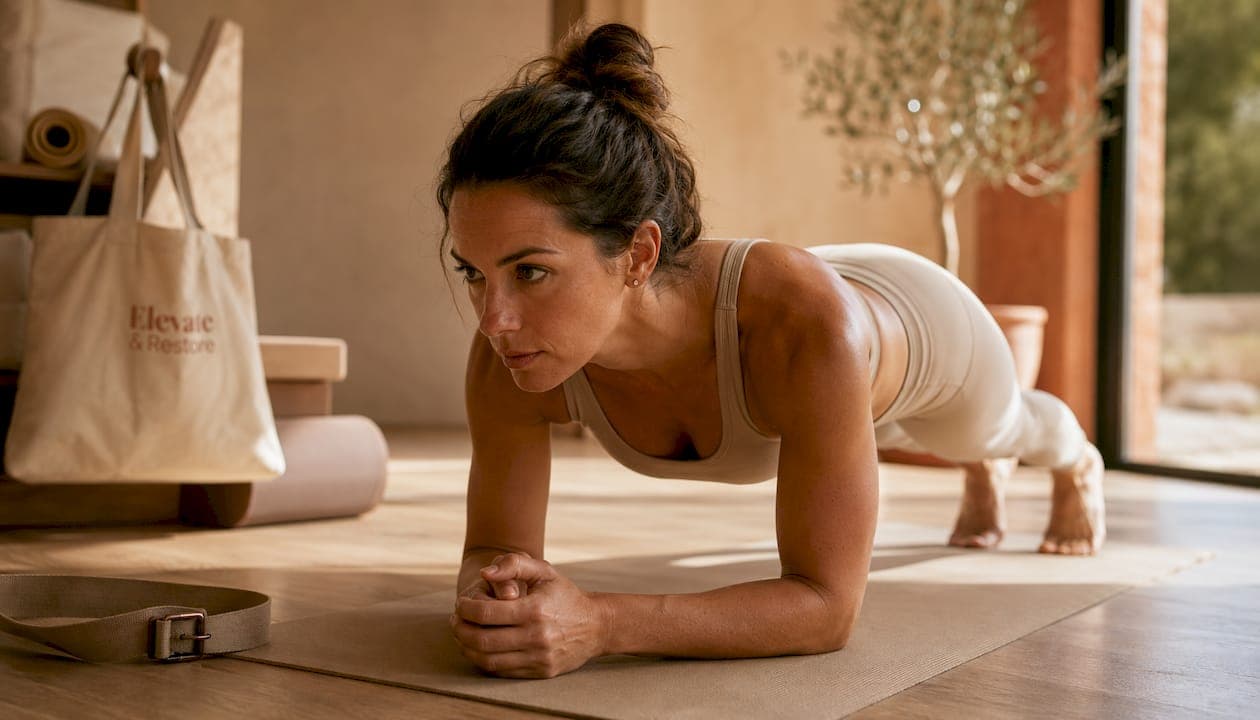
Core strengthening improves posture, reduces lower-back pain, supports pelvic-floor function, sharpens balance, and lifts overall exercise performance for women at every life stage. The benefits are well-supported by clinical research and transfer directly to everyday tasks, from picking up a toddler to carrying groceries up a flight of stairs.
The top six practical gains at a glance:
- Better posture and less back pain — a strong core holds the spine upright through long desk days and heavy lifts
- Improved balance and fall prevention — especially relevant as women move through their 40s, 50s and beyond
- Pelvic-floor and pregnancy support — deep core work protects against incontinence, supports a healthy pregnancy, and speeds postpartum recovery
- Easier daily tasks — bending, twisting, lifting and carrying all draw on core stability
- Stronger exercise performance — running, lifting, and Pilates all become more efficient when the foundation is solid
- Injury resilience — a well-coordinated core reduces strain on knees, hips and the lumbar spine
Quick caution: if you are pregnant, recently postpartum, or experiencing incontinence or prolapse symptoms, consult a women's health physiotherapist before starting or progressing any core programme.
Table of Contents
- What your core actually is (and why it matters)
- 10 core strengthening benefits for women
- A simple 4–6 week starter plan
- Common mistakes that reduce results or cause harm
- How long until you notice a difference?
- Signs your core might need attention
- What the research actually says
- Key takeaways
- The case for treating core work as a long-term investment
- Elevateandrestore: core training built for women in Melbourne's inner west
- Useful sources and further reading
What your core actually is (and why it matters)
The core is not just your abs. Think of it as a pressure canister: the diaphragm forms the lid, the pelvic floor is the base, the transverse abdominis wraps around the sides like a corset, and the multifidus and spinal erectors run along the back wall. The rectus abdominis (the "six-pack" muscle) and the obliques sit on the outside of this system, providing movement and rotation. The glutes and hip stabilisers complete the picture, anchoring the pelvis and transferring force between the lower body and spine.
What makes this system work is coordination, not just strength. The pelvic floor, transverse abdominis and diaphragm need to activate together as a unit before any movement happens. Breathing is central to that coordination: when you inhale, the diaphragm descends and the pelvic floor gently lowers; on the exhale, both recoil and the deep core engages. Get that rhythm right and every exercise becomes more effective. Skip it and you end up relying on the surface muscles, which fatigue faster and do far less to protect the spine.
10 core strengthening benefits for women
1. Less lower-back pain
Lower-back pain is one of the most common complaints among women, and a weak or poorly coordinated core is a frequent contributor. Mayo Clinic includes core strengthening in its recommended strategies for both preventing and rehabilitating back pain, because the deep stabilisers reduce compressive load on the lumbar discs during everyday movement. Think about standing at a kitchen bench for 20 minutes, or hunching over a laptop: without core support, the lower back absorbs all of that load.
2. Better posture through the workday
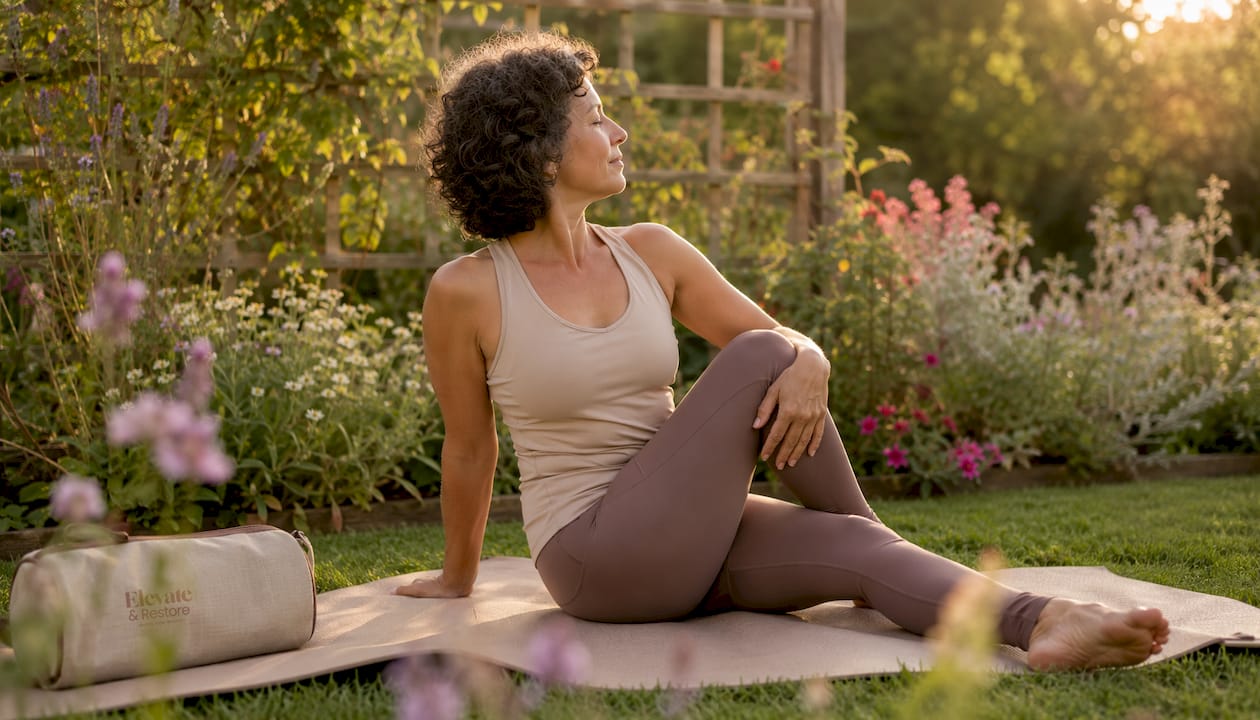
Sustained sitting and screen time gradually switch off the deep stabilisers and tighten the hip flexors, pulling the pelvis forward and rounding the upper back — making it essential to learn how to incorporate more movement in daily life for better posture and core activation. Regular core work reverses that pattern. Women who spend long hours at a desk often notice the difference within a few weeks: shoulders sit further back, the lower back stops aching by mid-afternoon, and standing feels less effortful. That shift is not aesthetic; it reduces cumulative strain on the cervical and lumbar spine.
3. Balance and fall prevention as you age
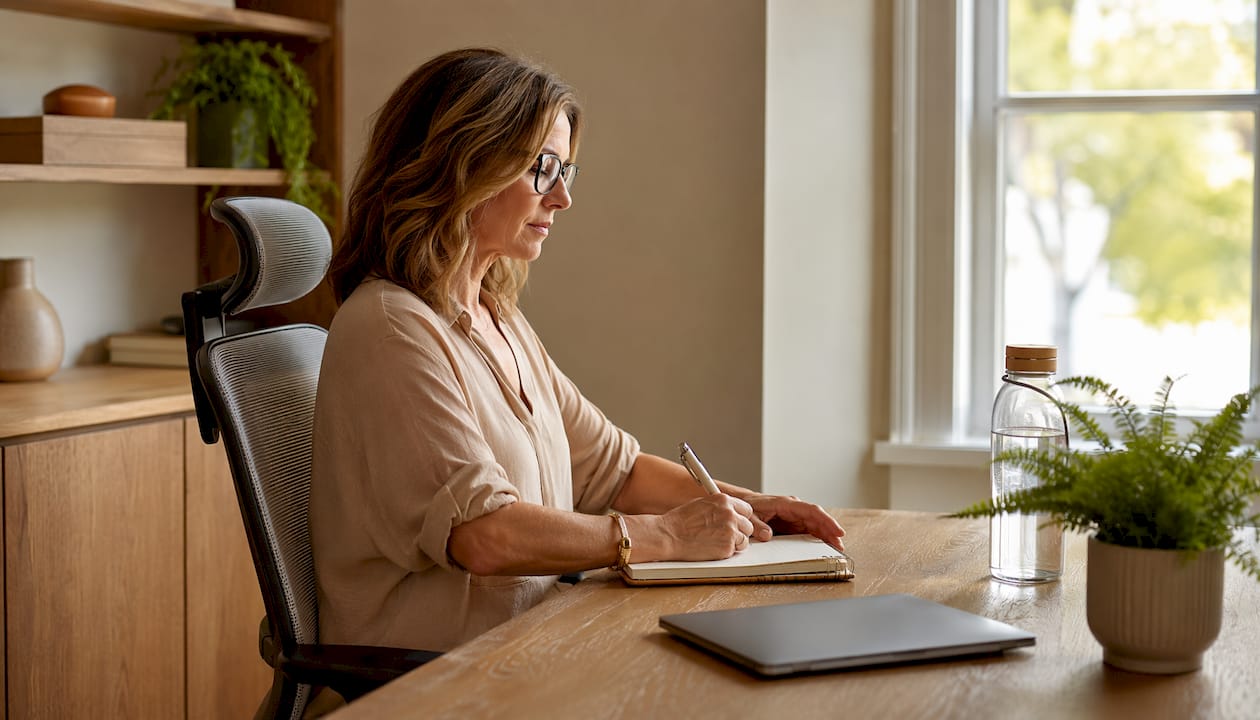
Harvard Health notes that core strength improves power transfer between the upper and lower body and may reduce fall risk by improving balance and stability. Core training also sharpens the nervous system's ability to react to unexpected terrain changes, which matters enormously for sustained independence as women age. Stepping off a kerb onto uneven ground, carrying a heavy bag on one side, or catching yourself mid-stumble all rely on the same rapid core-stabilisation response.
4. Pelvic-floor health and continence
The pelvic floor is part of the core, not a separate system. Women who train the deep core without addressing the pelvic floor often miss the most clinically significant benefit. Research published in BMC Women's Health found that combining pelvic-floor muscle training with core work improved trunk muscle endurance and reduced lower-back pain in sedentary women more than core training alone. For women experiencing stress incontinence (leaking when coughing, sneezing or jumping), targeted pelvic-floor and core work is often the first-line clinical recommendation.
5. Pregnancy support and postpartum recovery
During pregnancy, the growing uterus stretches the abdominal wall and shifts the centre of gravity forward, placing enormous demand on the lumbar spine and pelvic floor. A well-conditioned core manages that load more effectively and reduces the risk of diastasis recti (abdominal separation) worsening. Postpartum, the evidence is strong: a meta-analysis of 15 trials found that core stabilising exercise significantly reduced pain (SMD = -0.80) and disability (SMD = -0.85) in postpartum women with lumbopelvic pain, with moderate-to-high certainty for those key outcomes.
6. Stronger performance in other exercise
Every gym lift, run, swim and Pilates sequence relies on a stable core to transfer force efficiently. Without it, power leaks at the trunk and the body compensates with the wrong muscles, reducing output and increasing injury risk. Women who add dedicated core work to their training often find their squat depth improves, their running gait becomes more controlled, and their reformer Pilates sessions feel more connected. The functional benefits extend to sport and structured exercise alike.
7. Injury prevention across the whole body
A poorly stabilised core shifts load onto the knees, hips, and shoulders during movement. That compensation pattern is a common driver of overuse injuries in women who run or lift regularly. Building injury resilience through Pilates and functional training targets exactly this: teaching the body to stabilise before it moves, so joints are protected rather than overloaded. Anti-rotation exercises (like a pallof press) and single-leg work are particularly effective because they replicate the asymmetrical demands of real-world movement.
8. Functional independence through daily tasks
Picking up a child from the floor, lifting a bag of groceries into an overhead cupboard, or twisting to reach the back seat of a car: all of these draw on core stability. Women over 30 benefit from strength training that includes core work precisely because functional independence compounds over time. The women who maintain it into their 60s and 70s are typically those who built the habit decades earlier.
9. Metabolic and hormonal health
Core training, particularly when combined with functional strength work, contributes to lean muscle mass, which supports metabolic rate and insulin sensitivity. For women navigating perimenopause and menopause, when oestrogen decline accelerates muscle loss and central fat gain, resistance-based core work is one of the more practical tools available. It does not replace aerobic exercise or dietary attention, and visible waistline changes require managing body fat through combined cardio and nutrition rather than core exercises alone. But the muscle-preserving effect of regular core and strength work has real metabolic value.
10. Confidence and body awareness
This one is harder to quantify but consistently reported. Women who develop genuine core strength describe feeling more grounded in their bodies, more aware of how they move, and less anxious about physical tasks. That body awareness translates into better movement quality across everything else they do, from yoga to carrying furniture. It also tends to reduce the hypervigilance around pain that often accompanies chronic lower-back issues.
| Benefit | Daily example | Evidence strength |
|---|---|---|
| Lower-back pain reduction | Standing at a desk, lifting shopping | Strong |
| Posture improvement | Long screen sessions, commuting | Strong |
| Balance and fall prevention | Uneven terrain, single-leg tasks | Strong |
| Pelvic-floor and continence | Coughing, sneezing, exercise | Strong |
| Postpartum recovery | Returning to activity after birth | Moderate–high |
| Exercise performance | Running, lifting, Pilates | Moderate |
| Injury prevention | Running, gym, daily lifting | Moderate |
| Metabolic/hormonal health | Menopause, body composition | Emerging |
A simple 4–6 week starter plan
Aim for three sessions per week, with at least one rest day between sessions. Each session takes roughly 20 minutes. Progress by adding time or reps in weeks 3–4, then introduce instability or load in weeks 5–6.
- Diaphragmatic breathing with transverse abdominis activation — 5 breaths, 3 sets. Lie on your back, knees bent. Inhale to expand the ribcage; on the exhale, gently draw the lower belly in and feel the pelvic floor lift. This is the foundation for every other exercise.
- Dead bug — 6 reps per side, 3 sets. Lie on your back, arms pointing to the ceiling, knees at 90 degrees. Lower one arm and the opposite leg toward the floor while keeping the lower back pressed down. Return and alternate.
- Bird dog — 8 reps per side, 3 sets. On hands and knees, extend one arm and the opposite leg simultaneously, hold for 2 seconds, return slowly. Keep the hips level.
- Glute bridge — 12 reps, 3 sets. Lie on your back, feet hip-width apart. Drive the hips up, squeeze the glutes at the top, lower with control. Progress to single-leg in week 4.
- Forearm plank — 20–30 seconds, 3 sets. Elbows under shoulders, body in a straight line. Focus on breathing throughout rather than bracing and holding your breath.
- Anti-rotation press (pallof press or band hold) — 8 reps per side, 3 sets. Hold a resistance band at chest height, step sideways to create tension, press the band out and hold for 2 seconds. This trains the core to resist rotation, which is how it works in real life.
Progression: in weeks 3–4, increase plank holds to 40–45 seconds and add a 2-second pause at the top of the dead bug. In weeks 5–6, try the bird dog on a balance pad, add a resistance band to the glute bridge, or progress the plank to a hands-up position.
Pregnancy and postpartum modifications: avoid lying flat on your back after the first trimester. Substitute the dead bug with a seated or side-lying version. Prioritise breathing and pelvic-floor activation over load or duration. If you have a diastasis recti separation greater than two finger-widths, work with a pelvic-floor physiotherapist before progressing beyond gentle activation work.
Pro Tip: Before every set, take one full diaphragmatic breath. On the exhale, gently lift the pelvic floor before you move. That single habit recruits the deep core stabilisers that most people never access through bracing alone.
Common mistakes that reduce results or cause harm
Getting the exercises right matters as much as doing them consistently. These are the errors that show up most often.
- Over-focusing on crunches. The rectus abdominis is one layer of a multi-layered system. Functional core work must include rotation, anti-rotation and stabilisation to be genuinely useful.
- Breath-holding during effort. Holding the breath spikes intra-abdominal pressure and bypasses the deep stabilisers entirely. Exhale on the effort.
- Shrugged shoulders in planks. This shifts load to the neck and upper traps, not the core. Shoulders should stay packed down and back.
- Bracing instead of coordinating. Gripping the abs hard is not the same as coordinating the pelvic floor, transverse abdominis and diaphragm. Bracing can actually worsen pelvic-floor dysfunction in some women.
- Rushing progressions. Moving to harder exercises before mastering the basics leads to compensation patterns that are hard to unlearn. Two weeks of solid foundations beats six weeks of sloppy advanced work.
- Ignoring pain or leakage. Any urine leakage during exercise is a signal to reduce load and seek assessment, not push through. Pain that persists beyond mild muscle fatigue warrants the same response.
Safety notes by group:
- Pregnant women: avoid supine exercises after the first trimester, skip high-impact core work, and prioritise pelvic-floor breathing.
- Postpartum women: screen for diastasis recti before returning to loaded or high-impact work; a pelvic-floor physiotherapist is the right first stop.
- Menopausal women: connective tissue changes with oestrogen decline, so progress load gradually and allow adequate recovery between sessions.
- Women over 60: balance work and fall-prevention exercises take priority; training imbalances become more consequential and are worth addressing with a professional.
See a physiotherapist if you notice: persistent lower-back or pelvic pain during or after exercise; urine leakage with any physical activity; a visible bulge or heaviness in the pelvic region; or abdominal separation greater than two finger-widths that is not closing with gentle rehab.
How long until you notice a difference?
Realistic timelines help you stay consistent rather than give up too early.
- Weeks 2–4: neuromuscular gains come first. You will feel more connected to your deep core, notice better breath coordination, and find exercises that felt unstable becoming more controlled.
- Weeks 6–12: measurable strength and endurance improvements. Plank holds get longer, lower-back ache during daily tasks reduces, and balance on a single leg becomes steadier.
- Beyond 12 weeks: functional carryover into other exercise and daily life becomes obvious. Lifts feel more controlled, running posture improves, and the chronic lower-back fatigue that used to set in by evening starts to disappear.
Practical ways to track progress: time your plank hold each fortnight; test single-leg balance with eyes closed; note whether you can lift and carry without lower-back strain; keep a brief symptom diary for any pelvic-floor issues. Consistency over intensity is what drives these gains, not how hard any single session feels.
Signs your core might need attention
Most women do not realise their core is underperforming until they start working on it deliberately. These are the signals worth noticing.
- Frequent lower-back ache, especially after sitting or standing for extended periods. Start a gentle core routine focused on breathing and activation.
- Slumped posture that you have to consciously correct throughout the day. Add daily postural awareness and begin a structured core programme.
- Breath-holding during effort, like lifting a heavy bag or getting up from the floor. Focus on exhale-on-effort technique in every exercise.
- Urine leakage when coughing, sneezing, laughing or exercising. Reduce high-impact exercise and book an assessment with a pelvic-floor physiotherapist.
- Difficulty balancing on one leg for more than a few seconds. Incorporate single-leg balance work and hip stabiliser exercises.
- A visible ridge or dome along the midline when sitting up from lying down. This may indicate diastasis recti — seek assessment before progressing any abdominal work.
Any of the last two warrant a professional assessment rather than a self-guided programme. The others are good starting points for a structured routine.
What the research actually says
The evidence base for core training in women is solid in several areas and still developing in others.
| Study | Population | Outcome | Effect |
|---|---|---|---|
| Meta-analysis, 15 trials (Brazilian Journal of Physical Therapy) | Postpartum women with lumbopelvic pain | Pain and disability reduction | SMD = -0.80 (pain), -0.85 (disability); moderate–high certainty |
| RCT, BMC Women's Health | Sedentary women with lower-back pain | Trunk endurance and pain scores | Greater improvement when pelvic-floor training combined with core work |
| Clinical summary, Mayo Clinic | General adult population | Back pain prevention and rehabilitation | Core exercises recommended as part of standard care |
The Get Active Victoria resource, published by the Victorian Government, summarises the functional case for core strength clearly and is a useful starting point for Australian women wanting an accessible overview. For clinical concerns, the Mayo Clinic's core exercise guidance and the BMC Women's Health RCT both support combining pelvic-floor and core training for women with lower-back pain.
One practical note from the research: both supervised and unsupervised formats show benefits, but tailored, supervised approaches produce more consistent outcomes, particularly postpartum. That finding supports working with a qualified instructor rather than relying solely on app-based programmes, at least in the early stages.
Key takeaways
Core strengthening delivers its greatest benefits for women when it targets the full stabilising system, including the pelvic floor, rather than surface abdominal muscles alone.
| Point | Details |
|---|---|
| Train the full system | Include pelvic-floor activation, breathing, and anti-rotation work, not just crunches or planks. |
| Three sessions per week is enough | A consistent minimum dose of three weekly sessions produces measurable gains within 6–12 weeks. |
| Postpartum needs specialist input | Screen for diastasis recti and pelvic-floor dysfunction before progressing to loaded or high-impact work. |
| Expect neuromuscular gains first | Improved coordination and body awareness arrive in weeks 2–4, before visible strength changes. |
| Elevateandrestore offers structured support | Small-group reformer Pilates and functional training sessions at Elevateandrestore are designed to build core strength progressively for women over 30. |
The case for treating core work as a long-term investment
The conventional framing around core training tends to focus on aesthetics or injury recovery. Both are real, but they undersell the actual value. The more compelling case is this: a well-functioning core is what keeps women physically independent and pain-free across decades, not just through a single training block.
What gets overlooked is how early the investment pays off. Women in their 30s who build genuine core coordination, not just a strong plank, carry that capacity through pregnancy, postpartum recovery, the hormonal shifts of perimenopause, and into the years when fall prevention becomes a genuine clinical priority. The women who struggle most with lower-back pain, incontinence, and loss of balance in their 60s are often those who spent their 30s and 40s training the surface muscles while the deep stabilisers stayed dormant.
The other thing worth saying plainly: pelvic-floor health is core health. Treating them as separate concerns, which most general fitness content still does, means women get half the picture. The Pilates-based approach that integrates breathing, pelvic-floor awareness and progressive loading is not a soft option. It is, by the evidence, the more complete one.
Elevateandrestore: core training built for women in Melbourne's inner west
If you have read this far and recognised yourself in the signs of a weak core, or you are returning to exercise after pregnancy and want to get it right, Elevateandrestore's small-group reformer Pilates and functional training sessions are a practical next step. Classes are capped at six people, which means your instructor can actually watch your form, cue your breathing, and progress you at the right pace rather than the group average.
The studio's reformer Pilates classes in West Footscray are built around the same principles covered in this article: deep core activation, pelvic-floor coordination, progressive loading, and functional movement patterns that carry over into daily life. After sessions, the recovery lounge (infrared sauna, cold plunge, hot tub, and compression therapy) supports the adaptation process, which matters more than most people realise when training consistency is the goal.
Memberships, class packs, and single-session bookings are all available. The studio is in West Footscray, inner west Melbourne (postcode 3012), and is well-suited to women over 30 who want structured, evidence-informed core training without the noise of a large commercial gym. Book a trial class or assessment session directly through the website.
Useful sources and further reading
These are the primary sources used in this article, along with a note on what each covers.
- Get Active Victoria — Why do we need a strong core? A clear, accessible overview published by the Victorian Government. Good starting point for Australian women wanting a plain-language summary of core function and benefits.
- Mayo Clinic — Core exercises: why you should strengthen your core muscles Clinical guidance on core training for back pain prevention and rehabilitation. Authoritative and practical.
- Harvard Health — The real-world benefits of strengthening your core Covers functional benefits, balance, and daily-task transferability. Useful for understanding what core strength actually does beyond aesthetics.
- Harvard Health — Why you should care about your core Addresses the common misconception that core exercises reduce belly fat, and explains the role of combined cardio and nutrition.
- Brazilian Journal of Physical Therapy — Core stabilising exercise in postpartum women (meta-analysis) The strongest available evidence for postpartum core training. Covers pain, disability, and quality-of-life outcomes across 15 trials.
- BMC Women's Health — Pelvic floor muscle training and lumbar function (RCT) Randomised trial showing the added benefit of combining pelvic-floor training with core work in women with lower-back pain.
- Springhillmedgroup — What women should know about improving deep core support Practical clinical commentary on the canister model, breathing, and pelvic-floor coordination.
- Verywell Health — Benefits of strengthening your core Accessible summary of functional benefits and common training errors, including the over-emphasis on rectus abdominis.
Finding a pelvic-floor physiotherapist in Australia: the Australian Physiotherapy Association's Find a Physio directory allows you to search by location and specialty. Search for "women's health" or "pelvic floor" to find a qualified practitioner near you. For postpartum concerns, diastasis recti, or any pelvic-floor symptoms, a one-off assessment with a women's health physiotherapist is worth doing before starting a self-guided programme.