

Adrenal fatigue is defined in popular health culture as a condition where chronic stress exhausts the adrenal glands, leaving you depleted, foggy, and unable to recover from exercise. The Endocrine Society does not recognise it as a medical diagnosis. A 2016 systematic review examined 58 studies and found no consistent evidence that stress causes the adrenal glands to fail. What the symptoms do reflect is real: dysregulation of the HPA axis, the brain-adrenal communication system that governs your cortisol rhythm, sleep, and energy. Understanding what is adrenal fatigue fitness means separating the myth from the mechanism, then building a movement and lifestyle plan that actually works for your body.
What is adrenal fatigue, and why is the term controversial?
The term "adrenal fatigue" was coined in 1998 by naturopath James Wilson, who proposed that prolonged stress wears out the adrenal glands. The concept spread quickly because it gave a name to symptoms that many women over 30 recognise: persistent tiredness, brain fog, poor sleep, and difficulty recovering from exercise. The problem is that the science does not support the underlying mechanism.
Major medical organisations, including the Endocrine Society and Cedars-Sinai, reject adrenal fatigue as a diagnosis. The adrenal glands do not "tire out" from everyday stress. What does happen is that the hypothalamic-pituitary-adrenal axis, the HPA axis, can lose its normal rhythm. That rhythm disruption produces symptoms that feel very much like what Wilson described, but the cause and the fix are different.
True adrenal insufficiency, such as Addison's disease, is a serious medical condition. Diagnosing it requires an ACTH stimulation test, not a standard blood cortisol reading. Addison's disease presents with weight loss, low blood pressure, and skin pigmentation changes. These are distinct from the fatigue and brain fog symptoms most people associate with adrenal fatigue.
The real risk of the adrenal fatigue label is that it can delay proper care. Ignoring treatable conditions like hypothyroidism, depression, iron-deficiency anaemia, or sleep apnoea because you assume "adrenal fatigue" is the culprit leads to missed diagnoses. Getting a proper medical workup before self-treating is not optional. It is the starting point.
Pro Tip: If you are experiencing persistent fatigue, ask your GP to check thyroid function, iron studies, and vitamin D alongside a standard blood panel. These are the most commonly missed causes of fatigue in women over 30.
Common symptoms attributed to HPA-axis dysregulation include:
- Persistent tiredness that does not improve with rest
- Mid-afternoon energy crashes, typically between 2:00 PM and 4:00 PM
- Difficulty falling asleep despite feeling exhausted
- Waking between 2:00 AM and 4:00 AM and struggling to return to sleep
- Cravings for salty or sweet foods, particularly in the afternoon
- Reduced tolerance for exercise that previously felt manageable
- Brain fog and poor concentration, especially in the morning
How does chronic stress affect your energy and fitness capacity?
The HPA axis controls your cortisol rhythm. Cortisol should peak in the early morning, giving you energy and mental clarity, then taper through the day, reaching its lowest point at night so you can sleep. Chronic stress disrupts this pattern. The result is not a cortisol deficiency. It is a cortisol rhythm that no longer matches your daily needs.
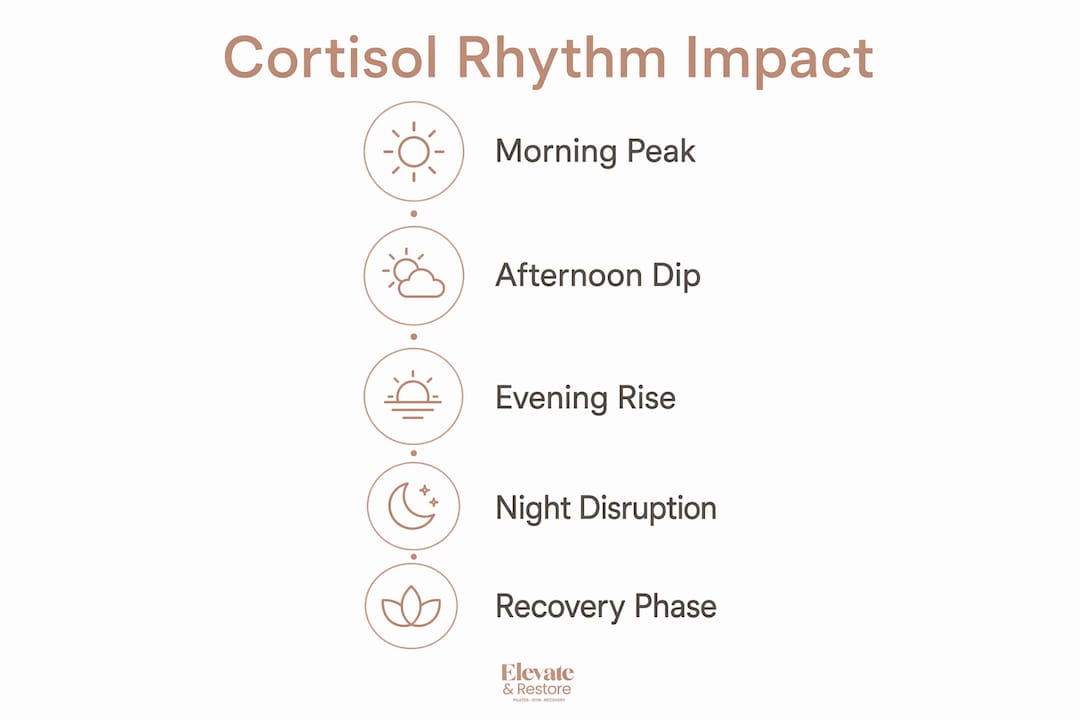
| Time of day | Healthy cortisol pattern | Disrupted pattern |
|---|---|---|
| 6:00 AM – 8:00 AM | High: drives alertness and energy | Low: waking feels difficult |
| 12:00 PM – 2:00 PM | Moderate: steady focus | Dropping fast: mid-day crash |
| 3:00 PM – 5:00 PM | Gently declining | Very low: severe energy dip |
| 9:00 PM – 11:00 PM | Low: supports sleep onset | Elevated: "wired but tired" state |
Elevated cortisol at night creates the "wired but tired" experience that many women describe. You feel exhausted but cannot switch off. This is a behavioural and physiological pattern, not a willpower failure. Addressing it requires rhythm-based interventions, not adrenal supplements.
Disrupted cortisol rhythms directly reduce exercise tolerance. When your morning cortisol is blunted, you lack the hormonal drive to train effectively. When evening cortisol is elevated, your sleep quality drops, and recovery between sessions suffers. The body reads excessive training as another stressor, which compounds the problem. This is why women experiencing these symptoms often feel worse after intense training, not better.
Regular physical activity improves mood, insulin sensitivity, sleep, and stress resilience. The key word is "balanced." Exercise that exceeds your current recovery capacity becomes a secondary stressor that worsens HPA-axis dysregulation rather than supporting it.
What are the best fitness strategies for adrenal fatigue recovery?
Fitness and adrenal function are directly linked, and the type of exercise you choose matters as much as the frequency. The goal during a recovery phase is to support your stress-regulation system, not challenge it further.
-
Prioritise zone-2 aerobic exercise. Zone-2 means working at a conversational pace, roughly 60%–70% of your maximum heart rate. Zone-2 training improves HPA-axis feedback sensitivity, limits cortisol spikes, and builds metabolic efficiency without triggering the stress response that HIIT provokes. Walking briskly, cycling at a moderate pace, and swimming all qualify.
-
Reduce high-intensity sessions temporarily. Excessive high-intensity exercise worsens HPA-axis dysregulation in people already experiencing fatigue symptoms. This does not mean stopping exercise altogether. It means replacing two or three HIIT sessions per week with moderate movement until your energy and sleep stabilise.
-
Use functional and low-impact movement. Pilates, yoga, and bodyweight functional training build strength and body awareness without placing excessive load on the nervous system. These modalities also improve breathing mechanics, which directly supports vagal nerve tone and stress regulation.
-
Apply graded progression. Start with 20–30 minutes of moderate movement three to four times per week. Add volume and intensity only when your sleep, mood, and energy have consistently improved for two or more weeks. Rushing progression is the most common mistake.
-
Integrate breathwork as a training tool. Diaphragmatic breathing and box breathing (four counts in, four counts hold, four counts out, four counts hold) activate the parasympathetic nervous system. Practising for five to ten minutes before or after training reduces post-exercise cortisol and supports recovery.
Pro Tip: Track your resting heart rate each morning before getting out of bed. A resting heart rate that is five or more beats above your personal baseline is a reliable signal that your body needs rest rather than training that day.
Complete inactivity worsens HPA-axis dysregulation. The goal is not rest alone. It is the right balance of movement and recovery, which is a principle that sits at the core of endocrine system fitness for women over 30.

What lifestyle habits support adrenal health beyond exercise?
Fitness is one piece of the picture. The lifestyle habits surrounding your training sessions determine whether your cortisol rhythm actually recovers.
Sleep is the highest-leverage intervention. Consistent 7–9 hours of sleep, combined with limiting caffeine after noon and reducing blue light exposure in the two hours before bed, directly supports cortisol rhythm restoration. Sleep consolidation is not a passive process. It requires deliberate environmental management.
Nutrition supports energy without requiring a supplement overhaul. Eating protein at breakfast stabilises blood glucose and supports morning cortisol function. Including complex carbohydrates at lunch and dinner helps regulate afternoon and evening energy without relying on stimulants. Avoiding long gaps between meals prevents the blood sugar dips that trigger cortisol spikes and afternoon cravings.
"Self-prescribing 'adrenal support' supplements can suppress natural cortisol feedback loops and mask underlying issues such as depression or iron-deficiency anaemia. Clinicians caution against unregulated supplement use without proper diagnosis and supervision."
Unregulated supplement use is one of the most common and least-discussed risks in the adrenal fatigue space. Many products marketed as "adrenal support" contain cortisol precursors or adaptogenic herbs that interfere with the body's own feedback systems. Before taking any supplement targeting hormonal health, get a proper diagnosis from a GP or endocrinologist.
Stress management techniques that directly support vagal nerve tone include:
- Mindfulness meditation: Even ten minutes daily reduces perceived stress and supports parasympathetic recovery.
- Cold water exposure: Brief cold showers or cold plunge sessions activate the vagus nerve and improve stress tolerance over time.
- Breathwork: Slow, extended exhales (longer out than in) shift the nervous system toward parasympathetic dominance within minutes.
- Social connection: Genuine social interaction is a biological stress buffer. Isolation amplifies HPA-axis dysregulation.
The timing of caffeine matters more than most women realise. Caffeine consumed after noon elevates evening cortisol, delays sleep onset, and reduces sleep quality, which then compounds fatigue the following day. Cutting caffeine after 12:00 PM is one of the fastest, most measurable changes you can make.
Key takeaways
Adrenal fatigue symptoms are real, but the cause is HPA-axis rhythm disruption, not adrenal gland exhaustion. The most effective approach combines zone-2 aerobic exercise, consistent sleep, and medical evaluation to rule out treatable conditions.
| Point | Details |
|---|---|
| Adrenal fatigue is not a diagnosis | No major medical body recognises it; symptoms reflect HPA-axis dysregulation. |
| Zone-2 exercise is the priority | Moderate aerobic movement supports cortisol regulation without worsening symptoms. |
| Sleep is the foundation | Consistent 7–9 hours and no caffeine after noon restores cortisol rhythm faster than supplements. |
| Get a medical workup first | Rule out thyroid issues, anaemia, and depression before assuming adrenal fatigue. |
| Supplements carry real risks | Unregulated adrenal support products can suppress natural cortisol feedback and mask real conditions. |
What I have learned from working with fatigued women in the studio
The women who recover fastest are not the ones who train hardest. They are the ones who get honest about what their body is actually telling them.
I have seen it play out repeatedly at Elevateandrestore. A woman comes in exhausted, convinced she needs to push through. She has been doing intense classes five days a week, sleeping poorly, and wondering why she feels worse instead of better. The answer is almost always the same: her training is adding to her physiological stress load, not reducing it.
The shift that changes everything is moving from "more is better" to "appropriate is better." That means choosing Pilates and zone-2 work over HIIT during recovery phases. It means using the sauna and cold plunge not as performance tools but as nervous system reset tools. It means treating rest as part of the training plan, not a reward for finishing it.
What I push back on hardest is the supplement-first approach. Women spend significant money on adrenal support products before they have had a thyroid test or a sleep study. The supplements feel proactive. They are often not. A proper diagnosis is always the first step.
The other thing I have learned is that patience is genuinely hard to sell. Recovery from HPA-axis dysregulation takes weeks, not days. The women who commit to consistent, moderate effort for six to twelve weeks see real change. The ones who want results in a fortnight often make things worse by over-training or abandoning the plan too early.
— Elevate
How Elevateandrestore supports your recovery and energy
If you are managing fatigue and want to move your body without making things worse, Elevateandrestore's approach is built for exactly that.
The reformer Pilates programme at Elevateandrestore runs in small groups of six, which means every session is coached with attention to your energy levels and movement quality. Pilates builds functional strength and supports nervous system regulation without the cortisol spike that high-intensity training triggers. The recovery lounge includes sauna, cold plunge, hot tub, and compression boots. These are not extras. For women managing stress-related fatigue, structured recovery sessions are as important as the training itself. Book a session and experience what balanced fitness actually feels like.
FAQ
What is adrenal fatigue fitness?
Adrenal fatigue fitness refers to exercise and lifestyle strategies designed to support the body's stress-regulation system when symptoms like fatigue, brain fog, and poor sleep are present. The focus is on moderate, consistent movement that supports HPA-axis recovery rather than adding to physiological stress.
Is adrenal fatigue a real medical condition?
Adrenal fatigue is not recognised as a diagnosis by any major medical or endocrine organisation. A 2016 systematic review of 58 studies found no evidence that stress causes the adrenal glands to fail or reduce cortisol output.
What exercises are best for adrenal fatigue symptoms?
Zone-2 aerobic exercise, Pilates, and functional low-impact movement are the most appropriate choices during a recovery phase. High-intensity interval training can worsen HPA-axis dysregulation and should be reduced until energy and sleep stabilise.
How long does adrenal fatigue recovery take?
Most people with HPA-axis dysregulation symptoms see meaningful improvement within 6–12 weeks of implementing structured sleep, moderate exercise, and caffeine management. Consistency over that period matters more than any single intervention.
Should I take adrenal support supplements?
Taking unregulated adrenal support supplements without a proper diagnosis carries real risks, including suppressing natural cortisol feedback loops and masking treatable conditions like depression or iron-deficiency anaemia. Always consult a GP or endocrinologist before starting any hormonal supplement.