
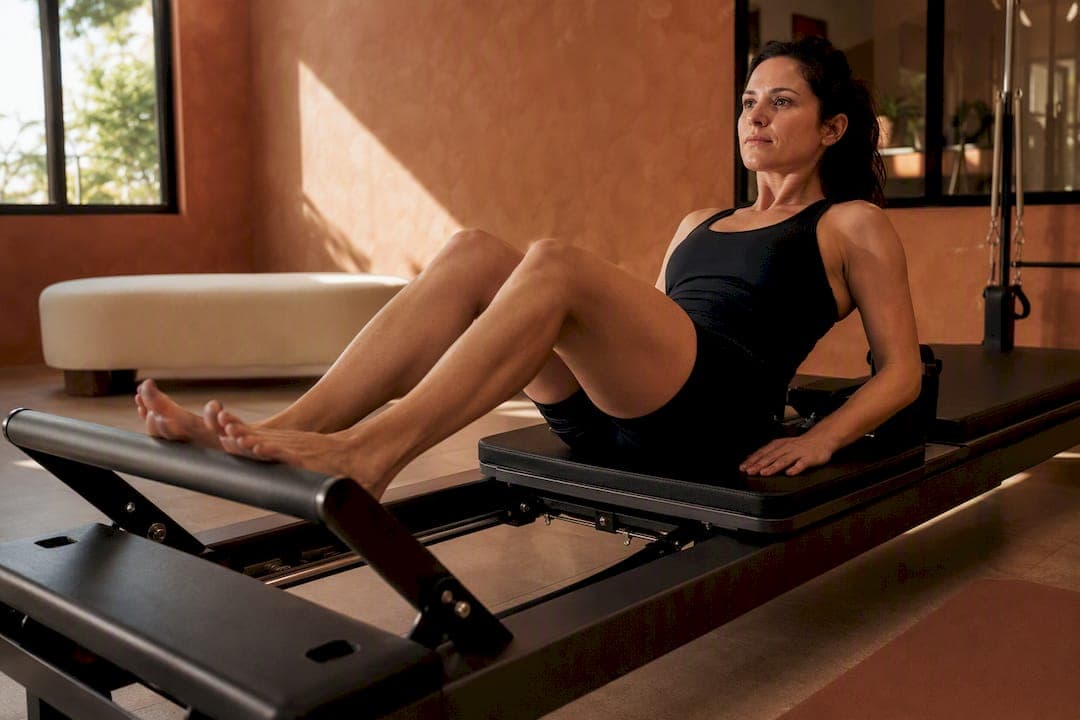
Reformer Pilates can help you lose weight and reshape your body, but not through calorie-torching alone. Clinical trials on structured reformer programs show measurable drops in waist and hip circumference within weeks, plus gains in lean muscle that improve body composition even when the scale barely moves. The catch: results depend on consistent attendance, progressive resistance, and pairing sessions with sensible eating. Here's how it actually works, and what to expect.
TL;DR:
- Consistent reformer Pilates three times weekly with progressive resistance yields measurable reductions in waist and hip circumference within the first month.
- Combining Pilates with a moderate calorie deficit and adequate protein intake enhances body composition improvements beyond exercise alone.
- Building lean muscle through resistance work boosts resting metabolic rate and supports fat loss, even if scale weight remains unchanged.
- Supervised, small-group classes ensure correct form and appropriate resistance progression, minimizing injury risk and maximizing results.
- Longer-term progress depends on sustained effort over at least 12 weeks, with multiple metrics tracking true body recomposition rather than scale weight alone.
Table of Contents
- How reformer Pilates supports weight loss and fat loss
- What the research says: key trials and their results
- How often and what class intensity works best
- Nutrition and cross-training: how to amplify your results
- What to expect and when: realistic timelines
- Downsides and cautions: injury risk and limitations
- Studio perspective: how Elevateandrestore structures reformer programs
- Beginner versus advanced reformer routines for weight loss
- Making reformer Pilates part of a broader routine
- Our take on reformer Pilates and body recomposition
- Starting reformer Pilates at Elevateandrestore
- Sources
How reformer Pilates supports weight loss and fat loss
The spring-based resistance on a reformer works muscles through a full range of motion; that's the real engine behind body recomposition. Building lean muscle mass raises your resting metabolic rate, meaning you burn more energy even when you're not exercising. This is the mechanism that separates reformer Pilates for weight loss from a purely cardio-driven approach.
Dynamic, cardio-style reformer sequences push heart rate higher than traditional mat Pilates, and that translates to a bigger calorie burn per session. Healthline notes that reformer and cardio-format classes burn more than mat-based sessions, though they generally sit below high-intensity cardio for sheer calorie expenditure. That's not a weakness. It's a different tool for a different job.
Reformer work also improves posture and movement efficiency, which sounds minor until you realise it affects how your body moves through an entire day, not just a 50-minute class.
- Spring resistance builds lean muscle without the joint pounding of running or jumping
- Cardio-format reformer classes elevate heart rate more than mat Pilates
- Better movement mechanics increase daily energy expenditure
- Structured, supervised classes tend to have higher adherence than solo gym routines
Pro Tip: Track how your clothes fit in week two, not just the scale. Muscle gain and fat loss can happen simultaneously, and the scale is often the last number to move.
What the research says: key trials and their results
The clinical picture on reformer Pilates is more convincing than most fitness trends get. A structured 12-week reformer program produced statistically significant reductions across multiple body circumference measurements, with the largest changes happening in the first month before progress continued at a slower rate through weeks eight to twelve.
Separately, a randomised controlled trial in overweight and obese women found reformer Pilates improved body composition, muscular strength, and endurance, reinforcing its case as a joint-friendly resistance option for people who can't tolerate high-impact training.
Session parameters across these trials cluster tightly:
- Sessions of 40 to 60 minutes, three times per week
- Progressive spring resistance and repetition increases across the study period
- Some trials controlled diet, others tested Pilates alone
Sample sizes in this research tend to be small, typically fewer than fifty participants, and trial durations are usually up to twelve weeks. That limits how confidently anyone can predict long-term outcomes. What the data does support: consistent reformer practice produces measurable, real body-composition change, and larger improvements show up when training is paired with dietary adjustments.
How often and what class intensity works best
Trial evidence points to a clear frequency sweet spot: 2 to 3 sessions per week, 40 to 60 minutes each. Fewer sessions slow progress; cramming in daily classes without recovery invites overuse issues rather than faster results.
A realistic weekly build looks like this:
- Weeks 1 to 2: technique-focused beginner classes, light spring resistance, two sessions per week
- Weeks 3 to 6: add a third weekly session, increase resistance progressively, introduce cardio-format intervals
- Weeks 7 to 12: mix progressive resistance classes with hybrid strength sessions, maintain three sessions weekly
Small-group supervision matters more than it sounds like it should. In a class of six or fewer, an instructor can correct spring selection and form before bad habits set in, which is exactly the kind of progressive overload the trials used to generate their results.
Pro Tip: If you're new to reformer Pilates, resist the urge to jump into advanced resistance in week one. The circumference gains researchers recorded came from steady progression, not heroics.
Nutrition and cross-training: how to amplify your results
Exercise alone gets you partway there. A 12-week trial found that women who combined reformer Pilates with a weight-loss diet saw significantly larger reductions in body weight, BMI, and waist and hip circumference than the Pilates-only group, along with bigger increases in basal metabolic rate and lean mass.
Practical priorities, in order:
- A modest calorie deficit rather than an aggressive cut that undermines training performance
- Adequate protein intake to preserve and build the lean mass reformer sessions are creating
- Sustainable food changes over restrictive short-term diets that don't survive month two
Cross-training with light cardio and additional resistance work can support results, provided you're not stacking so much volume that recovery suffers. If you have a complex health history or specific weight-loss targets, a registered dietitian can tailor the calorie and protein numbers to your situation rather than relying on generic ranges.
What to expect and when: realistic timelines
Circumference changes tend to show up faster than most people expect. Trial data shows the biggest reductions in waist, hip, and thigh measurements occur in the first month, with continued but slower change through months two and three.
Here's the part that trips people up: muscle gain can mask fat loss on the scale. You might lose visible inches while your weight stays flat, because you're building lean tissue at the same time you're losing fat.
Track progress with more than one method:
- Waist and hip tape measurements, same time of day, same landmarks each time
- Progress photos taken every two to four weeks
- Strength benchmarks, like spring resistance level or rep count
- Class attendance logs to spot patterns in consistency versus results
Downsides and cautions: injury risk and limitations
Reformer Pilates isn't a substitute for high-intensity cardio if raw calorie burn is your only goal. It burns less than running or HIIT in most comparisons, so factor that into your weekly plan rather than expecting it to do everything.
- Poor technique without supervision risks strain, particularly through the lower back and shoulders
- Soreness and mild overuse symptoms are common early on, especially with fast progression
- Anyone with a recent surgery, unstable health condition, or pregnancy complication should get medical clearance first
- Choose a qualified instructor, progress resistance gradually, and report pain immediately rather than pushing through it
Studio perspective: how Elevateandrestore structures reformer programs
Elevateandrestore runs reformer classes capped at six people, which means real-time feedback on spring selection and form, not a generic script. A typical session moves through a warm-up, technique-focused drills, progressive resistance work, a conditioning set, and a cool-down, mirroring the structure used in the clinical trials themselves.
Recovery tools including infrared sauna, cold plunge, hot tub, and compression boots support the training, but they're an adjunct to exercise and nutrition, not a replacement for either.
Beginner versus advanced reformer routines for weight loss
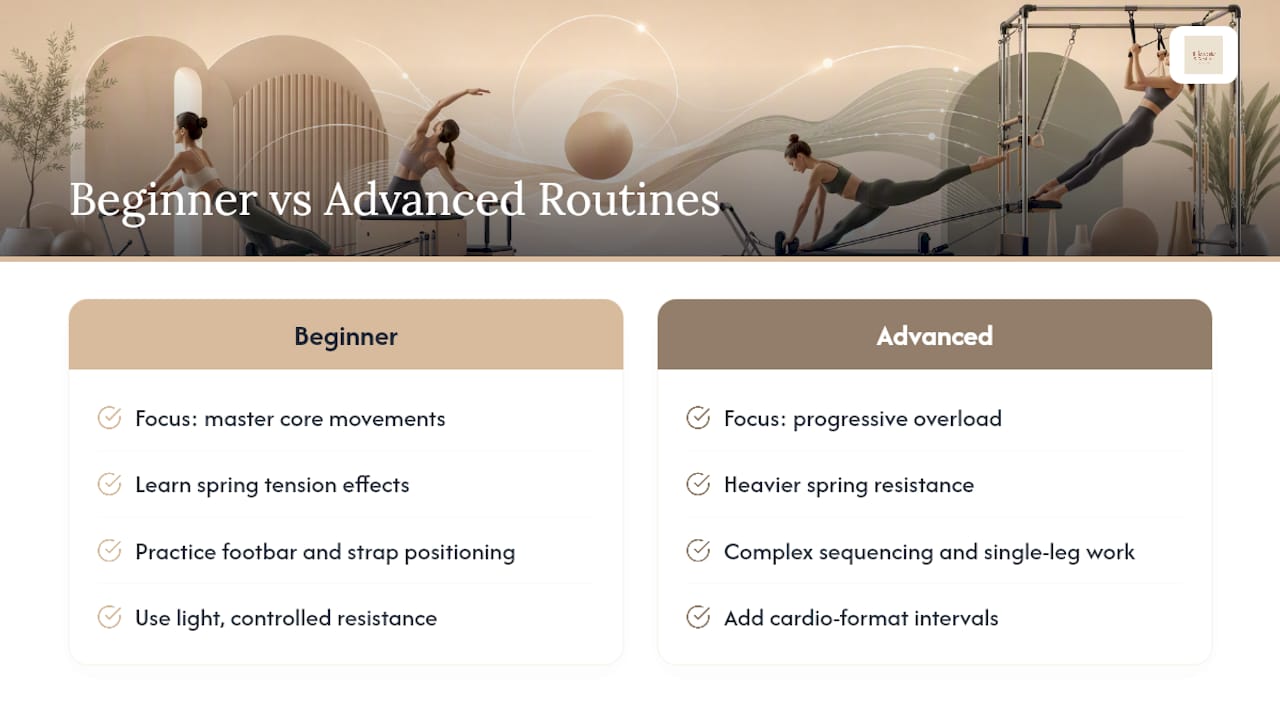
Beginners should spend the first few weeks mastering the reformer's core movements before chasing intensity. That means learning how spring tension changes the exercise, understanding foot bar and strap positioning, and building the core control that every later exercise depends on. Trying to skip this stage to "burn more calories" usually backfires: poor form limits muscle engagement, which limits the very metabolic benefit you're chasing.
Intermediate and advanced routines shift the emphasis toward progressive overload. That means heavier spring resistance, more complex sequencing (think single-leg work, unstable positions, faster transitions between exercises), and often the addition of cardio-format intervals that keep heart rate elevated for longer stretches. This is where reformer Pilates workouts start to resemble a genuine strength-and-conditioning session rather than a mobility class.
The mistake many intermediate exercisers make is staying in beginner mode too long, using light resistance indefinitely because it feels comfortable. Comfortable doesn't build lean mass. If you've been attending classes for eight weeks and haven't increased resistance or complexity, you've likely plateaued. Ask an instructor for a technique check and a resistance progression, because supervised programs can adjust intensity safely rather than guessing at home.
Making reformer Pilates part of a broader routine
Reformer Pilates for weight loss works best as one piece of a wider plan, not the entire plan. Pairing two or three reformer sessions with a walk or light cardio on off days keeps energy expenditure up without overloading the same muscle groups every day.
Sleep and stress matter more than most fitness content admits. Poor recovery blunts the metabolic benefits of any training program, reformer included, because cortisol and disrupted sleep interfere with the muscle repair that drives body composition change. If you're using recovery tools like a sauna or cold plunge after sessions, that's not indulgence, it's supporting the same physiological process the exercise started.

Think about your week holistically: reformer sessions for structured resistance, some form of daily movement, a nutrition approach you can actually sustain, and enough rest to let adaptation happen. Readers weighing reformer Pilates against other formats often ask how it compares to yoga for body composition goals specifically, and the honest answer is that yoga offers flexibility and stress reduction, while reformer's resistance loading is what drives the muscle and metabolic changes documented in the trials above.
Consistency beats intensity here. Three moderate sessions a week for three months will outperform an unsustainable five-session week you abandon after ten days.
Our take on reformer Pilates and body recomposition
The fitness industry oversells "toning" and undersells the actual mechanism at play: reformer Pilates works because it builds muscle under load, and muscle is metabolically expensive tissue to maintain. That's not marketing language, it's the same principle behind any resistance training program, applied through a format that's gentler on joints than barbells or plyometrics.
Where conventional advice falls short is the obsession with the scale. The trials on reformer Pilates measure circumference and body composition for good reason. Those numbers reflect what's actually happening to your body, while weight alone can mask genuine progress for weeks.
Our honest read: prioritise consistency and technique before intensity. A supervised, small-group setting isn't a luxury add-on, it's the difference between progressive overload done safely and guesswork that stalls out or causes injury. Get the fundamentals right, track more than one metric, and give it the full 12 weeks before judging results.
— Elevate
Starting reformer Pilates at Elevateandrestore
Elevateandrestore keeps every reformer class capped at six people, which means your first session includes a proper assessment and a class recommendation rather than being thrown into a room of twenty strangers guessing at spring settings.
Your first visit covers a safety briefing, a look at your movement patterns, and guidance on where to start based on your goals and any injury history. From there, you can choose a casual single session to test the format, a class pack if you want flexibility without commitment, or a membership if you're ready to build the two-to-three-sessions-a-week rhythm the research points to. Small-group supervision means technique corrections happen in real time, which matters more in week one than any other week.
If recovery is part of your plan, the infrared sauna, cold plunge, and compression therapy are available alongside training to support the muscle repair that drives results. Ready to see how a structured, supervised program fits your goals? Book a first reformer Pilates class and start with an honest assessment of where you're at.
Sources
- Evaluation of the Effects of Reformer Pilates Exercises on Women's Anthropometric Parameters | Journal of Sports Science Academy
- The Effect of A Weight‑Loss Diet in Women Doing Reformer Pilates: A 12‑Week Evaluation
- Effects of reformer pilates on body composition, strength, and psychosomatic factors in overweight and obese women: A randomised controlled trial
- Pilates for weight loss: Does it work? | Healthline