
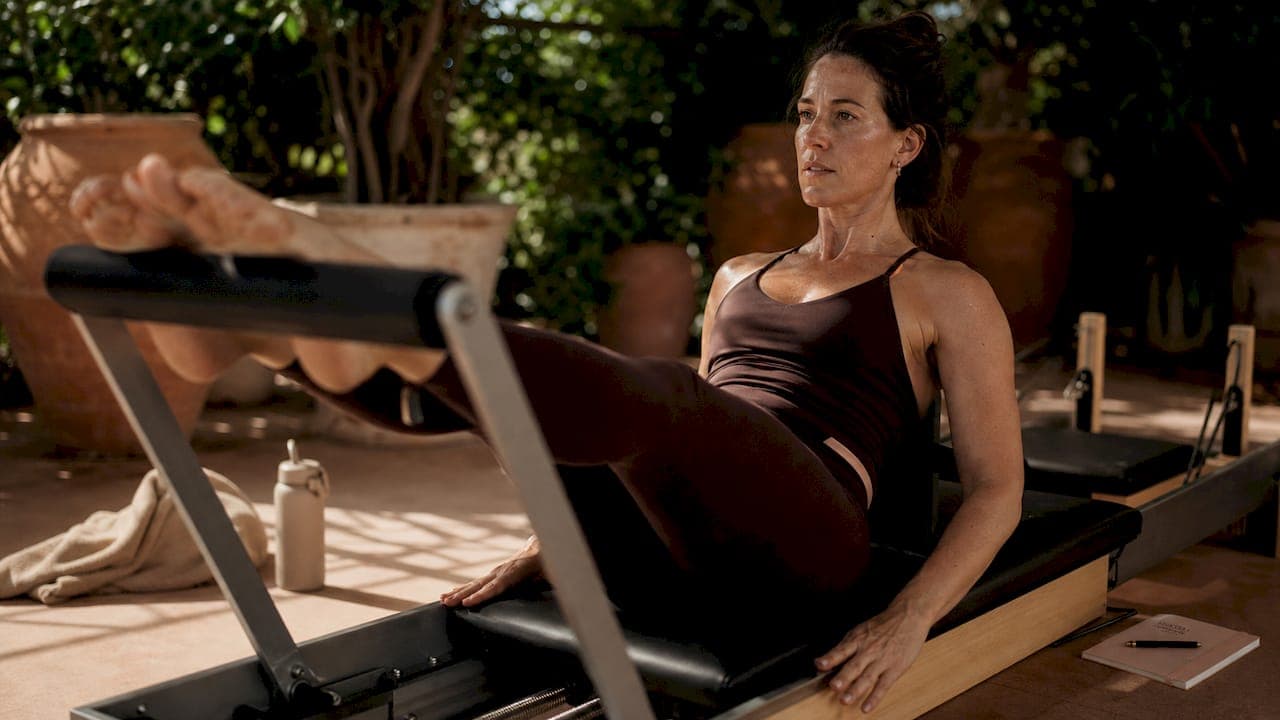
Reformer Pilates is a form of Pilates performed on a spring-loaded machine called a reformer, which uses adjustable resistance to support and challenge classical Pilates movements. The machine includes a padded sliding carriage, footbar, adjustable springs, shoulder blocks, and straps that work together to target muscles with precision. Unlike a gym machine that isolates one muscle group, the reformer trains your whole body through controlled, low-impact movement. For anyone over 30 looking to build strength, improve posture, and move better without punishing their joints, it delivers results that are hard to match.
What is reformer pilates and how does the machine work?
The reformer machine is the foundation of everything. The sliding carriage moves along a set of rails, and the springs connecting it to the frame create resistance in both directions. You push or pull the carriage away, then control its return. That return phase, known as the eccentric phase, is where two-directional muscle training happens. Your muscles work on the way out and again on the way back. This is a major reason reformer Pilates feels thorough despite the movements looking small and controlled.
The six foundational Pilates principles guide every session: concentration, control, centring, precision, breath, and flow. These are not just philosophical ideas. They are practical cues that shape how you move on the machine. Breath timing, for example, directly affects how well your deep core muscles activate. Lose the breath pattern and you lose the depth of the exercise.
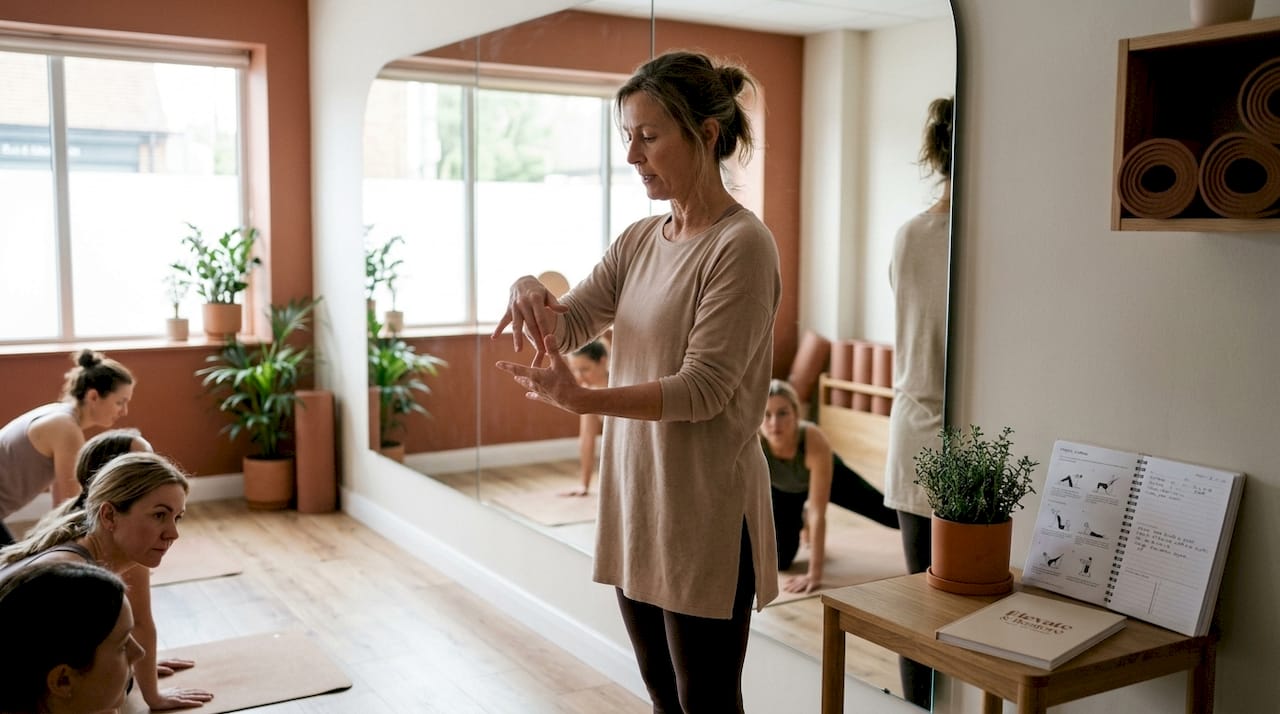
Spring tension is adjustable, which means the same exercise can be made easier or harder without changing the movement itself. A beginner working on footwork uses lighter springs for support. An advanced client uses heavier springs for greater resistance. This progressive resistance design is what makes the reformer suitable for such a wide range of fitness levels and goals.
Pro Tip: In your first few classes, resist the urge to rush through the movements. Ask your instructor to walk you through carriage control, strap setup, and breath timing before adding spring resistance. Getting these basics right from the start makes every subsequent session more effective.
| Machine Component | Function |
|---|---|
| Sliding carriage | Moves along rails to create resistance through spring tension |
| Adjustable springs | Control resistance level from light support to heavy load |
| Footbar | Anchor point for feet or hands depending on exercise |
| Straps and handles | Allow pulling movements and upper body engagement |
| Shoulder blocks | Keep the body positioned correctly on the carriage |
What benefits does reformer pilates offer for people over 30?
The physical benefits of reformer Pilates are well documented. Improved muscle strength, endurance, flexibility, balance, and posture are the headline outcomes, and the low-impact nature of the work makes it accessible even when managing an existing injury or returning from a break in training. The adjustable resistance means you are never forced into a load your body is not ready for.
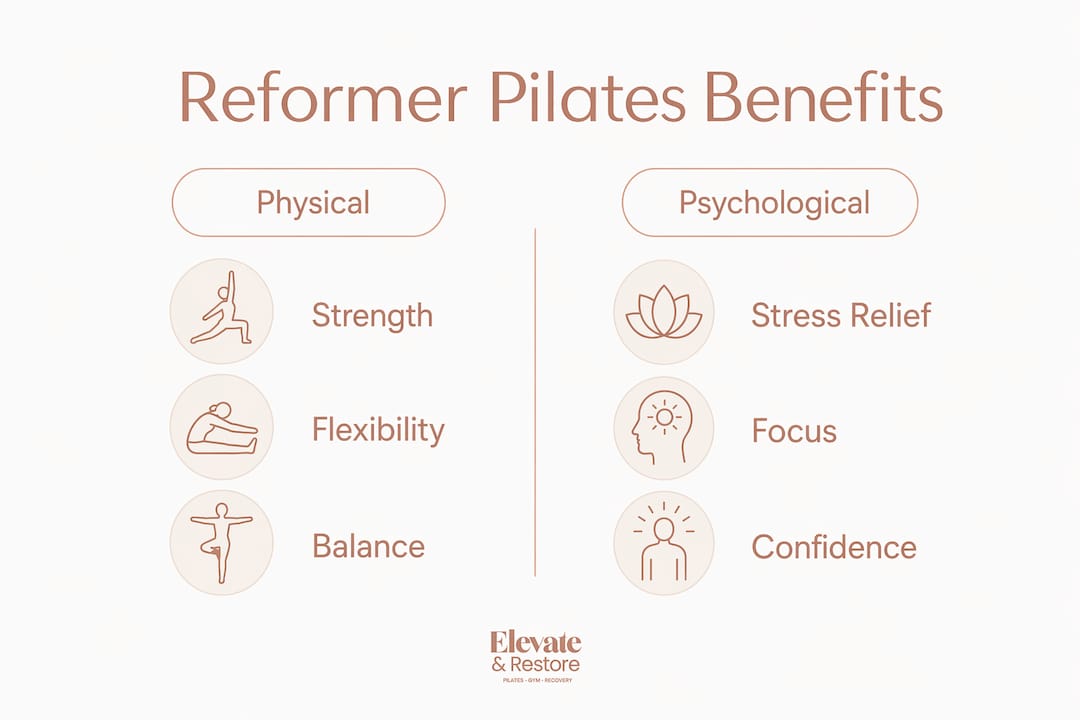
The psychological benefits are equally significant and often underestimated. A 2025 study published in PubMed found that an 8-week reformer Pilates programme improved postural alignment, body appreciation, and reduced social appearance anxiety in sedentary office workers. The study involved 22 participants completing two 60-minute sessions per week, with statistically significant improvements across physical and psychological outcomes. That result matters because it shows reformer Pilates is not just a physical tool. It changes how you feel about your body.
A 2025 randomised trial also confirmed that the mind-body principles of Pilates reduce chronic musculoskeletal pain and improve psychosocial variables. The combination of breath, concentration, and controlled movement creates a form of moving mindfulness that many over-30 clients find genuinely calming. If you want to understand the science behind this, the research on mindful movement and anxiety is worth reading.
Key reformer Pilates benefits for people over 30 include:
- Postural correction: Targets the deep stabilising muscles that support spinal alignment, which tends to deteriorate with desk-based work.
- Core strength: Activates deep core muscles, including the pelvic floor, more effectively than most gym-based core work.
- Joint-friendly loading: Spring resistance reduces compressive load on joints compared to free weights or high-impact training.
- Injury management: Instructors can modify exercises to work around common issues like lower back pain, knee problems, or shoulder injuries.
- Body awareness: The precision required builds a stronger connection between mind and movement over time.
- Mental focus: The concentration required during sessions creates a genuine mental reset, separate from the physical work.
For women specifically, the pelvic floor benefits of consistent reformer Pilates practice are worth understanding in detail.
Reformer pilates vs mat pilates: which one suits you?
Mat Pilates uses bodyweight only. Reformer Pilates uses adjustable spring resistance that scales from beginner to advanced without changing the exercise. That single difference creates a significant gap in what each method can deliver.
On a mat, you are limited by your own bodyweight and gravity. On a reformer, the springs can assist or resist movement depending on how they are set up. This means a reformer can make an exercise easier for someone rebuilding after injury, or harder for someone training at an advanced level. Mat Pilates cannot offer that range within a single exercise.
The reformer also provides physical feedback through the carriage. You feel immediately when your alignment is off because the carriage moves unevenly. That feedback loop accelerates technique development in a way that mat work cannot replicate.
| Feature | Reformer Pilates | Mat Pilates |
|---|---|---|
| Resistance type | Adjustable spring resistance | Bodyweight only |
| Equipment required | Reformer machine | Mat only |
| Cost per class | Approx. A$20–30 | Lower or free at home |
| Exercise variety | High, with machine modifications | Moderate |
| Injury modification | Strong, via spring adjustment | Limited |
| Best suited for | Progressive strength, rehab, posture | Budget-conscious, home practice |
Mat Pilates suits people who prefer home practice, have a tight budget, or are building a foundation before moving to the reformer. The reformer suits people who want progressive resistance, instructor-guided technique, and a broader range of exercises. For a deeper comparison of movement-based practices, the Pilates vs yoga guide for women over 30 covers the key differences well.
Pro Tip: If you are unsure which to start with, try a reformer fundamentals class first. The machine feedback and instructor guidance will teach you Pilates principles faster than mat work alone, and you can always add mat sessions later.
What to expect in a reformer pilates class
A typical reformer class runs 45–60 minutes and follows a structured format. Here is what a standard session looks like:
- Warm-up (5–10 minutes): Light footwork on the reformer to activate the legs and establish breath patterns. Springs are set light to allow free movement.
- Resistance work (30–40 minutes): The main body of the class. Exercises target legs, core, back, arms, and hips through a sequenced programme. Spring loads change throughout.
- Stretching and cool-down (5–10 minutes): The carriage and straps are used to support deep stretches. This phase supports recovery and flexibility.
Class types vary by studio. Fundamentals classes focus on technique and are ideal for beginners. Athletic classes use heavier spring loads and faster tempos for conditioning. Recovery-focused classes use lighter resistance and longer holds to support mobility and tissue repair.
Frequency matters. Experts recommend 2–3 sessions per week to fully realise the benefits of reformer Pilates. At that frequency, most people notice measurable changes in posture and strength within four to six weeks. Classes in Australian studios typically cost A$20–30 per session, making it a considered investment. Understanding why group sessions cost less than private training can help you plan your budget.
Reformer Pilates is suitable for most adults, including those managing injuries, provided the instructor is informed and qualified to modify exercises. Pregnancy, recent surgery, and certain spinal conditions require medical clearance first.
Can you do reformer pilates at home?
Home reformer practice is possible, but it comes with real considerations. Home reformer machines are available for purchase or rental, with quality units starting around A$1,500 and climbing significantly from there. That investment makes sense once you have solid technique and a clear training plan.
The non-negotiable starting point is professional instruction. Learning carriage control, spring selection, and body positioning from a qualified instructor before practising alone prevents poor habits and reduces injury risk. Online and virtual classes from reputable studios can support home practice once the basics are established.
Key considerations for home reformer practice:
- Get instruction first: At least 8–10 studio sessions before practising independently.
- Check your setup: The reformer must sit on a non-slip surface with enough clearance around the carriage.
- Start with lighter springs: Unexpected carriage movement is the most common beginner mistake at home.
- Follow a structured programme: Random exercises without sequencing reduce effectiveness significantly.
- Combine with studio sessions: Even monthly check-ins with an instructor keep your technique honest.
The ideal approach is to treat home practice as a supplement to studio sessions, not a replacement. The instructor feedback and class structure in a studio environment accelerate progress in ways that solo practice cannot fully replicate.
Key takeaways
Reformer Pilates delivers measurable physical and psychological benefits through spring-loaded resistance, precise technique, and consistent practice of 2–3 sessions per week.
| Point | Details |
|---|---|
| Machine mechanics matter | The sliding carriage and adjustable springs create two-directional muscle work that drives results. |
| Benefits go beyond the physical | Research confirms improvements in posture, body appreciation, and reduced anxiety after 8 weeks. |
| Reformer beats mat for progression | Adjustable resistance allows the same exercise to scale from beginner to advanced without changing the movement. |
| Frequency drives outcomes | Two to three sessions per week is the recommended minimum to see consistent strength and postural changes. |
| Professional instruction is non-negotiable | Learning carriage control and breath timing from a qualified instructor prevents poor habits from the start. |
What i have learned running reformer classes for over-30 clients
The most common thing I see with new clients over 30 is that they underestimate how much technique matters in the first few weeks. They come in expecting a workout and leave surprised by how much mental focus the reformer demands. That is not a complaint. It is usually the thing they end up valuing most.
The over-30 body responds well to reformer Pilates because it rewards precision over intensity. You do not need to push hard to get results. You need to move well, consistently. The clients who progress fastest are not the fittest ones in the room. They are the ones who listen to their body, ask questions, and show up regularly.
Choosing the right studio matters more than most people realise. Small group classes, ideally six people or fewer, give you the instructor attention that makes a real difference in technique development. A large class with 15 reformers and one instructor is a very different experience. The functional training and injury prevention principles that underpin good reformer programming require that individual attention to apply correctly.
My honest advice: start with a fundamentals class, commit to two sessions per week for six weeks, and pay attention to how your posture and energy levels change. The results will speak for themselves.
— Elevate
Try reformer pilates at Elevateandrestore in west footscray
Elevateandrestore offers reformer Pilates classes in West Footscray designed specifically for adults who want results without the noise of a large gym. Every class runs with a maximum of six participants, so you get genuine instructor attention on your technique, spring settings, and movement quality from the first session.
The studio combines reformer Pilates with a full recovery lounge including sauna, cold plunge, hot tub, and compression boots. That combination of training and recovery in one location is rare, and it makes a real difference to how your body responds between sessions. Whether you are brand new to Pilates or returning after time away, Elevateandrestore has a class format that fits where you are right now.
FAQ
What is a reformer pilates machine?
A reformer is a spring-loaded exercise machine with a sliding carriage, footbar, adjustable springs, shoulder blocks, and straps. It adds resistance to classical Pilates movements and allows exercises to be scaled from beginner to advanced.
Is reformer pilates good for beginners?
Reformer Pilates suits beginners well because the adjustable spring resistance can support movement rather than resist it. A fundamentals class with a qualified instructor is the recommended starting point.
How often should you do reformer pilates?
Experts recommend 2–3 sessions per week to see consistent improvements in strength, posture, and flexibility. Most people notice measurable changes within four to six weeks at that frequency.
Is reformer pilates better than mat pilates?
Reformer Pilates offers adjustable resistance and exercise variety that mat Pilates cannot match. Mat Pilates is more accessible and cost-effective for home practice, but the reformer delivers faster progression for most people.
Who should avoid reformer pilates?
Most adults can participate safely with qualified instruction. Those with recent surgery, certain spinal conditions, or who are pregnant should seek medical clearance before starting. Always inform your instructor of any injuries or health conditions before your first class.