
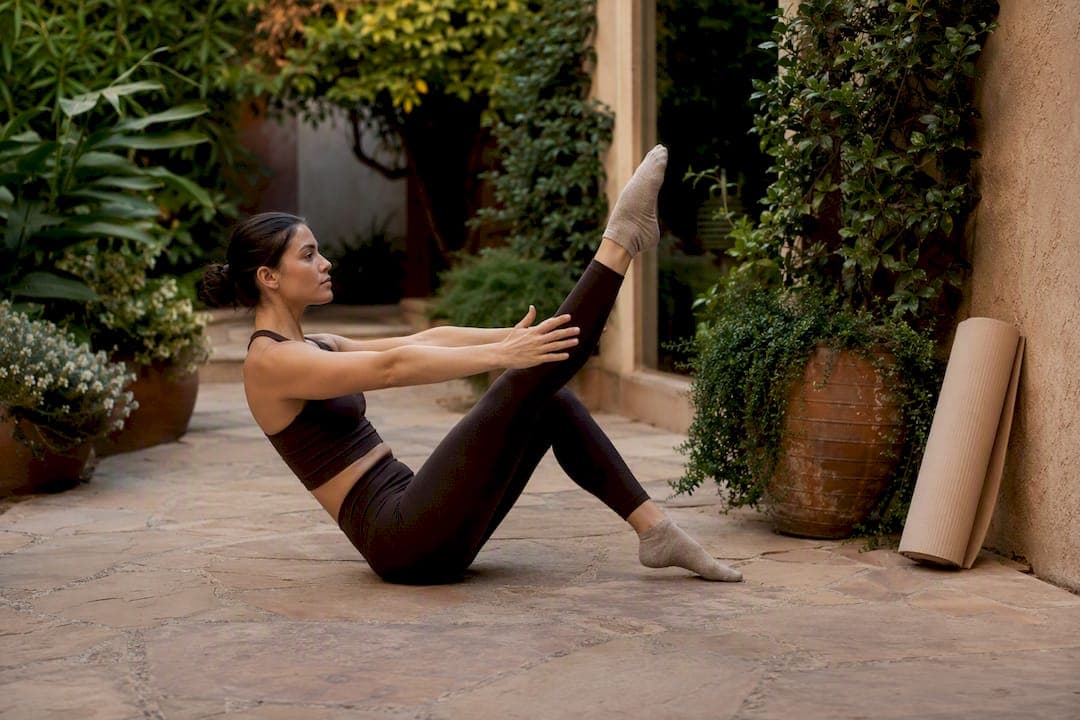
Yes, pilates improves flexibility and joint mobility when you practise it regularly and pay attention to how sessions are sequenced. The mechanism is simple to state, harder to fake: pilates lengthens muscles while strengthening them through that new range, so gains stick rather than fading by Thursday. A 10-week programme in older adults produced large, measurable increases across multiple joints, including large, measurable increases in thoracolumbar lateral bending and shoulder external rotation. Even a single clinical session moved the needle, improving sit-and-reach scores and finger-to-floor distance in adults with mild chronic low back pain.
What should you do with this? Start here:
- Book 2 to 4 pilates sessions a week, 20 to 30 minutes each, with a flexibility focus.
- Prioritise controlled, active stretching over passive holds.
- Expect early sensation of change within a fortnight, measurable gains by 6 to 10 weeks.
TL;DR:
- Starting pilates with two to four 20-30 minute sessions weekly, focusing on stretching before strength work, produces measurable flexibility improvements in 6 to 10 weeks.
- Incorporating active lengthening and end-range strength training during sessions enhances the durability and functional use of new ranges of motion.
- Sequencing sessions to include dedicated stretching at the start and strength later significantly improves sit-and-reach gains and reduces soreness compared to other approaches.
- Reformer machines and small-group classes with professional cueing support safer, more effective progress into full ranges of motion.
- Regular practice benefits adults with stiffness, postural tension, or mild low back pain, but poses caution for acute injury, nerve pain, or shoulder impingements.
Table of Contents
- How pilates improves flexibility and joint mobility
- Pilates exercises that improve flexibility, plus a 20 to 30 minute routine
- How to sequence sessions for measurable flexibility gains
- Pilates versus yoga versus static stretching: which wins?
- Who benefits most, and when to be careful
- How Elevateandrestore supports safe, measurable flexibility gains
- What the evidence actually tells us about flexibility training
- Book into a studio built around control, not just stretch
- Key Takeaways
- Authoritative studies and guides cited
- Sources
How pilates improves flexibility and joint mobility
Most stretching programs ask a muscle to relax and lengthen while doing nothing else. Pilates asks it to lengthen and work, which is the whole point. Trainers call this active length: contracting a muscle at its longest position instead of just hanging out there passively. It's the difference between touching your toes and being able to control your leg at head height during a kick.
This matters because flexibility without strength is fragile. Anyone can be pushed or stretched into a deeper range by gravity or a partner. Pilates instead builds what's called end-range strength, meaning you can hold and control a joint at the edge of its motion rather than just visiting it briefly. That's what makes a new range usable in daily life, not just visible in a photo.
Three things drive this in practice:
- Spinal articulation — rolling through the spine bone by bone (as in a roll-up) mobilises segments that stay stiff in most people.
- Pelvic control — a stable pelvis lets the hips and lower back move independently instead of compensating for each other.
- Breath coordination — exhaling into a stretch triggers a genuine nervous-system release, not just a mental one.
Reformer machines add another layer: adjustable spring resistance guides limbs into fuller ranges of motion while the springs support the body's weight, which is often the safest way to explore a stretch you can't yet manage unassisted.
Pro Tip: Exhale on the stretch, not the return. Most people do the opposite by habit, which tightens exactly the muscle they're trying to lengthen.
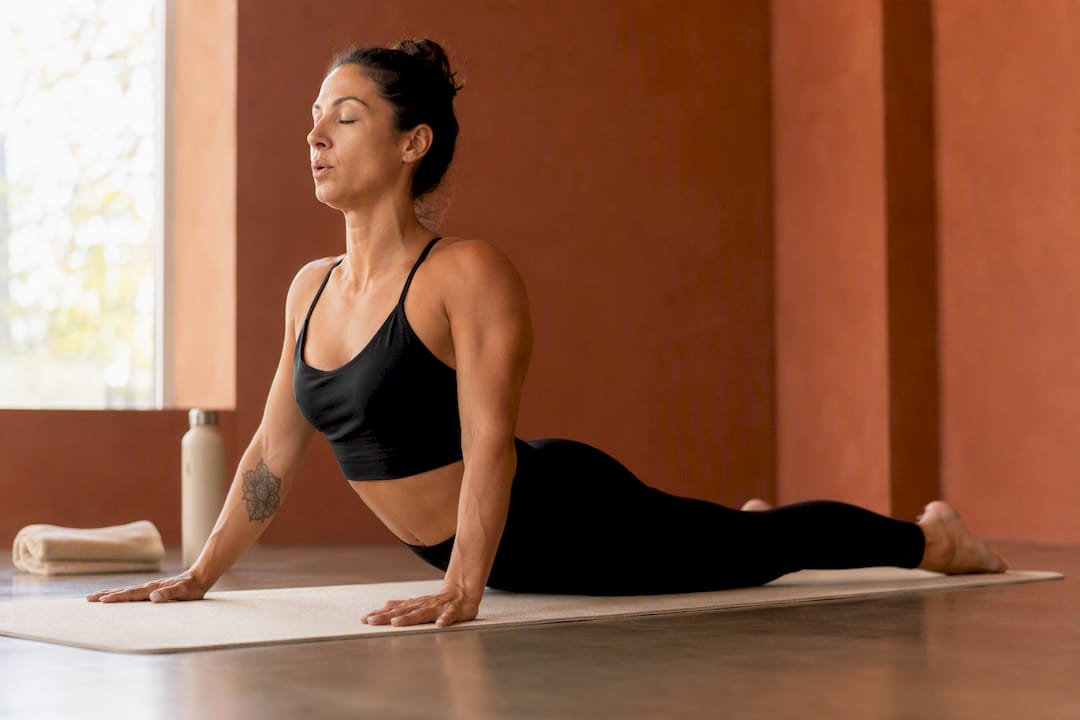
Pilates exercises that improve flexibility, plus a 20 to 30 minute routine
Some moves earn their place in almost every flexibility-focused pilates routine. Here are the ones worth learning properly.
- Spine stretch forward — targets the back and hamstrings. Cue: sit tall, reach forward vertebra by vertebra. Regress by bending the knees; progress by flexing the feet and reaching further.
- Roll-up — full spine mobility. Cue: peel off the mat slowly, exhale on the way down. Regress with bent knees and a small range; progress to a straight-leg roll-up.
- Mermaid — lateral spine and rib cage. Cue: reach up and over, keep both hips grounded. Regress with a smaller side bend; progress by adding a reformer arm pull for extra length.
- Hip rolls / bridges — hip flexors and lower back. Cue: peel the spine up one segment at a time. Regress with a small pelvic tilt; progress to single-leg bridge.
- Hamstring leg circles — hip and hamstring mobility. Cue: keep the standing leg glued to the mat. Regress with a bent working knee; progress with a straight leg and a slower tempo.
- Saw — spine rotation plus hamstring reach. Cue: rotate from the ribs, not the shoulders. Regress with a smaller twist; progress with a longer exhale and deeper reach.
- Cat-cow — spinal segmentation and warm-up. Cue: lead with the tailbone, not the head. Suitable for almost everyone, including beginners.
- Shoulder bridge — hips, glutes and thoracic extension. Cue: press evenly through both feet. Progress by extending one leg at the top.
Mat work suits most of these moves fine. Choose the reformer when you're working toward a deeper range you can't yet control unassisted, such as a full straddle stretch or deep hip opener, since the springs offer graduated resistance you can dial back if it's too much.
Sample 25-minute routine:
- 0 to 5 min: cat-cow and pelvic tilts (warm-up)
- 5 to 12 min: spine stretch forward, roll-up, saw
- 12 to 18 min: hip rolls, hamstring leg circles
- 18 to 23 min: mermaid, shoulder bridge
- 23 to 25 min: seated breath and stillness
How to sequence sessions for measurable flexibility gains
Order matters more than most people assume. An 8-week randomised trial found that including dedicated stretching at the start of pilates sessions produced significantly better sit-and-reach improvements than pilates without that opening stretch block, with a large effect size and fewer post-exercise aches. Strength work later in the session then locks in that new range instead of just visiting it.
Structure a session like this:
- 5 minutes of gentle dynamic warm-up
- 8 to 10 minutes of dedicated stretching, targeting whatever's tightest that day
- 10 to 15 minutes of strengthening through the newly available range
- 2 to 3 minutes of cooldown and breath work
For frequency, two sessions a week is roughly the floor for noticeable change; three or four accelerates it. Most people report the first subjective loosening within two weeks, with objective gains on tests like sit-and-reach or fingertip-to-floor distance showing up between 6 and 10 weeks, consistent with the timeframes used in trial protocols on pilates and flexibility. Skipping the warm-up or rushing straight into deep stretches cold is the most common cause of next-day soreness.
Pilates versus yoga versus static stretching: which wins?
They're not really competing for the same job. Pilates builds flexibility with end-range strength, so a new range of motion becomes something you can control, not just display. Yoga tends to favour longer, breath-centred holds that build flexibility through sustained passive tension. Static stretching alone delivers passive length gains but does little to build the strength to use that length under load.
- Choose pilates when you're rehabbing an injury, chasing functional mobility, or need control at the edge of your range.
- Choose yoga if you want longer holds and a slower, breath-led approach to the same tight areas.
- Combine both if you like the variety. A weekly yoga class alongside pilates works well as cross-training for mobility, and the two rarely conflict.
Systematic review evidence backs pilates as an effective option for flexibility gains, comparable to other exercise modalities and clearly better than staying sedentary, though the researchers rate overall evidence quality as low to moderate.
Who benefits most, and when to be careful
Pilates for flexibility suits adults dealing with general stiffness, postural tightness from desk work, or chronic low-grade back pain that responds to movement rather than rest. It's also a sound rehab tool once acute injury has settled.
- Modify forward flexion and roll-ups for anyone with acute low back pain; work from neutral spine instead.
- Reduce range and load on overhead reaching moves like the mermaid for shoulder impingement.
- Pregnant clients should avoid deep spinal flexion and prone positions; a qualified instructor will adjust the whole session.
- Stop immediately and see a physiotherapist or GP if you feel sharp, shooting, or nerve-type pain rather than the expected muscular stretch sensation.
Pro Tip: Muscular stretch feels like tension that eases within a breath or two. Nerve pain doesn't ease; it often gets sharper or radiates. Don't push through the second kind.
How Elevateandrestore supports safe, measurable flexibility gains
Small-group reformer classes, capped at six people, give an instructor time to correct the compensations that quietly cap flexibility progress, like a hip that hikes instead of a hamstring that lengthens. That kind of cueing is difficult to deliver in a room of thirty.
- Reformer sessions use spring resistance to guide clients into fuller, better-supported ranges of motion.
- The recovery hub, including sauna, cold plunge, hot tub, and compression therapy, supports the muscle recovery that lets you return to stretching sooner rather than fighting soreness.
- Related reading on building injury resilience through pilates covers how flexibility and injury prevention overlap in practice.
What the evidence actually tells us about flexibility training
Most flexibility advice treats stretching as something separate from strength work, done before or after the "real" training. The research on pilates suggests that's backwards. The 8-week trial on sequencing didn't just show stretching-first pilates works better; it showed stretching-only or strength-only approaches leave gains on the table compared with combining them properly in one session.
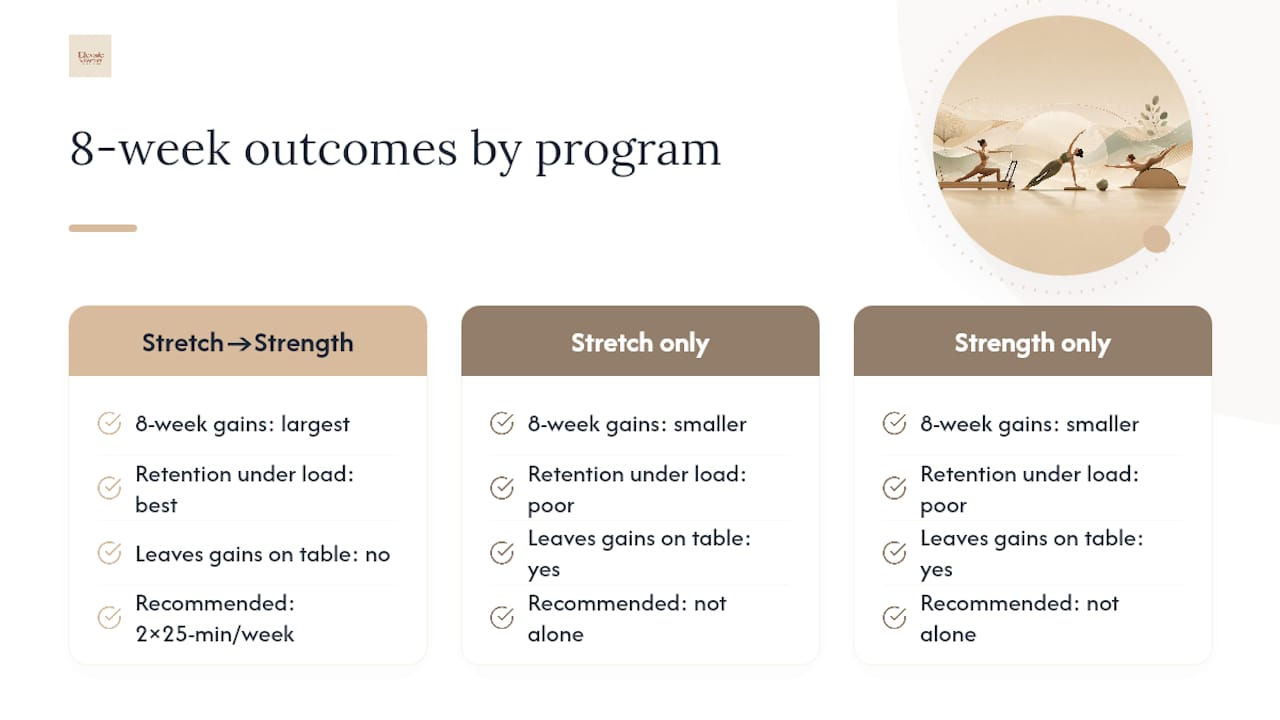
The bigger miss in conventional advice is expecting flexibility to be permanent once you've "got" it. It isn't. Range of motion you can't control under load tends to regress within weeks of stopping practice, which is exactly why the end-range strength piece matters more than most stretching guides admit. A deep hip opener means little if you can't hold a bridge afterwards.
What we'd prioritise first, based on everything above: consistency over intensity. Two properly sequenced 25-minute sessions a week, stretching before strengthening, will outperform one heroic 90-minute stretch marathon almost every time.
— Elevate
Book into a studio built around control, not just stretch
There's a real gap between generic flexibility advice and actually being coached through it, and that's the gap Elevateandrestore is built to close. Reformer classes are capped at six people, so an instructor can watch how your hips move on the fourth rep, not just the first, and adjust spring resistance to get you safely into new range without guesswork about form.
The recovery hub sitting alongside the studio, sauna, cold plunge, hot tub and compression boots, means the soreness that usually derails a new stretching habit gets managed properly instead of becoming the reason you skip next week's session. If you're carrying stiffness from years at a desk or easing back into movement after a niggle, the small-group reformer pilates classes are the practical starting point, and the recovery lounge is there for the days after. Book a session and feel the difference small-group cueing makes to how your body actually responds.
Key Takeaways
Pilates improves flexibility by combining active muscle lengthening with end-range strength, and sequencing stretching before strengthening produces measurably better results than either alone.
| Point | Details |
|---|---|
| Flexibility gains are real and measurable | A 10-week programme showed large increases in shoulder rotation and spinal lateral bending. |
| Sequencing changes outcomes | Stretching before strengthening in an 8-week trial produced significantly better sit-and-reach results with fewer aches. |
| Frequency and timeline | Two to four 20 to 30 minute sessions weekly, with measurable change typically by 6 to 10 weeks. |
| Strength makes flexibility usable | End-range strength, not passive stretching alone, is what keeps new range of motion functional. |
| Small-group coaching supports safe progress | Elevateandrestore's six-person reformer classes and recovery hub help clients build range safely and recover between sessions. |
Authoritative studies and guides cited
- Effect of a Pilates programme on flexibility in elderly subjects
- Pain, function and flexibility changes after clinical pilates
- Stretching within pilates programs: a randomised trial
- Systematic review of pilates and health outcomes
- Mobility and athletic longevity guide
Sources
- Effect of a physical training program using the Pilates method on flexibility in elderly subjects
- Pain, Function and Trunk/Hip Flexibility Changes Immediately after Clinical Pilates Exercises in Young Adults with Mild Chronic Low Back Pain
- Effects of stretching in a pilates program on musculoskeletal fitness: a randomized clinical trial
- Systematic review on Pilates and health outcomes (flexibility results summary)