
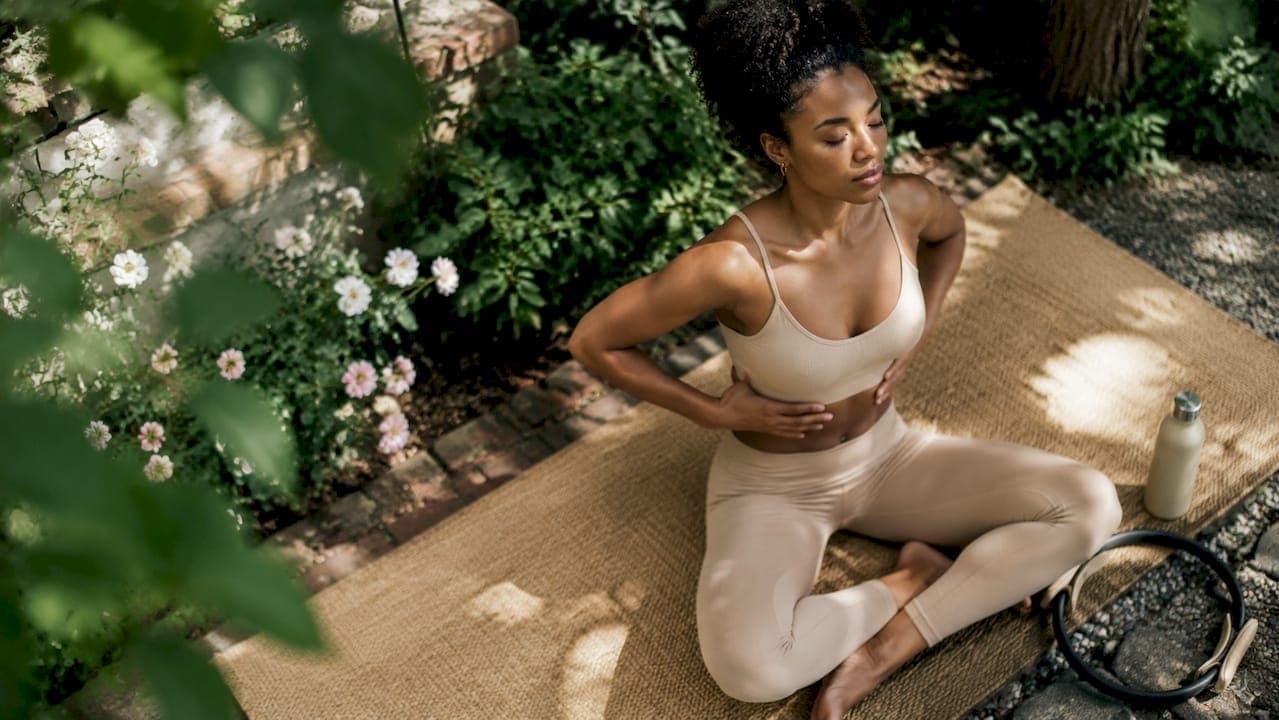
Breathwork in Pilates is defined as the deliberate coordination of breathing patterns with movement to activate the deep core, stabilise the spine, and create a precise mind-body connection. The role of breathwork in Pilates goes far beyond simply "remembering to breathe." It is the organising principle that determines how well your powerhouse engages, how safely your pelvic floor responds, and how efficiently your nervous system recovers between efforts. For practitioners over 30, getting this right is the difference between a practice that produces real results and one that plateaus. This guide draws on 2026 clinical trials and coaching frameworks from Polestar Pilates and Wundacore to explain exactly how breath drives performance.
How does breath control enhance core activation in Pilates?
Breath control in Pilates works by using the mechanics of the ribcage and diaphragm to create intra-abdominal pressure that stabilises the spine without bracing. When you exhale, the pelvic floor and transversus abdominis naturally recoil upward and inward. That reflex is your powerhouse activating. The breath is not just supporting the movement. It is triggering it.
Lateral breathing vs diaphragmatic breathing
Lateral ribcage breathing is the preferred technique in Pilates because it allows full lung expansion without causing the abdomen to dome outward. Belly-dominant diaphragmatic breathing, while excellent for relaxation, reduces the tension in the abdominal wall that Pilates exercises depend on. Think of lateral breathing as expanding your ribcage sideways and into your back, like an accordion, rather than pushing your belly forward. This distinction matters more as you age, because abdominal wall tone naturally decreases after 30 and the breath becomes a critical compensatory tool.
Breath timing links directly to movement phases. The standard cue is to exhale on the effort, the curl, the press, or the lift, and inhale on the return. This is not arbitrary. Timed exhalation acts as the organising cue for pelvic floor and deep core engagement, reducing the tendency for accessory muscles in the neck and jaw to take over.
Common pitfalls that undermine your practice
The most damaging habit in Pilates is breath holding. Valsalva-like breath holding raises intra-abdominal pressure and blood pressure, disrupts pelvic floor timing, and creates the exact instability you are trying to prevent. Many practitioners hold their breath when an exercise feels hard, which is precisely when continuous breathing matters most.
- Breath holding during challenging exercises spikes pressure and disrupts pelvic floor coordination
- Over-bracing the abdominals blocks natural ribcage movement and reduces breath volume
- Shallow chest breathing increases neck and shoulder tension, reducing movement quality
- Forcing breath timing before establishing breath awareness creates mechanical, disconnected movement
Pro Tip: If you cannot maintain a continuous exhale through a Pilates exercise, the load is too high. Reduce the difficulty until your breath flows freely, then rebuild. This is not a regression. It is the correct progression.
What are the health benefits of breathwork in Pilates for adults over 30?
The importance of breath in Pilates extends well beyond technique. Clinical research published in 2026 confirms that combining structured breathwork with Pilates produces measurable improvements in physical and psychological health that Pilates alone does not consistently achieve.
Cardiovascular and respiratory gains
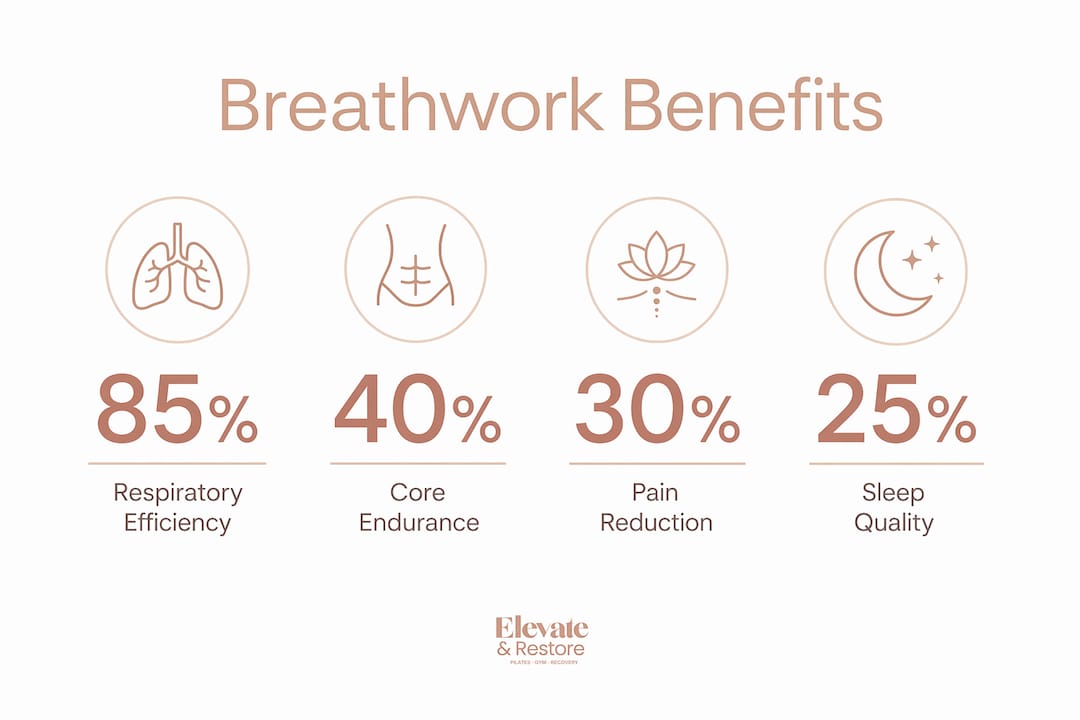
An 8-week Mat Pilates programme focusing on lateral breathing mechanics improved respiratory efficiency and core endurance in adults aged 60 to 77. This means that even moderate Pilates practice, when breath is taught correctly, produces genuine cardiorespiratory adaptation. A separate randomised controlled trial found that Pilates breathing combined with treadmill training improved blood pressure, pulmonary function, and quality of life in pre-hypertensive patients over six weeks. For anyone over 30 managing cardiovascular risk factors, this is a significant finding.
Slow, controlled breathing also produces autonomic benefits including improved heart rate variability, which is a direct marker of stress resilience and recovery capacity. Rapid or hyperventilatory breathing patterns do not produce these effects. The quality and pace of the breath determines the outcome.
Pain reduction and sleep quality
A clinical trial found that Pilates with breathing re-education reduced pain and improved sleep quality in women with chronic neck pain more effectively than Pilates alone. The addition of breath re-education was the variable that made the difference. For practitioners over 30 dealing with desk-related neck tension or chronic musculoskeletal discomfort, this is a practical reason to prioritise breath technique over adding more exercises to your programme.
| Outcome | Pilates alone | Pilates with breathwork |
|---|---|---|
| Core endurance | Moderate improvement | Significant improvement |
| Blood pressure | Minimal change | Measurable reduction |
| Neck pain and disability | Moderate reduction | Greater reduction |
| Sleep quality | Some improvement | Notably improved |
| Stress and anxiety | Reduced | Significantly reduced |
Pilates breathwork practices also improve heart rate variability and reduce psychological distress, making the breath a direct tool for managing the stress load that accumulates in daily life after 30.
How do different breathwork techniques compare in Pilates?
Not all breathing approaches serve the same purpose in Pilates. Understanding the differences helps you choose the right technique for the right moment in your practice.
Lateral ribcage breathing vs belly breathing
Lateral thoracic breathing expands the ribcage outward and posteriorly, maintaining abdominal wall engagement throughout the breath cycle. Belly breathing, by contrast, allows the abdomen to fully expand on the inhale, which releases the core connection Pilates exercises require. Pilates breathing differs from diaphragmatic belly breathing precisely because it prioritises lateral rib expansion to support core stability without full abdominal distension. Both techniques have value. Belly breathing is ideal for relaxation, recovery, and nervous system downregulation. Lateral breathing is the tool for active Pilates work.
Paced vs natural breathing
| Technique | Primary use | Core engagement | Best for |
|---|---|---|---|
| Lateral ribcage breathing | Active Pilates exercises | High | Core work, reformer, mat |
| Diaphragmatic belly breathing | Recovery and relaxation | Low | Cool-down, stress relief |
| Paced breathing (slow exhale) | Autonomic regulation | Moderate | Endurance, anxiety reduction |
| Natural breathing | Movement flow | Variable | Warm-up, low-load movement |
Paced breathing, where the exhale is deliberately lengthened to twice the duration of the inhale, activates the parasympathetic nervous system and improves heart rate variability. This pattern is particularly useful in Pilates sequences that combine endurance with precision, such as the Hundred or long reformer series. Polestar Pilates frames breath as a pressure management system rather than a timing cue, which shifts the focus from mechanical compliance to functional safety. That framing is more useful for practitioners over 30 who are managing pelvic floor health or recovering from injury.
Skilled instructors adapt breath cues to the individual. A client with pelvic floor dysfunction needs different cueing than a competitive athlete. The breath technique is always in service of the person, not the other way around.
How can you integrate breathwork into your Pilates practice?
Integrating breath into Pilates practice is a skill that develops in stages. Rushing to coordinate breath timing before establishing basic breath awareness is the most common mistake practitioners make.
- Observe your natural breathing pattern first. Before your next session, lie in a constructive rest position and simply notice where your breath goes. Does your chest rise? Does your belly dome? Does your breath shallow out when you engage your core? Awareness precedes change.
- Practise lateral breathing in isolation. Place your hands on the sides of your ribcage and breathe into your hands. Feel the ribcage expand sideways and into your back. Do this for two minutes before beginning any Pilates exercise.
- Coordinate exhale with effort. Once lateral breathing feels natural, begin exhaling on the hardest part of each exercise. The curl in a roll-up, the press in a leg circle, the lift in a bridge. Do not force the timing. Let the exhale initiate the movement.
- Check for breath holding under load. When exercises become challenging, notice whether your breath stops. If it does, reduce the load or modify the exercise until continuous breathing is possible again.
- Use breath to manage tension. If you notice your neck, jaw, or shoulders tightening during an exercise, it is often a sign that your breath has become shallow or stopped. A full exhale will release that tension more effectively than a postural correction.
For women over 30, pelvic floor coordination is directly linked to breath mechanics. The pelvic floor lifts on the exhale and releases on the inhale. Teaching this connection through breath awareness, before adding load, produces far better outcomes than cueing the pelvic floor directly.
Pro Tip: Begin every Pilates session with two minutes of lateral breath observation before you move. Experienced Pilates instructors teach breath awareness before coordinating breath timing with movement, because sustainable mechanics require a foundation of awareness first.
What I have learned about breath in Pilates after years of coaching
The most persistent misconception I see in Pilates is that breath is a timing rule rather than a physiological tool. Practitioners learn to exhale on the curl and inhale on the return, and they follow that rule mechanically without ever understanding why. When the rule does not fit the exercise, they either hold their breath or abandon the cue entirely.
What actually matters is pressure management. The exhale reduces intra-abdominal pressure and coordinates the pelvic floor. The inhale prepares the system for the next effort. When you understand that, the timing becomes intuitive rather than prescriptive. You stop asking "when do I breathe?" and start asking "what does my body need right now?"
I have also seen how breath cueing can cause harm when it is poorly delivered. Instructors who cue "brace your core and hold" are inadvertently teaching the Valsalva manoeuvre. Over time, this pattern increases blood pressure, disrupts pelvic floor function, and creates the chronic tension it is supposed to prevent. Reducing the exercise load and maintaining continuous exhalation is always the safer and more effective choice.
For practitioners over 30, breath awareness is also a direct line into the nervous system. Slow, controlled breathing activates the parasympathetic response, reduces cortisol, and improves recovery between sessions. That is not a secondary benefit. For this age group, recovery capacity is often the limiting factor in progress, and the breath is one of the most accessible tools available.
— Elevate
Experience expert breathwork coaching at Elevateandrestore
At Elevateandrestore in West Footscray, every Pilates class is taught in small groups of six, which means your instructor can actually hear your breath, observe your ribcage mechanics, and correct your cueing in real time. That level of attention is what separates a practice that progresses from one that stalls. Our instructors integrate lateral breathing, pelvic floor coordination, and pressure management into every session, not as an add-on but as the foundation. After your session, the recovery lounge including sauna, cold plunge, and compression boots supports the nervous system reset that breathwork begins. Book your first session and feel the difference that proper breath coaching makes.
FAQ
What is the role of breathwork in Pilates?
Breathwork in Pilates coordinates the exhale with muscular effort to activate the deep core, stabilise the spine, and manage intra-abdominal pressure. It is the primary mechanism by which Pilates produces core engagement and movement efficiency.
Why is lateral breathing used in Pilates instead of belly breathing?
Lateral ribcage breathing maintains abdominal wall engagement throughout the breath cycle, which is necessary for core stability during Pilates exercises. Belly breathing releases that tension and reduces the effectiveness of core-focused movements.
Can breathwork in Pilates reduce pain and improve sleep?
Clinical research confirms that Pilates combined with breathing re-education reduces musculoskeletal pain and improves sleep quality more effectively than Pilates alone, particularly for adults with chronic neck pain or postural issues.
How does breath holding affect Pilates performance?
Breath holding during Pilates raises intra-abdominal pressure, disrupts pelvic floor timing, and increases blood pressure. Maintaining continuous exhalation through challenging exercises produces safer and more effective core activation.
How long does it take to integrate breathwork into Pilates practice?
Most practitioners develop basic lateral breathing awareness within two to four weeks of consistent practice. Coordinating breath timing with complex movement patterns typically takes six to eight weeks of guided instruction.
Key takeaways
Breathwork is the physiological foundation of Pilates, not a supplementary technique. Without correct breath mechanics, core activation, pelvic floor coordination, and spinal stability are all compromised.
| Point | Details |
|---|---|
| Lateral breathing is the standard | Ribcage expansion maintains core tension that belly breathing releases, making it the correct technique for active Pilates work. |
| Exhale timing drives core engagement | Timed exhalation is the organising cue for pelvic floor and deep core activation, reducing accessory muscle substitution. |
| Breath holding causes harm | Valsalva-like holding raises blood pressure and disrupts pelvic floor timing. Reduce load before sacrificing continuous breath. |
| Clinical evidence supports breathwork | Adding breath re-education to Pilates improves pain, sleep, blood pressure, and pulmonary function beyond Pilates alone. |
| Awareness precedes timing | Building lateral breath awareness before coordinating breath with movement produces more sustainable and effective mechanics. |