
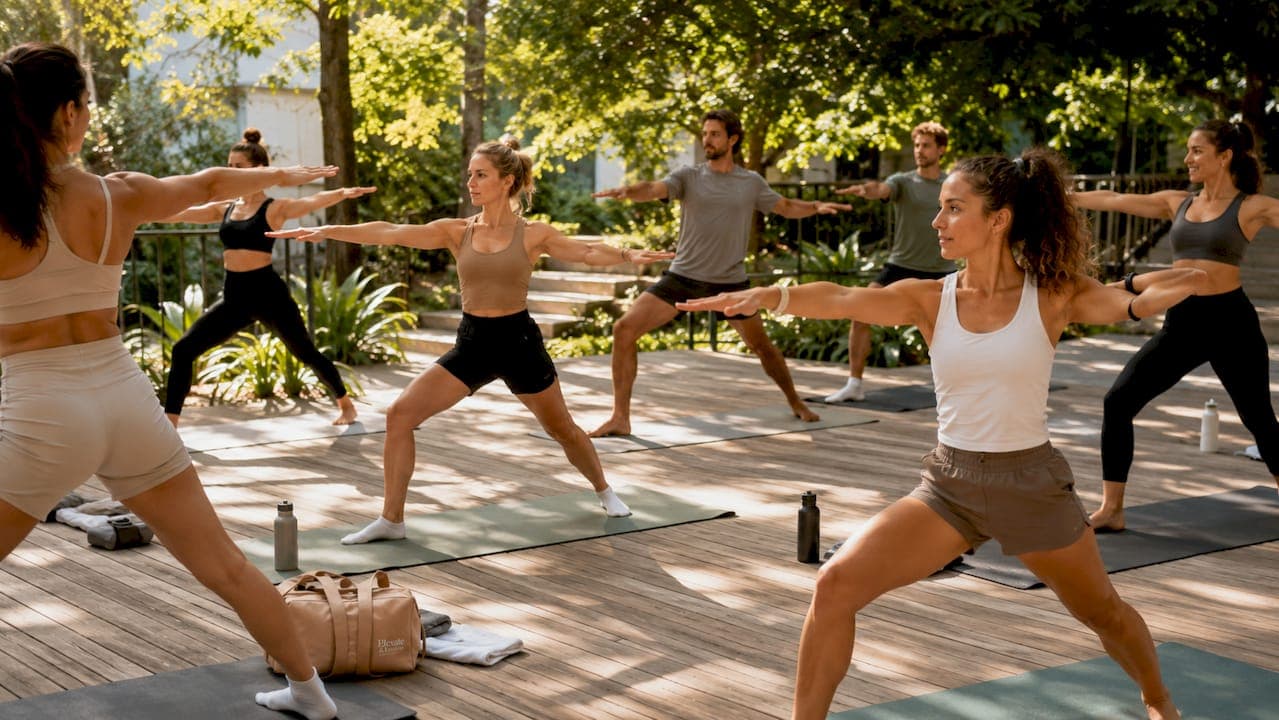
A group fitness class is a structured workout session led by a qualified instructor, designed to guide beginners through movement with community support and real-time coaching. Attending a group fitness class for the first time is one of the most effective ways to build a consistent exercise habit. The shared energy of a room lifts your effort without you even noticing. Formats like reformer Pilates, functional training, HIIT, and yoga each suit different goals and fitness levels. Knowing what to expect before you walk through the door removes most of the nerves and sets you up for a genuinely good experience.
How to choose the right group fitness class for your first time
The class format you choose shapes your entire first experience, so pick one that matches where you are right now, not where you want to be in six months.

Start by matching the format to your goal. If you want to build strength and move better in daily life, functional training or reformer Pilates are strong starting points. If you want to raise your heart rate and burn energy, a cardio or HIIT format works well. If stress relief and flexibility are the priority, yoga or stretch-based classes deliver that. There is no wrong answer, but picking a format you find interesting makes it far easier to come back.
Check the class description carefully before booking. Studios often label classes as "all levels," "beginner-friendly," or "open level." Those labels matter. A class pitched at all levels in a boutique studio with experienced regulars can feel very different from one specifically designed for newcomers. Read online reviews and look for comments from people who attended for the first time. Phrases like "the instructor checked in on me" or "I felt welcome straight away" are reliable signals.
Pro Tip: Ring or email the studio before your first booking. Ask directly whether the class suits complete beginners. Instructors appreciate the question and will often give you a heads-up on what to expect.
Location and schedule convenience also matter more than most beginners realise. A class that fits your routine is one you will actually attend. Check whether the studio offers trial packages, and read the cancellation policy before you commit. Many boutique studios require credit card details even for free trial classes to cover no-shows. Knowing this upfront prevents surprises.
What to bring and expect on the day
Arriving prepared removes the logistical stress that trips up most first-timers. Arrive 15 minutes early for check-in, paperwork, and a quick look around the space. Late arrivals risk losing their spot to someone on the waitlist, and walking into a class already in progress is far more uncomfortable than arriving with time to spare.
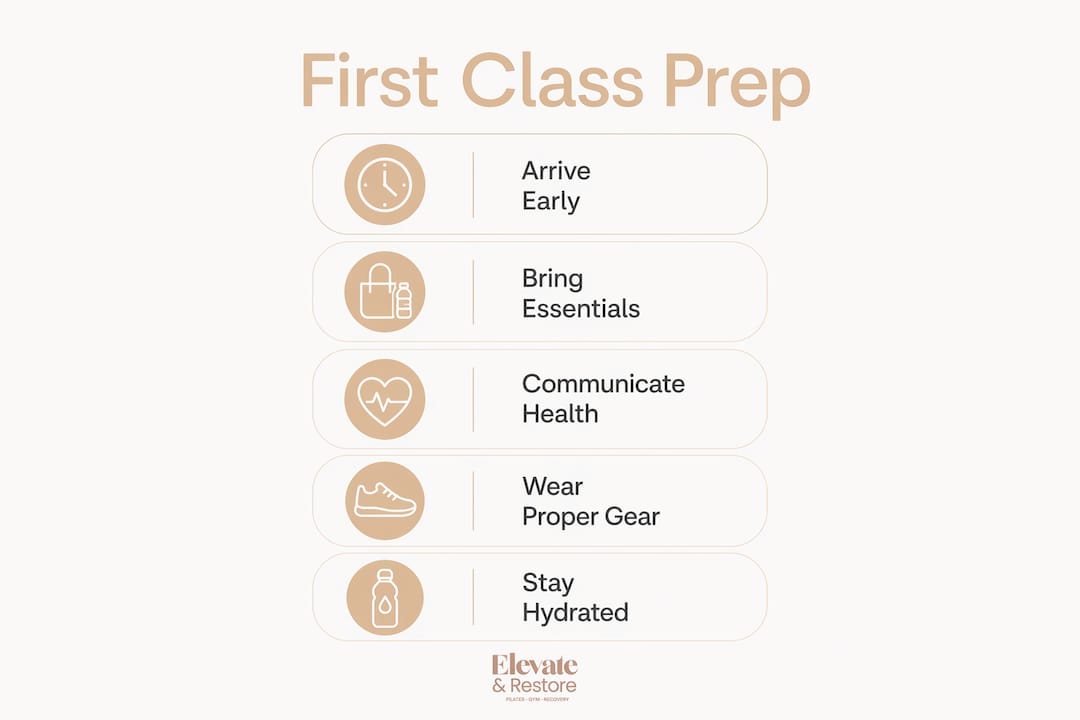
Wear activewear suited to the activity. For Pilates or yoga, fitted clothing that does not bunch up works best. For cardio or HIIT, breathable, moisture-wicking fabric keeps you comfortable. Proper footwear matters more than most people expect. Flat-soled shoes suit strength and Pilates formats better than cushioned running shoes, which can reduce stability during weighted movements.
The table below covers what to bring and what to budget for on the day.
| Item | Why you need it |
|---|---|
| Water bottle | Hydration is non-negotiable for any class format |
| Towel | Many studios charge for towel hire or do not supply them |
| Grip socks | Required for reformer Pilates; rental fees typically apply |
| Photo ID | Some studios require ID for first-time check-in |
| Payment method | Equipment hire and incidental fees are common |
Hidden costs catch beginners off guard. Grip sock hire, towel rental, and locker fees can add up. Rental fees for grip socks often range from $3–$5 per session. Buying your own pair after the first class is a simple way to reduce ongoing costs.
Before class starts, tell the instructor about any injuries or health concerns. Instructors appreciate early communication from new participants because it lets them offer modifications and keep you safe throughout the session. This one conversation can make the difference between a comfortable class and an avoidable injury.
Pro Tip: Store your phone in a locker before class. Checking it mid-session breaks your focus and signals to the instructor that you are disengaged. You will get far more from 45 minutes of full attention.
How to get the most from your first class
A typical group fitness session follows a clear structure: a warm-up to prepare your joints and raise your heart rate, a main workout block focused on strength or cardio, and a cool-down with stretching to bring your body back to baseline. Knowing this structure in advance means you will not feel lost when the instructor moves between phases.
Follow these steps to get the most from the session:
- Position yourself near the middle of the room. You can see the instructor clearly and watch other participants for cues without feeling exposed at the front.
- Follow the instructor's modifications, not the person next to you. Regulars often work at a higher intensity. The modification is the correct version for where you are right now.
- Focus on how your body feels, not how you look. Shifting attention to internal markers like sweating and increased heart rate reduces anxiety and builds confidence faster than chasing perfect form from day one.
- Rest when you need to. Taking a break is not failure. Pushing through genuine pain signals is how injuries happen. Effort and pain are different sensations, and learning to tell them apart is a skill worth building early.
- Introduce yourself to one person. Group fitness builds community, and that community is one of the biggest reasons people keep coming back. A brief hello before or after class is enough to start.
- Stay for the cool-down. Skipping the final stretch to beat the car park rush is a common mistake. The cool-down reduces soreness and helps your nervous system settle after exertion.
The group fitness accountability effect is well documented. Exercising alongside others consistently raises effort levels and keeps attendance rates higher than solo training. That effect starts from your very first session.
Common mistakes beginners make in their first group fitness class
Most beginner mistakes come from one of two places: too much pressure on yourself, or not enough preparation beforehand. Both are easy to fix once you know what to watch for.
- Comparing yourself to regulars. The person next to you has attended this class dozens of times. You are on day one. Comparison at this stage is not useful information.
- Skipping pre-class communication. Not telling the instructor about a sore knee or a recent surgery means they cannot help you. A 30-second conversation before class prevents a lot of unnecessary discomfort.
- Arriving late or unprepared. Walking in after the warm-up has started is stressful for you and disruptive for the class. Preparation is the simplest form of respect for your own experience.
- Ignoring cancellation policies. Many studios charge a fee for cancellations within 12–24 hours of a class. Read the policy before you book so you are not caught out.
- Judging the format after one session. Attending at least three classes before deciding whether a format suits you is the standard advice from experienced coaches. The first class is largely about learning the environment and the routine.
- Skipping food and water beforehand. Arriving dehydrated or on an empty stomach tanks your energy and your enjoyment. A light meal one to two hours before class and consistent water intake through the day are the baseline.
One more thing worth knowing: after a free trial class, most boutique studios will offer you a membership or introductory package. This is standard practice. You are not obligated to sign up on the spot. Ask about the options, take the information home, and decide when you are ready.
Key takeaways
Preparing well before your first group fitness class is the single most effective way to reduce anxiety and get genuine value from the session.
| Point | Details |
|---|---|
| Arrive 15 minutes early | Early arrival allows check-in, orientation, and a pre-class chat with the instructor. |
| Tell the instructor about injuries | Early communication lets the instructor offer safe modifications throughout the session. |
| Attend at least three times | One class is not enough to judge a format. Three sessions reveal whether it suits your goals. |
| Focus on effort, not perfection | Tracking internal signals like heart rate builds confidence faster than chasing flawless form. |
| Read the cancellation policy | Hidden fees and credit card holds are standard at boutique studios. Know the rules before you book. |
What I have seen work for first-timers at Elevateandrestore
The anxiety people feel before their first class is real, and I want to be straight with you: it does not fully disappear until you have been through the door a couple of times. That is completely normal. What I have noticed, working with beginners at Elevateandrestore, is that the people who settle in fastest are the ones who ask questions before class rather than trying to figure everything out alone in the room.
The biggest thing I would push back on is the idea that you need to be fit before you start a group class. That logic keeps people stuck. You get fit by attending. The class is the mechanism, not the reward at the end of a solo preparation phase. Our small group format at Elevateandrestore, with a maximum of six people per session, exists precisely because beginners need real attention from an instructor, not a wave from across a crowded room.
I also think people underestimate how much the recovery side of fitness matters from the very first week. Showing up sore and exhausted to your second class is one of the fastest ways to talk yourself out of continuing. Using tools like a sauna, cold plunge, or compression boots after your session is not a luxury. It is how you make the next session feel possible.
Celebrate finishing. Not the performance, not the technique. Just the fact that you showed up and did something unfamiliar. That is genuinely hard, and it counts.
— Elevate
Start your first class at Elevateandrestore
Elevateandrestore runs small group functional training and reformer Pilates sessions in West Footscray, with a maximum of six people per class. That size means every participant gets direct coaching, not just a spot in a crowded room.
The studio also includes a full recovery hub with sauna, cold plunge, hot tub, and compression boots, so your body can recover properly between sessions. Whether you are looking at reformer Pilates as your starting point or want to explore the gym floor, the team at Elevateandrestore is set up to support beginners from day one. Visit the website to check the class schedule and find the session that fits your week.
FAQ
What should I wear to my first group fitness class?
Wear activewear suited to the activity. For Pilates or yoga, fitted clothing works best. For cardio or HIIT, choose breathable, moisture-wicking fabric and stable footwear.
How early should I arrive for my first class?
Arrive at least 15 minutes before the session starts. This gives you time to check in, complete any paperwork, and speak with the instructor before the class begins.
Do I need to be fit before joining a group fitness class?
No. Group fitness classes are designed to accommodate different fitness levels, and instructors provide modifications throughout. You build fitness by attending, not before attending.
How many classes should I try before deciding if it is right for me?
Attend at least three classes before making a judgement. The first session is mostly about learning the environment and the routine, not your actual fitness capacity.
Are there hidden costs I should know about?
Many studios charge for grip sock hire ($3–$5), towel rental, and locker use. Some also require credit card details for free trial bookings and charge fees for late cancellations.