
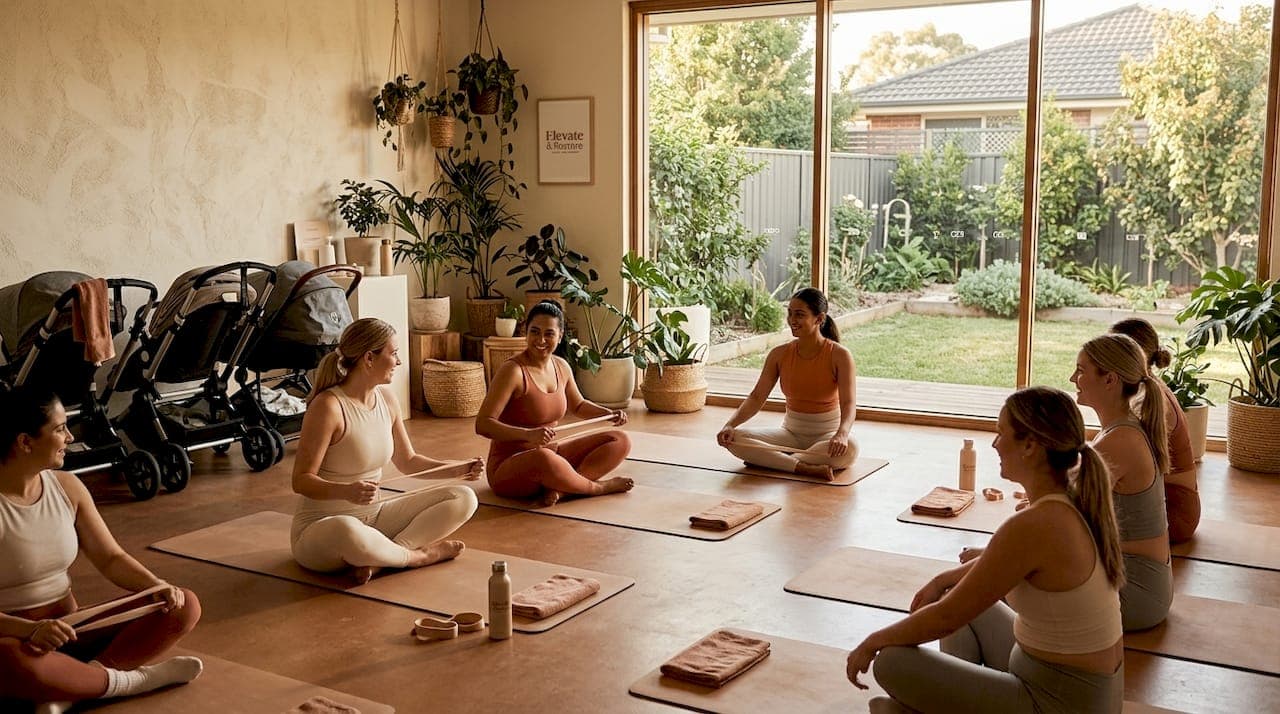
Postpartum fitness classes are specialised exercise programmes designed to rebuild core strength, restore pelvic floor function, and support overall recovery after childbirth. The best postpartum fitness class types go well beyond generic gym sessions. They account for diastasis recti, pelvic floor weakness, hormonal changes, and the very real logistical challenge of exercising with a newborn. Formats range from stroller workouts like Fit4Mom's Stroller Strides to reformer Pilates, postnatal yoga, targeted pelvic floor classes, and progressive strength training. Choosing the right format depends on your recovery stage, your goals, and what your body is telling you.
1. Stroller-based postpartum workouts
Stroller workouts are full-body fitness classes that combine cardio, strength, and core work while your baby rides along in the pram. Fit4Mom's Stroller Strides is the most recognised format: a 60-minute class structured around resistance bands, bodyweight movements, and walking intervals. The baby is present throughout, which removes the childcare barrier that stops many new mothers from exercising consistently.
The social element is a genuine benefit, not just a nice bonus. Baby-friendly class formats boost attendance and consistency precisely because they remove the logistical friction of finding care. When you show up regularly, you build momentum, and momentum is what drives recovery.
Key benefits of stroller-based classes:
- Baby attends every session, no childcare needed
- Combines cardio and strength in one workout
- Builds community with other new mothers
- Suitable for outdoor and indoor settings
- Encourages progressive intensity as fitness returns
Pro Tip: Start with gentle pram walks in the first few weeks before joining a structured stroller class. Build your walking base first, then progress to resistance and cardio components once you have medical clearance.
Pelvic floor safety still applies here. If you experience leaking, heaviness, or pelvic pressure during any stroller workout, reduce intensity and consult your GP or women's health physio before continuing.
2. Pilates-based postpartum classes
Pilates is the most clinically aligned of all postpartum fitness class types for core and pelvic floor recovery. Mat Pilates and reformer Pilates both focus on controlled, low-load movements that rebuild deep abdominal strength without overloading the midline. Reformer Pilates adds spring resistance, which allows precise load management, making it particularly well suited to women managing diastasis recti.
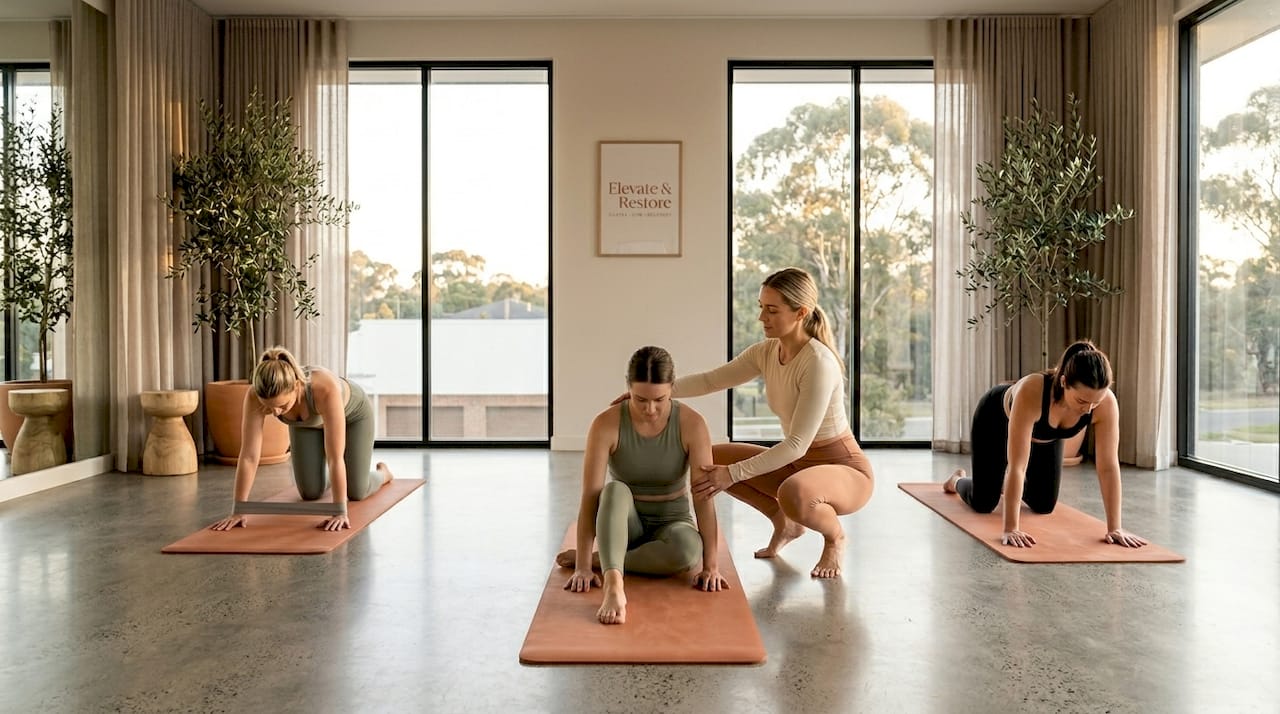
Pilates targets core strength and controlled movement patterns, which is exactly what the postpartum body needs before returning to higher-impact activity. The MUTU System is a well-known structured postpartum programme that applies Pilates-style principles to progressive core rehabilitation. It demonstrates how this format can be delivered both in-studio and at home with strong clinical grounding.
| Format | Core focus | Pelvic floor engagement | Best timing |
|---|---|---|---|
| Mat Pilates | High | Moderate | From 6-week check |
| Reformer Pilates | Very high | High | From 6 to 8 weeks with clearance |
| MUTU System | High | High | From early postpartum with guidance |
Medical guidance is clear: advanced core exercises should wait until after the 6-week postpartum check, with full planks and higher-intensity work progressing carefully toward 12 weeks. This means Pilates is ideal for the 6 to 12-week window when many other class types are still too demanding.
Posture alignment is another underrated benefit. Feeding, carrying, and sleep deprivation all create forward-head and rounded-shoulder patterns. Pilates directly addresses these through spinal extension and shoulder stabilisation work.
You can explore how reformer Pilates supports recovery at Elevateandrestore's West Footscray studio, where small group sizes of six people mean you get genuine coaching attention.
3. Postnatal yoga options
Yoga suits new mothers who are prioritising flexibility, mobility, breathwork, and mental well-being alongside physical recovery. Yoga is better suited to flexibility and stress relief, while Pilates is the stronger choice for core strength and controlled movement. Both have a place in a postpartum exercise programme, and many women benefit from combining them.
Restorative and gentle yoga classes are the most appropriate formats in the early postpartum period. They focus on hip opening, spinal mobility, and diaphragmatic breathing, all of which support recovery without loading the pelvic floor. Specific poses that engage Mula Bandha (the pelvic floor lock) offer a gentle introduction to pelvic floor activation within a yoga context.
Benefits of postnatal yoga:
- Reduces cortisol and supports emotional regulation
- Improves hip and thoracic mobility affected by pregnancy
- Introduces breathwork that directly supports pelvic floor function
- Accessible in studio, online, and at home formats
- Baby-and-me yoga classes available widely across Australia
The mental health dimension of postnatal yoga is not secondary. Sleep deprivation, identity shifts, and physical recovery create significant stress loads for new mothers. A consistent yoga practice addresses this directly, which makes it one of the most complete postpartum fitness class types for whole-person recovery.
4. Pelvic floor and core coordination classes
Pelvic floor classes are the most misunderstood of all postpartum fitness class types. Most people assume they are just Kegel exercises. They are not. Effective pelvic floor recovery includes breathwork, glute activation, resistance band work, and posture correction alongside pelvic floor engagement. Kegels alone address only one component of a complex system.
Diaphragmatic breathing can begin within days of birth and forms the foundation of all subsequent core work. From there, a structured pelvic floor class builds through glute activation, postural alignment, and progressive loading. This sequence matters because the pelvic floor does not function in isolation. It works as part of the deep core canister alongside the diaphragm, transverse abdominis, and multifidus.
"Good postpartum classes coach midline bulging recognition and adjust exercise load accordingly." Joint Venture Physical Therapy
Coning or doming during core exercises signals abdominal overload and requires immediate load reduction or a referral to a women's health physio. Any quality pelvic floor class will teach you to recognise this sign and respond to it. If your class does not address this, find one that does.
Non-negotiable elements in a quality pelvic floor class:
- Diaphragmatic breathing cues in every session
- Glute and hip activation integrated throughout
- Posture correction and spinal alignment work
- Resistance band progressions
- Symptom monitoring and modification guidance
Pro Tip: If you experience any leaking, pelvic heaviness, or visible coning during class, these are functional signals, not normal side effects. A women's health physiotherapist can assess your readiness and guide your progression.
5. Postpartum strength training classes
Strength training is the long game of postpartum fitness. It rebuilds functional capacity, corrects postural imbalances, and supports pelvic floor function through progressive loading. The key is sequencing: bodyweight and resistance band work come first, with moderate-to-vigorous strength training introduced only after pelvic floor readiness is established.
Readiness for strength training is not just about time. It is about function. Comfortable walking, absence of leaking or pelvic pressure, and basic core coordination are the milestones that signal your body is ready to load. For most women, this means a gradual build from 6 weeks toward more structured strength work between 12 and 16 weeks postpartum.
Postpartum strength training class formats include:
- Bodyweight circuit classes focused on functional movement patterns
- Resistance band group sessions targeting glutes, back, and shoulders
- Small-group strength classes with progressive loading over weeks
- Baby-friendly strength sessions where infants attend
- Online postpartum exercise programmes with structured progression
The group fitness accountability factor is particularly valuable in strength training. When you train alongside other mothers at a similar recovery stage, the shared experience normalises the process and keeps you consistent. Consistency, not intensity, is what drives results in the postpartum period.
Higher-impact work like running or jump-based classes generally requires waiting until at least 12 weeks postpartum, with symptom-free walking and functional pelvic floor control as prerequisites. Skipping this progression is the most common reason new mothers experience setbacks.
Key takeaways
The most effective postpartum fitness class types combine pelvic floor awareness, progressive loading, and baby-friendly logistics to support safe, consistent recovery from childbirth.
| Point | Details |
|---|---|
| Start with pelvic floor foundations | Diaphragmatic breathing and glute activation come before any loaded core work. |
| Match class type to recovery stage | Pilates and yoga suit the 6 to 12-week window; strength training builds from there. |
| Monitor symptoms, not just timelines | Coning, leaking, or pelvic pressure signal overload regardless of weeks postpartum. |
| Baby-friendly formats improve consistency | Classes that allow infant attendance remove the childcare barrier that disrupts training. |
| Progressive loading is non-negotiable | Bodyweight and bands precede moderate strength work, which precedes high-impact cardio. |
What I've learned about choosing postpartum classes
The most common mistake I see new mothers make is choosing a class based on what they used to do before pregnancy rather than what their body needs right now. A woman who ran marathons pre-pregnancy does not automatically have a pelvic floor ready for running at eight weeks postpartum. Recovery is not linear, and it is not governed by fitness history.
At Elevateandrestore, we work with small groups of six, which means we can actually watch how each person moves. That matters enormously in the postpartum period, where the difference between a safe rep and an overloaded one is often visible in the midline or the breath pattern. Generic large-group classes cannot offer that level of attention.
The formats that produce the best long-term outcomes are those that start conservative and build deliberately. Pilates and targeted core work in the first 12 weeks, then progressive strength training, then higher-impact options once the foundations are solid. Women who follow this sequence rarely experience the setbacks that come from rushing. The ones who skip steps often end up back at square one.
If you are unsure where to start, a women's health physio assessment before joining any class is the single best investment you can make. It tells you exactly where your pelvic floor and core are functioning, and which class types are appropriate right now.
— Elevate
Start your postpartum fitness journey at Elevateandrestore
Elevateandrestore is a functional training and Pilates studio in Melbourne's Inner West, built specifically for the kind of focused, progressive training that postpartum recovery demands.
Our small group format of six people per session means every participant gets genuine coaching attention, not just a spot in a crowded room. We offer reformer Pilates, functional strength training, and a full recovery hub with sauna, cold plunge, hot tub, and compression boots. These recovery tools are not extras. They are part of how we support your body between sessions. Explore our postpartum fitness classes or book a consultation to find the right starting point for your recovery stage.
FAQ
When can I start postpartum fitness classes?
Gentle core work and diaphragmatic breathing can begin within days of birth, but structured classes should generally wait until after your 6-week postpartum check. Higher-impact formats like strength training and cardio classes are typically appropriate from 12 weeks, provided you are symptom-free.
What is the best postpartum fitness class for pelvic floor recovery?
Pilates and dedicated pelvic floor coordination classes are the most targeted options for pelvic floor recovery. Effective recovery requires breathwork, glute activation, and progressive loading, not just Kegel exercises.
Is yoga or Pilates better for postpartum recovery?
Pilates suits core strength and controlled movement; yoga is better for flexibility, mobility, and stress relief. Many new mothers benefit from both, using yoga for mental well-being and Pilates for structural recovery.
What are the warning signs to stop exercising postpartum?
Symptoms like leaking, pelvic heaviness, or coning during exercise signal that the current load exceeds your pelvic floor's capacity. Stop the activity and consult a women's health physiotherapist before continuing.
Do postpartum fitness classes need to be baby-friendly?
Not necessarily, but baby-friendly class formats significantly improve attendance consistency by removing the childcare barrier. If finding care is a challenge, look for stroller workouts, baby-and-me yoga, or studio classes that welcome infants.