
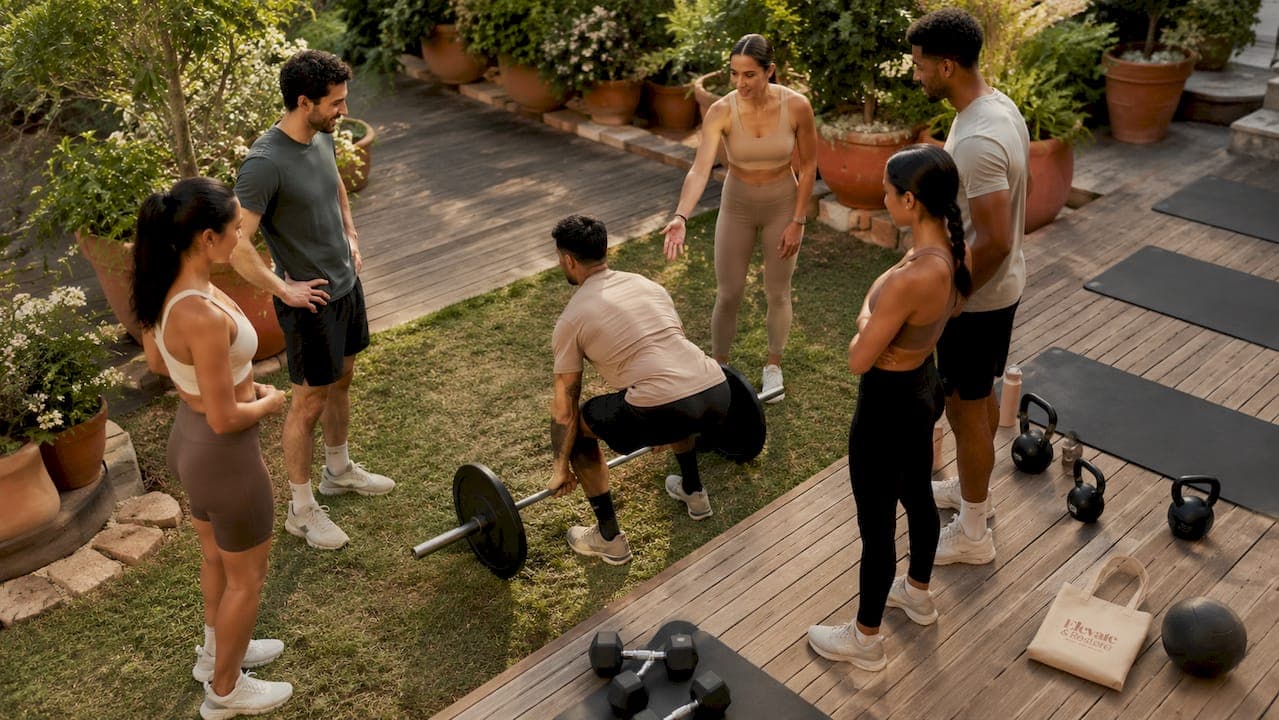
Small group training is defined as structured exercise sessions with 2–6 participants, where a coach delivers real-time form corrections and personalised load adjustments to every person in the room. This format is why small group training improves form far more reliably than solo workouts or large fitness classes. A meta-analysis of 71 studies covering more than 31,000 participants confirmed a statistically significant advantage for group-based training on functional outcomes including strength and flexibility. The coaching attention you receive in a group of six is simply not available in a class of twenty-five. At Elevateandrestore, this is the entire model: capped sessions, qualified coaches, and a recovery hub that supports your body between sessions.
Why small group training improves form: the coach ratio effect
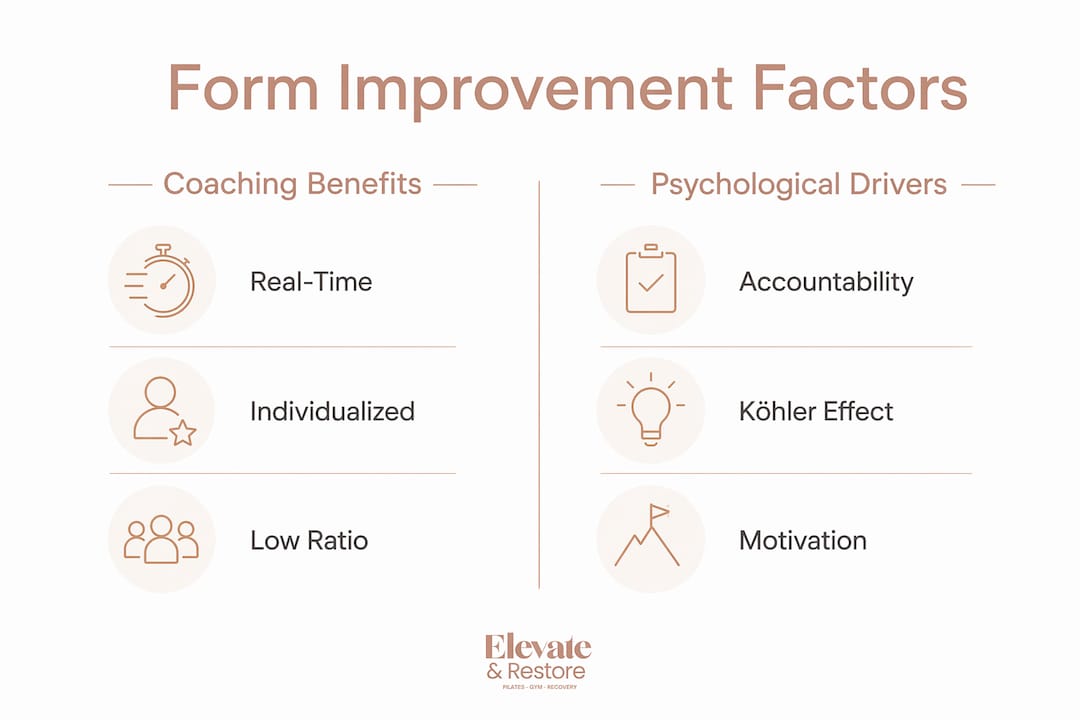
The coach-to-participant ratio is the single biggest reason small group sessions produce better technique than other formats. Small groups of 2–6 participants allow coaches to monitor every person's movement in real time, something impossible in large classes of 15–25 where individual corrections are routinely missed. That gap in attention is where poor habits form and injuries begin.
In a small group, a coach watches your hip position during a deadlift, catches a collapsing knee in a lunge, and adjusts your tempo before the pattern becomes ingrained. These are not minor tweaks. Repeated poor mechanics under load cause chronic injuries that take months to address. NASM-certified coaches working at a 4:1 ratio provide the kind of proactive correction that prevents those injuries from developing in the first place.
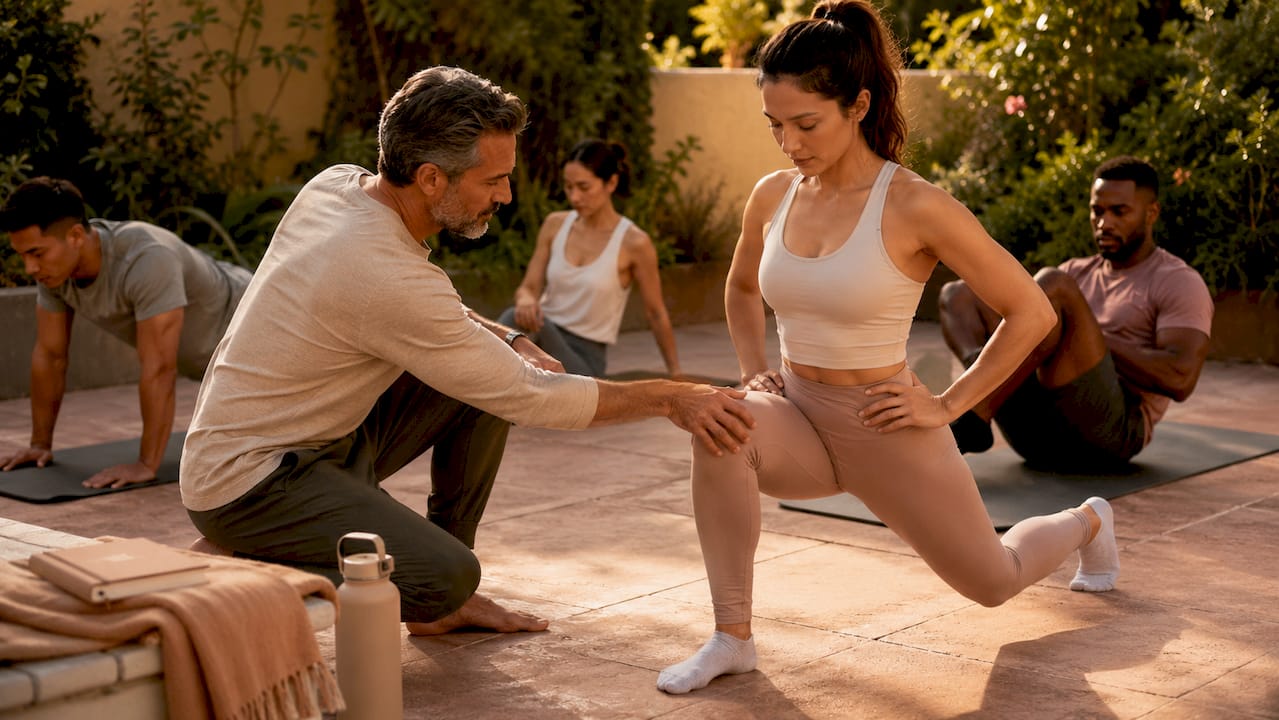
Beyond watching, coaches in small groups physically cue and modify exercises instantly. Small group sessions operate a feedback loop focused on movement mechanics rather than just workout flow. Your load, depth, and tempo are adjusted based on what the coach sees, not what a generic programme prescribes.
Common form mistakes that coaches catch in small groups include:
- Lumbar rounding during hip hinges and Romanian deadlifts
- Forward knee tracking past the toes in squats and lunges
- Shoulder elevation during pressing movements
- Breath holding under load, which spikes intra-abdominal pressure
- Overextension of the lower back in Pilates reformer exercises
Pro Tip: Ask your coach for one specific cue to focus on each session. A single technical target per workout builds motor patterns faster than trying to fix everything at once.
What psychological factors in small groups sharpen your technique?
Group dynamics do more for your form than most people realise. The Köhler Effect is a well-documented psychological phenomenon where individuals elevate performance in groups, particularly when they perceive themselves as the least capable member. That drive to keep up with the group translates directly into greater focus and effort during technically demanding movements.
Accountability is the other major driver. Built-in accountability in small groups dramatically improves attendance and consistency. Consistency matters for form because motor patterns require repetition over weeks to become automatic. You cannot master a movement you only practise occasionally.
Social support within a small group also reduces the psychological stress of training. Group training lowers stress by 26% and improves quality of life compared to training alone. Lower stress during a session means better focus, and better focus means cleaner execution of every rep.
The behavioural effects that improve exercise execution in small groups include:
- Reduced self-consciousness, which allows participants to ask for corrections without embarrassment
- Peer modelling, where watching others perform a movement correctly accelerates your own learning
- Sustained effort, driven by the communal energy of training alongside others
- Coach familiarity, which builds trust and makes participants more receptive to technical feedback
Small group vs solo vs large class: which improves form most?
The differences between training formats are not subtle when it comes to form correction. Solo training gives you full schedule flexibility but zero external feedback. Most people cannot accurately self-assess their own movement patterns, particularly under fatigue. Poor form goes unnoticed and uncorrected until an injury forces the issue.
Large group classes offer energy and affordability, but the coaching attention per person drops sharply. With 15–25 participants and one instructor, corrections are reactive at best and absent at worst. Individual corrections are limited in large class formats, which means form breakdowns accumulate silently over time.
One-on-one personal training provides the most individual attention but at a cost that makes long-term consistency difficult for most people. Small group training costs around 30% of one-on-one personal training while delivering approximately 90% of the personalisation benefits. That ratio makes small group training the most practical format for sustained form improvement.
| Training Format | Form Correction | Injury Risk | Motivation | Cost |
|---|---|---|---|---|
| Solo training | None | High | Variable | Low |
| Large group class | Minimal | Moderate to high | High | Low |
| Small group (2–6) | Real-time, personalised | Low | High | Moderate |
| One-on-one PT | Maximum | Lowest | High | High |
The table makes the trade-offs clear. Small group training sits at the intersection of quality coaching and sustainable cost, which is precisely why it produces the most consistent form improvements for the widest range of participants.
How to get the most out of small group training for form
Getting the most from a small group session requires active participation, not passive attendance. The coaching attention is available to you, but you need to use it.
- Ask for feedback at the start of each session. Tell your coach which movement felt off last time. Coaches in small groups track your progress, but your own observations add context they cannot always see.
- Arrive with a specific focus. Decide before the session which movement pattern you want to refine. Deliberate practice with a clear technical target produces faster improvements than general effort.
- Attend consistently. Consistency with the same coach over multiple weeks enables the repetition needed to master movement patterns. Sporadic attendance breaks the feedback loop that makes small group training effective.
- Accept modifications without resistance. Differentiation within small groups means your load, tempo, and range of motion may differ from the person next to you. That is the point. Modifications protect your form and match your anatomy.
- Track your progress between sessions. Note the cues your coach gives you and review them before the next session. This closes the loop between coaching and independent practice.
Pro Tip: If you are new to a small group format, tell your coach about any previous injuries or movement restrictions in your first session. This allows them to modify exercises from day one rather than discovering limitations mid-workout.
What does the research say about form gains in small groups?
The evidence for small group training's superiority on form and functional outcomes is now substantial. A 2026 meta-analysis published in Nature Human Behaviour reviewed 71 studies with over 31,000 participants and found an effect size of g = 0.164 favouring group-based training for functional outcomes. An effect size at this scale, across this many participants, confirms the advantage is real and reproducible.
Tailored strength training programming in small groups leads to stronger outcomes and lower injury risk compared to non-individualised approaches. Physiotherapy-led small group programmes adjust weekly based on each participant's movement response and limitations. That level of responsiveness is what separates small group training from every other format.
"Proactive coaching in small groups prevents the silent accumulation of poor movement habits that typically lead to injury or plateau." — What Is Semi-Private Training?
The data on stress reduction reinforces the form argument. Lower cortisol during training correlates with better neuromuscular control, which directly affects movement quality. Long-term success in improving form depends on sustained programming over weeks, achievable only with consistent coaching in small group settings.
| Research Finding | Implication for Form |
|---|---|
| Effect size g = 0.164 across 31,000 participants | Group training produces measurably better functional outcomes |
| 26% stress reduction in group vs solo training | Lower stress improves neuromuscular control and movement quality |
| 4:1 coach-to-athlete ratio in small groups | Each participant receives proactive, personalised correction |
| 90% of PT personalisation at 30% of the cost | Sustained coaching is financially accessible long term |
Key takeaways
Small group training improves exercise form by combining real-time coaching, psychological accountability, and personalised programming in a format that is both affordable and sustainable.
| Point | Details |
|---|---|
| Coach ratio drives form correction | A 4:1 ratio allows coaches to catch and correct technique errors before they become injuries. |
| Psychology lifts effort and focus | The Köhler Effect and group accountability keep participants consistent and technically focused. |
| Small groups outperform solo and large classes | Real-time personalised feedback is unavailable in solo or large class formats. |
| Research confirms functional gains | A 2026 meta-analysis of 31,000 participants found statistically significant advantages for group training. |
| Consistency is the mechanism | Sustained coaching over weeks is what converts feedback into permanent movement improvement. |
The part most people miss about small group training
Most fitness content focuses on what small group training gives you: coaching, community, accountability. What it rarely discusses is what it removes. It removes the silence of solo training, where poor form compounds quietly over months. It removes the anonymity of large classes, where you are just another body in the room. Those two things are where most training plateaus and injuries begin.
At Elevateandrestore, we cap sessions at six people for exactly this reason. Six is not a marketing number. It is the maximum at which a coach can genuinely watch every person move, every rep, every set. Beyond that, attention gets divided and form corrections get missed.
The other thing worth saying: form improvement is not just about safety. It is about getting more from every session. A properly executed squat recruits more muscle than a sloppy one. A clean hip hinge builds posterior chain strength that carries over into everything from running to picking up your kids. The functional training benefits of correct movement compound over time in ways that no amount of extra volume can replicate.
My honest advice is this: prioritise quality over intensity, especially in the first few months. The group will push you hard enough. Let the coach focus on your mechanics. That combination is what produces results that actually last.
— Elevate
Train smarter at Elevateandrestore
Elevateandrestore runs small group sessions capped at six participants, with qualified coaches focused on real-time form correction and personalised programming. Every session is designed to build movement quality first, intensity second.

Whether you are starting with reformer Pilates for controlled, coach-led technique work or training in the gym at West Footscray for functional strength, the small group format means your form is always being watched and refined. After your session, the recovery lounge with sauna, cold plunge, hot tub, and compression boots is there to support your body between sessions. If you are ready to train with genuine coaching attention, explore our sessions and book your spot.
FAQ
How many people are in a small group training session?
Small group training typically involves 2–6 participants. At Elevateandrestore, sessions are capped at six to maintain the coach-to-participant ratio needed for real-time form correction.
Does small group training actually improve form faster than solo workouts?
Yes. Solo training provides no external feedback, so poor movement habits go undetected. Small group coaches correct technique in real time, which accelerates the development of correct motor patterns.
How does the köhler effect apply to group workouts?
The Köhler Effect causes individuals to raise their effort when training alongside others, particularly when they feel less capable than the group. This increased focus and effort directly improves the quality of movement execution during sessions.
Is small group training suitable for beginners who are still learning form?
Small group training is particularly well-suited to beginners. The low participant-to-coach ratio means new movers receive more corrections and guidance than they would in a large class or training alone.
How does small group training compare in cost to personal training?
Small group training costs approximately 30% of one-on-one personal training while delivering around 90% of the personalisation benefits. That makes it the most cost-effective format for sustained, coached form improvement.