
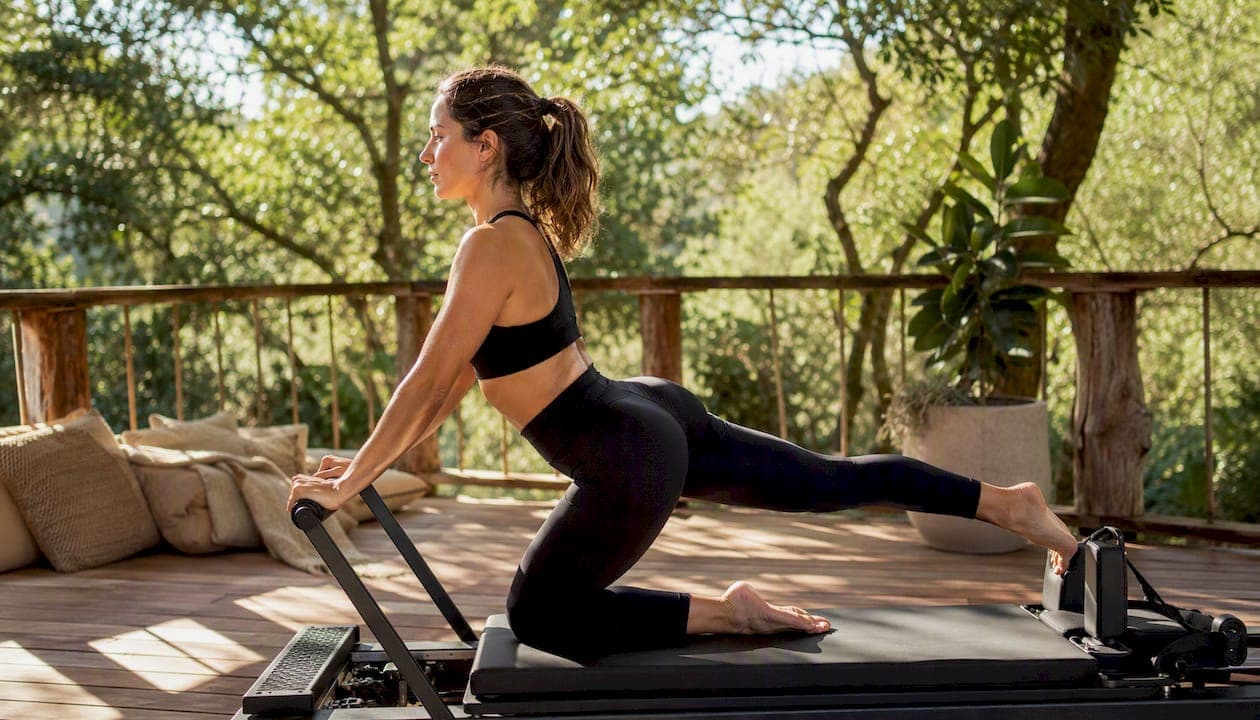
Tight hip flexors reduce hip extension range of motion and suppress gluteus maximus activation during squats, forcing your hamstrings and rectus femoris to compensate and cutting depth before you ever hit parallel. The fix is not more stretching. EMG research shows the priority is glute activation first, then targeted mobility, then progressive loading. Start today with a 60-second glute activation drill before your warm-up set.
When you follow that sequence consistently, you can expect:
- Improved hip extension range of motion within a few weeks
- Stronger glute engagement and reduced forward trunk lean during squats
- Fewer compensatory movement patterns (early hip tuck, knee cave, shallow depth)
Table of Contents
- How to tell whether your hip flexors are limiting your squat
- Exercise progressions from activation to loaded squats
- Red flags: when tight hips might need clinical assessment
- A 4-week plan to restore hip-friendly squats
- Key takeaways
- The part most lifters skip
- Elevateandrestore: small-group training built for this exact problem
- Useful sources and key studies
How to tell whether your hip flexors are limiting your squat
Three self-assessments point specifically to hip flexor restriction rather than ankle stiffness or knee mechanics.
- Overhead squat observation. Stand with arms overhead and squat to depth. Functional movement research supports the overhead squat as a reliable screen for neuromuscular compensations linked to hip flexor restriction. Watch for forward arm fall, excessive forward lean, or asymmetrical hip shift.
If your Thomas test is positive but your ankle dorsiflexion is normal (heel stays flat in a wall ankle test), hip flexors are the primary limiter. If both tests are positive, address both. Functional movement screening tools like the overhead squat and inline lunge can help you map which compensations to prioritise.
Pro Tip: Film your overhead squat from the side. Arm fall and forward lean are subtle in real time but obvious on video. A 10-second clip tells you more than a mirror.
If you have groin pain during any of these tests, stop and see a physio before continuing.
Exercise progressions from activation to loaded squats
Lead with the phase that matches where you are, not where you want to be.
Phase 1: Activation (weeks 1–2)
- Glute squeeze holds: 3 sets of 10-second holds, focus on pelvic neutral
- Banded clamshells: 3 × 15 each side, slow and controlled
- Quadruped hip extension: 3 × 12 each side, avoid lumbar extension, exhale on the lift
Phase 2: Mobility (weeks 1–4, ongoing)
- Kneeling lunge with overhead reach: 3 × 8 each side, posterior pelvic tilt maintained
- Prone hip extension with glute pinch: 2 × 10 each side
Phase 3: Strength (weeks 2–6)
- Hip thrusts: 3 × 10–12, drive through the heel, squeeze at the top
- Romanian deadlifts: 3 × 8–10, hinge from the hip, neutral spine
- Split squats: 3 × 8 each side; regress to a static lunge if knee pain appears
Phase 4: Loaded squat integration (weeks 4–8+)
- Box squat to parallel: 3 × 8, sit back and down, cue glute pinch at the top
- Tempo back squat (3-second descent): 3 × 6, builds control through the full range
- Front squat: 3 × 5–6, upright torso demands hip mobility and glute drive simultaneously
Pro Tip: If hip thrusts cause lower back discomfort, check that your rib cage is not flaring. Tuck the ribs down, brace the core, and reduce the range before adding load.
For injury resilience through Pilates, reformer work adds controlled resistance through hip extension patterns that are difficult to replicate with free weights alone.
Red flags: when tight hips might need clinical assessment
Most hip tightness responds to the interventions above. These symptoms require a physio or sports physician before self-managing:
- Constant sharp groin pain during or after squatting
- Mechanical catching, clicking, or locking in the hip joint
- Progressive pain at night or at rest
- A persistent limp or altered gait after training
- Neurological signs: tingling, numbness, or referred pain down the leg
Femoroacetabular impingement syndrome (FAIS) is a structural condition where the ball and socket of the hip joint make abnormal contact during movement. Research on FAIS highlights that hip muscle weakness persists after surgery and associates with worse outcomes, meaning aggressive hip flexion loading without clinical guidance can worsen the condition. If you have been told you have a cam or pincer deformity, get a tailored plan from a sports physio before progressing through the phases above.
A 4-week plan to restore hip-friendly squats
This plan suits lifters over 30 who train 3–4 days per week and want to address hip flexor tightness without abandoning their current programme. Scale volume down if you are managing knee or lower back sensitivity.
| Day | Session focus | Key exercises | Duration |
|---|---|---|---|
| Monday | Activation + strength | Glute bridges, banded clamshells, hip thrusts, split squats | — |
| Tuesday | Light movement + mobility | 20-min walk, lunge with reach, prone hip extension | — |
| Wednesday | Functional training or Pilates | Reformer or mat work, pelvic control focus | 45 min |
| Thursday | Rest or recovery hub | Sauna, cold plunge, compression boots | 30 min |
| Friday | Loaded squat integration | Box squat, tempo squat, Romanian deadlift | 45 min |
| Saturday | Optional Pilates or walk | Low-intensity movement, hip flexor stretches | 30 min |
| Sunday | Rest |
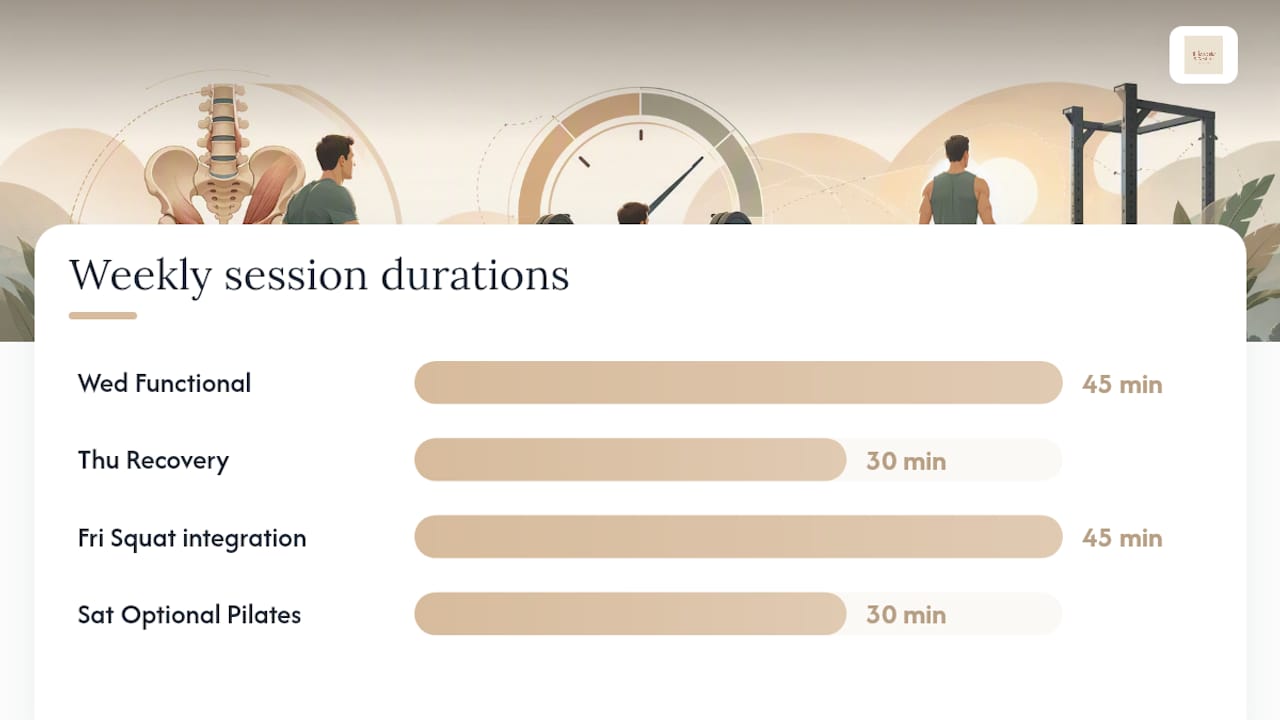
Micro-session option for busy weeks: 10 minutes of glute activation (bridges + clamshells) plus 5 minutes of dynamic hip mobility is enough to maintain neural drive between full sessions.
If pain increases or squat mechanics worsen after week 2, book a 1:1 movement assessment before continuing.
Key takeaways
Tight hip flexors limit squat depth and strength primarily by suppressing gluteus maximus activation, making glute activation and progressive loading the most effective corrective approach.
| Point | Details |
|---|---|
| Activation before mobility | Glute activation drills must precede stretching to override reciprocal inhibition and restore glute drive. |
| EMG evidence is clear | Research shows significantly less gluteus maximus activation and more than 2.5× greater biceps femoris activation relative to gluteus maximus in people with shortened hip flexors during squats. |
| Strength beats stretching | Progressive loading through hip thrusts, split squats, and squat integration produces lasting change; isolated stretching alone does not. |
| Timeline is realistic | Early neural gains appear in 2–6 weeks; meaningful strength and ROM changes take 6–12+ weeks of consistent work. |
| Elevateandrestore approach | Small-group reformer Pilates and functional training at Elevateandrestore directly target pelvic control and glute strength for lifters over 30. |
The part most lifters skip
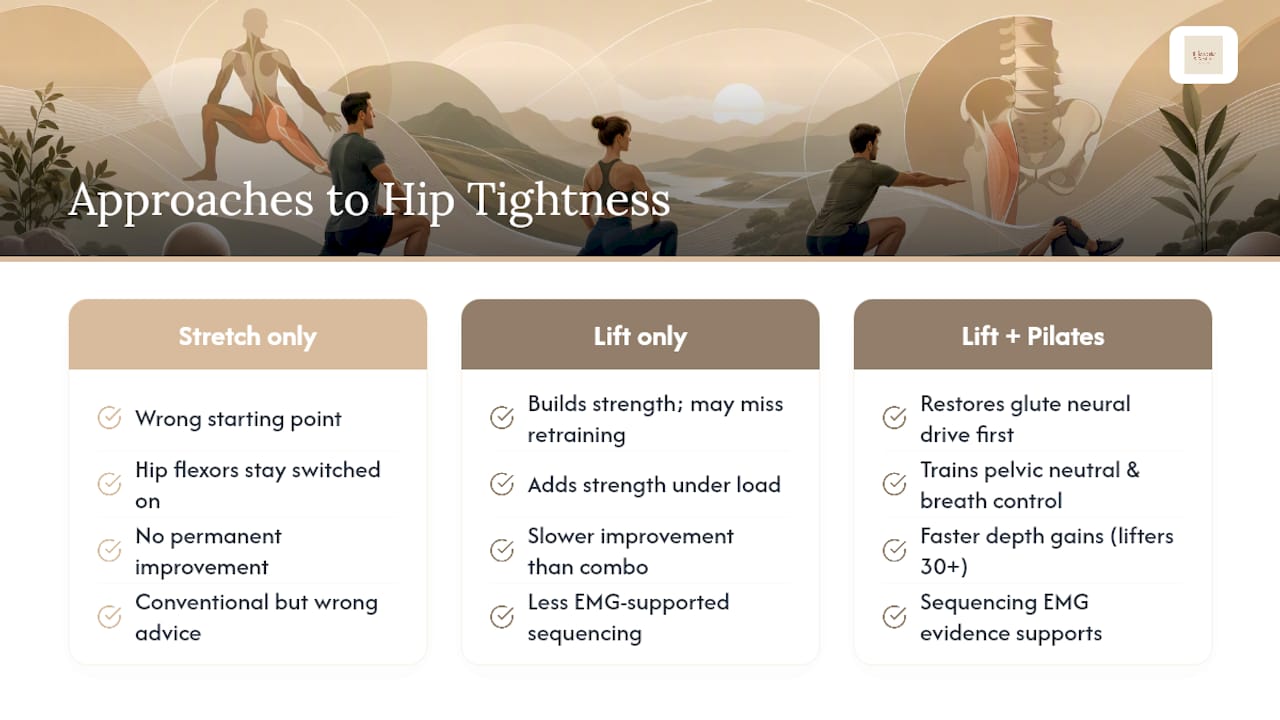
The conventional advice for tight hips is to stretch more. It is the wrong starting point. Hip tightness is frequently a symptom of posterior chain underactivity, not a flexibility deficit in isolation. When the glutes are not pulling their weight, the hip flexors compensate by staying switched on, and no amount of couch stretching changes that pattern permanently.
What actually shifts things is restoring the neural drive to the glute first, then building the strength to sustain it under load. Pilates is particularly well-suited to this because it trains pelvic neutral and breath control at low loads before adding resistance, which is exactly the sequencing the EMG evidence supports. Lifters over 30 who add one or two Pilates sessions per week alongside their strength work tend to see squat depth improvements faster than those who only stretch or only lift.
The other thing worth saying: if you have been squatting for years with tight hips and compensatory patterns, the movement habit is deeply ingrained. Video feedback and a coach's eye matter. Self-assessment is a starting point, not a substitute for a trained set of eyes on your movement.
Elevateandrestore: small-group training built for this exact problem
Lifters over 30 dealing with tight hips and limited squat depth get faster results when the training environment is built around pelvic control, glute activation, and progressive loading rather than generic group fitness. At Elevateandrestore in West Footscray, small-group reformer Pilates classes (maximum six people) focus precisely on the hip extension, pelvic stability, and posterior chain strength that the evidence points to. Functional training sessions layer progressive loading on top of that foundation.
The recovery hub adds infrared sauna, cold plunge, hot tub, and compression boots to support tissue recovery between sessions. Book a trial class or movement assessment at Elevateandrestore to get a clear picture of where your squat mechanics are starting from and a plan to move forward.
Useful sources and key studies
- The influence of hip muscle impairments on squat performance
- Research in Review: Does a Shortened Hip Flexor Limit the Hip Extensor and Lower Extremity Biomechanics?
- Do you spend most of your day sitting? These hip flexor stretches are for you
- Tight hips: 7 stretches, symptoms, causes, prevention, and more
- The effect of restricted hip extension on muscle activity during functional movements
This article provides general fitness and movement information, not medical advice. For persistent hip pain or suspected structural conditions, consult a physiotherapist or sports physician.