
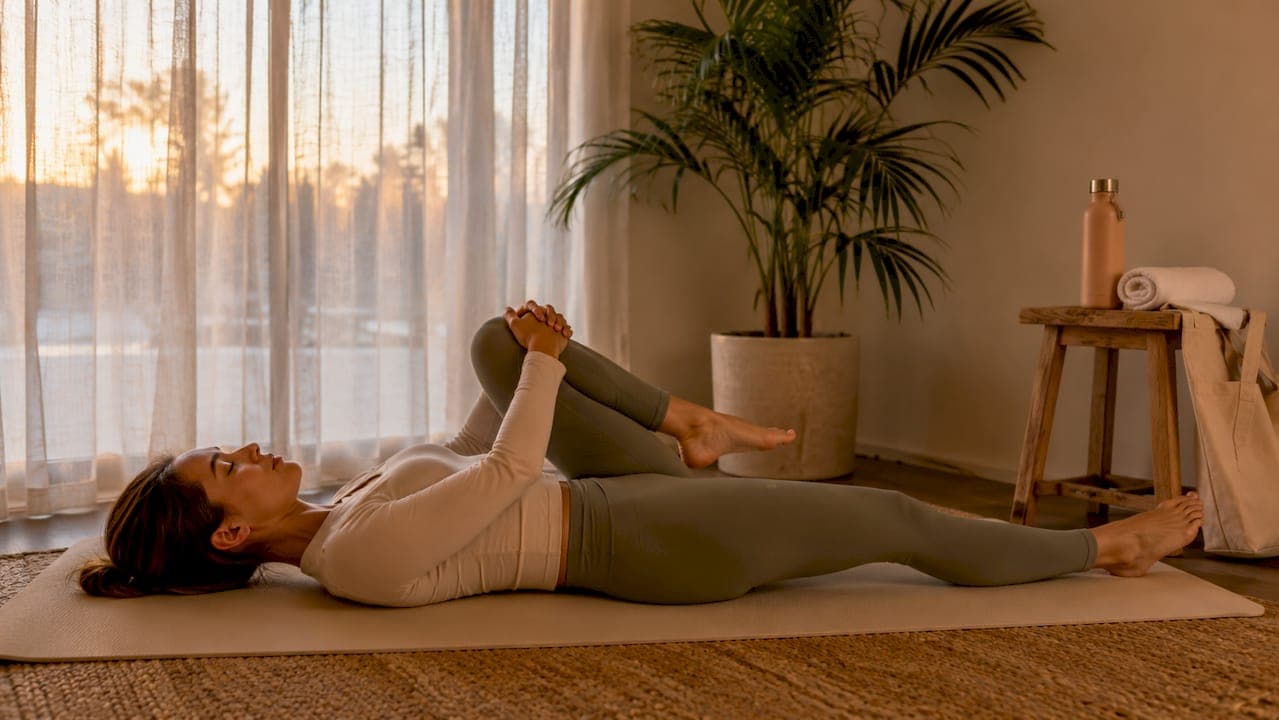
Stress relief through breathwork Pilates is defined as the deliberate pairing of conscious, controlled breathing with precise Pilates movement to calm the nervous system and reduce stress. This combination works on a physiological level, not just a conceptual one. Pilates breathwork reduces anxiety by improving vagal tone and lowering sympathetic nervous system activity. The method draws on foundational Pilates principles, including breath, concentration, and control, to interrupt chronic stress patterns. Backed by research from the Journal of Physical Therapy Science and Harvard Health, this approach delivers measurable results for people who practise it consistently.
How does breathwork in Pilates physiologically reduce stress?
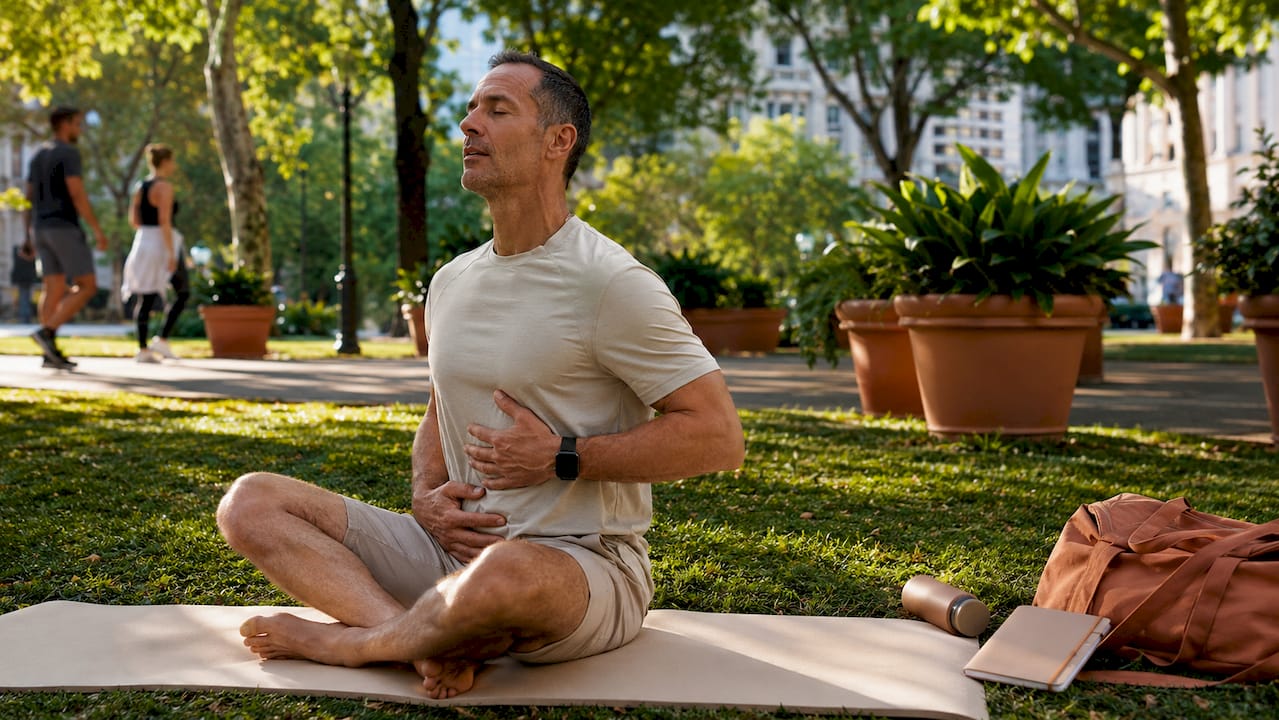
Diaphragmatic breathing, also called belly breathing, is the engine behind stress relief in Pilates. When you breathe deeply into your belly rather than your chest, you activate the parasympathetic nervous system, the branch responsible for rest and recovery. Slow, deep diaphragmatic breathing practised for 15 minutes daily can lower systolic blood pressure by up to 10 mm Hg. That is a meaningful physiological shift, not a placebo effect.
Pilates adds a second layer of benefit by demanding that you coordinate breath with movement. This coordination forces your attention into the present moment, which physically interrupts the brain's tendency to loop through anxious or stressful thoughts. Conscious breathing paired with movement disrupts cognitive rumination cycles, which are the mental patterns that keep stress alive long after the stressor has passed. Breaking that loop is one of the most underrated benefits of the practice.
The autonomic nervous system effects are well documented. An 8-week Pilates programme with twice-weekly 60-minute sessions produced measurable improvements in autonomic nervous system function and mental health in adults aged 30–39 with moderate stress. That means the benefits are not just subjective feelings of calm. They show up in measurable physiological markers.
Key physiological mechanisms at work during breathwork Pilates include:
- Parasympathetic activation: Deep, slow breathing signals safety to the brain and body, reducing cortisol output.
- Vagal tone improvement: Controlled exhalation stimulates the vagus nerve, which governs the body's relaxation response.
- Reduced sympathetic arousal: Mindful breathing lowers heart rate and muscle tension associated with the fight-or-flight state.
- Cognitive interruption: Matching breath to movement prevents the mind from drifting into stress-amplifying thought patterns.
Pilates breathwork's primary goal is to deliberately disrupt stress-related cognitive loops by demanding focused breathing-movement coordination, which prevents rumination and chronic stress.
What are the essential Pilates breathwork techniques for stress relief?
Three core techniques form the foundation of breathwork for relaxation in Pilates. Each one serves a specific purpose, and understanding the difference between them helps you apply the right tool at the right moment.
-
360-degree breathing. Inhale through your nose and allow your ribcage to expand in all directions, front, back, and sides. On the exhale, draw your navel gently toward your spine and let the ribcage compress. This technique maximises lung capacity and creates a natural internal massage for the organs. It is the most commonly taught method in Pilates for stress management because it builds body awareness alongside breath control.
-
Fletcher breathing. Developed by Ron Fletcher, this technique uses a short, sharp exhalation forced through the teeth or lips. The forced exhale engages the deep abdominal muscles and creates a moment of sharp focus. Fletcher breathing's controlled exhalation promotes muscular engagement and heightened present-moment awareness. Use it during dynamic Pilates movements where you need to anchor your core and reset your attention.
-
Light, slow, deep (LSD) breathing. This method prioritises a gentle, unhurried breath cycle. LSD breathing lowers sympathetic arousal and encourages the body into a state of relaxation. It works best during floor-based Pilates exercises like the Hundred or Spine Stretch, where the pace allows for a longer breath cycle.
Practical timing cues make all three techniques more effective. As a general rule, inhale to prepare for a movement and exhale during the effort phase. For example, exhale as you curl up in a Roll-Up and inhale as you lower back down. This pattern keeps your core engaged and your nervous system regulated throughout the session.
Pro Tip: Set a timer for 2 minutes before your Pilates session and practise 360-degree breathing lying on your mat. This primes your nervous system for relaxation before you move a single muscle.
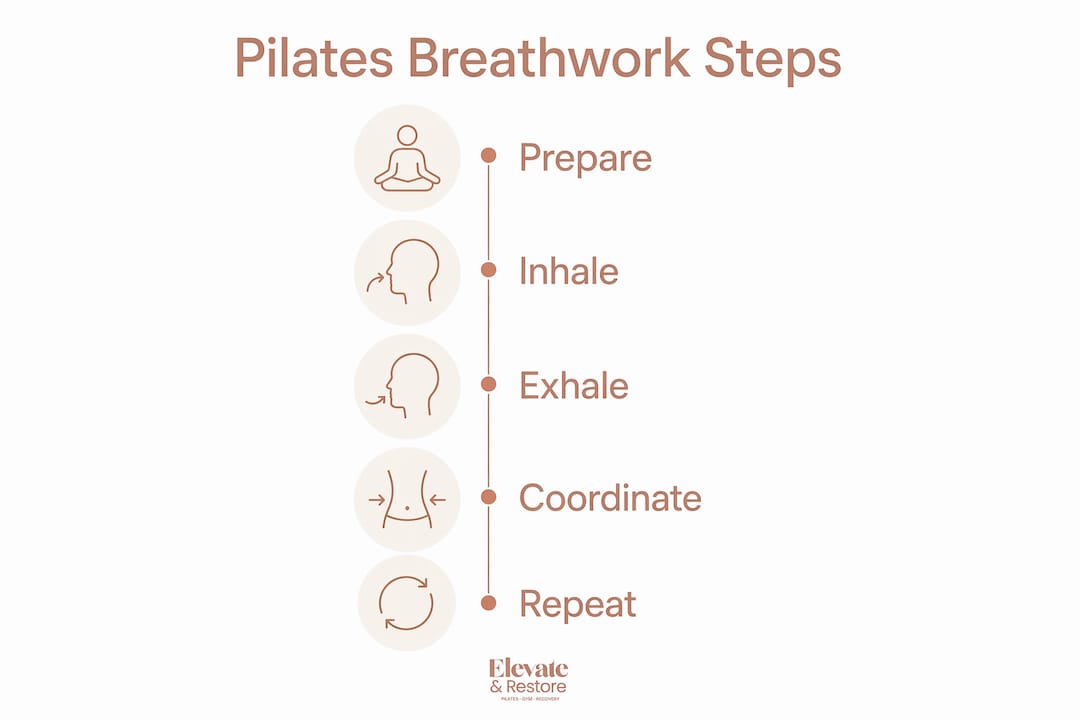
How to perform a basic breathwork Pilates routine for stress relief at home
Before you begin, gather a few simple items and set up your space.
| What you need | Why it matters |
|---|---|
| Yoga or Pilates mat | Provides cushioning for spine and joints |
| Quiet space | Reduces distraction and supports breath focus |
| Comfortable clothing | Allows full ribcage expansion |
| Timer or clock | Helps maintain session duration |
| Pillow or rolled towel | Supports head and neck if needed |
Breath timing with movement improves concentration and deepens the stress-relief effect. Follow this sequence twice weekly for best results, and supplement with daily diaphragmatic breathing practice of at least 15 minutes.
-
Constructive rest with 360-degree breathing (3 minutes). Lie on your back with knees bent and feet flat. Place hands on your ribcage. Inhale for 4 counts, feeling the ribs expand. Exhale for 6 counts, drawing navel toward spine. This is your nervous system reset.
-
Pelvic tilts with breath (8 repetitions). Inhale to neutral spine. Exhale and tilt your pelvis, pressing your lower back gently into the mat. Inhale to return. This movement mobilises the lumbar spine and anchors breath awareness.
-
Spine stretch forward (6 repetitions). Sit tall with legs extended. Inhale to lengthen the spine. Exhale and reach forward, rounding through the back. Inhale to sit tall again. This exercise directly releases tension held in the back and hamstrings.
-
The Hundred (modified). Lie on your back with knees bent at 90 degrees. Lift your head and shoulders. Pump your arms in small, controlled movements, inhaling for 5 pumps and exhaling for 5 pumps. Complete 5–10 cycles. This exercise builds breath endurance and warms the body without spiking stress.
-
Supine twist (4 per side). Lie on your back and drop both knees to one side. Inhale to prepare. Exhale and feel the ribcage release toward the floor. This position directly stimulates the vagus nerve through gentle spinal rotation.
-
Savasana with LSD breathing (3 minutes). Lie flat and allow your breath to become light, slow, and deep. Let your body feel heavy. This closing phase consolidates the parasympathetic response built during the session.
Common mistakes to avoid include holding your breath during the effort phase, breathing only into the chest, and rushing through the exhale. Each of these habits keeps the sympathetic nervous system active and reduces the calming effect of the practice.
Pro Tip: If you find your mind wandering during the routine, use a simple anchor phrase on each exhale, such as "releasing now." This verbal cue reinforces the breath-relaxation connection and pulls attention back to the body.
Modifications for beginners include reducing the Hundred to 3 cycles, keeping knees bent throughout, and shortening the session to 20 minutes. People with back sensitivity can perform the Spine Stretch seated on a folded blanket to reduce hamstring tension.
What are common challenges in sustaining breathwork Pilates for stress relief?
Shallow breathing is the most common obstacle. Most people default to chest breathing under stress, which keeps the sympathetic nervous system engaged. Recognising this pattern is the first step to changing it. Place one hand on your chest and one on your belly during practice. The belly hand should rise first on every inhale.
Distraction and inconsistency are the next barriers. Even 3–5 minutes of daily breathwork produces measurable reductions in stress hormones and improved mood. That means you do not need a full session every day to maintain the benefits. Short, consistent practice outperforms occasional long sessions every time.
Common challenges and how to address them:
- Shallow breathing: Practise diaphragmatic breathing lying down first, where gravity assists the belly to rise naturally.
- Loss of focus: Use a breath count or a simple anchor phrase to return attention to the body.
- Inconsistency: Attach your breathwork practice to an existing habit, such as morning tea or winding down before bed.
- Plateau in stress relief: Introduce new techniques like Fletcher breathing or explore different breathwork class formats to refresh your practice.
- Overdoing the effort: Pilates breathwork is not about forcing breath. Strain in the breath signals that you are working against your nervous system, not with it.
Integrating Pilates breathwork with other mindfulness practices amplifies the results. Pairing your sessions with a brief body scan meditation or a few minutes of journalling after class helps consolidate the mental clarity gained during movement. Professional guidance, particularly in a small-group setting, accelerates progress because an instructor can identify breath-holding patterns you cannot see yourself.
Pro Tip: Schedule your Pilates breathwork sessions in your calendar the same way you would a meeting. Treating them as non-negotiable appointments is the single most effective way to build consistency.
Key takeaways
Breathwork Pilates calms the nervous system through diaphragmatic breathing, vagal stimulation, and focused breath-movement coordination, producing measurable stress relief with consistent practice.
| Point | Details |
|---|---|
| Diaphragmatic breathing activates rest mode | Belly breathing switches the body from fight-or-flight to rest-and-digest within minutes. |
| Twice-weekly sessions deliver results | An 8-week programme of 60-minute sessions twice a week produces measurable autonomic and mental health improvements. |
| Three core techniques cover all needs | 360-degree breathing, Fletcher breathing, and LSD breathing each serve a distinct role in stress management. |
| Short daily practice sustains benefits | Even 3–5 minutes of daily breathwork maintains nervous system regulation between full sessions. |
| Breath-movement coordination is the key | Matching breath to Pilates movement interrupts rumination and keeps the mind anchored in the present. |
What I've learned from years of watching breath change people
The most common thing I see in new clients is that they think Pilates is about the movement. They come in focused on the exercise, the form, the burn. Breath is an afterthought. That is exactly backwards.
Every meaningful shift I have observed in how people carry stress in their bodies has started with breath awareness, not with a harder exercise. When someone finally learns to exhale fully, to really let go on the out-breath, something visibly changes in their posture and their face. The science behind mindful movement confirms what I see in the studio: breath is the mechanism, and movement is the vehicle.
My honest advice for beginners is to spend the first two weeks doing nothing but the breathing. Lie on your mat and practise 360-degree breathing for 10 minutes. Get comfortable with the sensation of a full inhale and a complete exhale before you add any movement at all. Most people skip this step and then wonder why they feel tense during class.
Consistency matters more than intensity. A 20-minute session where you breathe well beats a 60-minute session where you hold your breath through every hard part. Start small, breathe fully, and trust that the nervous system responds to repetition.
— Elevate
Pilates and breathwork at Elevateandrestore
Elevateandrestore runs small-group Pilates classes in West Footscray with a maximum of six people per session. That size is deliberate. It means instructors can watch your breath, not just your form, and correct the patterns that keep stress locked in your body.
After class, the recovery hub at Elevateandrestore gives your nervous system a second wave of relief. The sauna, cold plunge, hot tub, and compression boots are all tools that extend the parasympathetic state you build during breathwork Pilates. If you are serious about managing stress through movement and breath, this is where to start.
FAQ
How does breathwork help with stress?
Breathwork activates the parasympathetic nervous system by slowing the breath and deepening the exhale, which lowers cortisol and reduces heart rate. Even 3–5 minutes of slow, conscious breathing produces measurable reductions in stress hormones.
How often should I do breathwork Pilates for stress relief?
Twice-weekly 60-minute sessions produce significant improvements in autonomic nervous system function and mental health within 8 weeks. Daily diaphragmatic breathing practice of 15 minutes supplements full sessions and maintains the benefits between classes.
What is 360-degree breathing in Pilates?
360-degree breathing is a technique where you inhale through the nose and allow the ribcage to expand in all directions, then exhale by drawing the navel toward the spine. It maximises lung capacity and builds the body awareness central to Pilates stress management.
Can beginners do breathwork Pilates at home?
Yes. Beginners can start with constructive rest breathing, pelvic tilts, and a modified Hundred using only a mat and a quiet space. Reducing session length to 20 minutes and keeping knees bent throughout makes the practice accessible without reducing the stress-relief benefit.
Is Pilates good for anxiety relief?
Pilates is effective for anxiety relief because it combines breath control with focused movement, which interrupts the cognitive loops that sustain anxious thinking. Research shows that regular Pilates practice improves vagal tone and reduces sympathetic nervous system activity, both of which are directly linked to lower anxiety levels.