
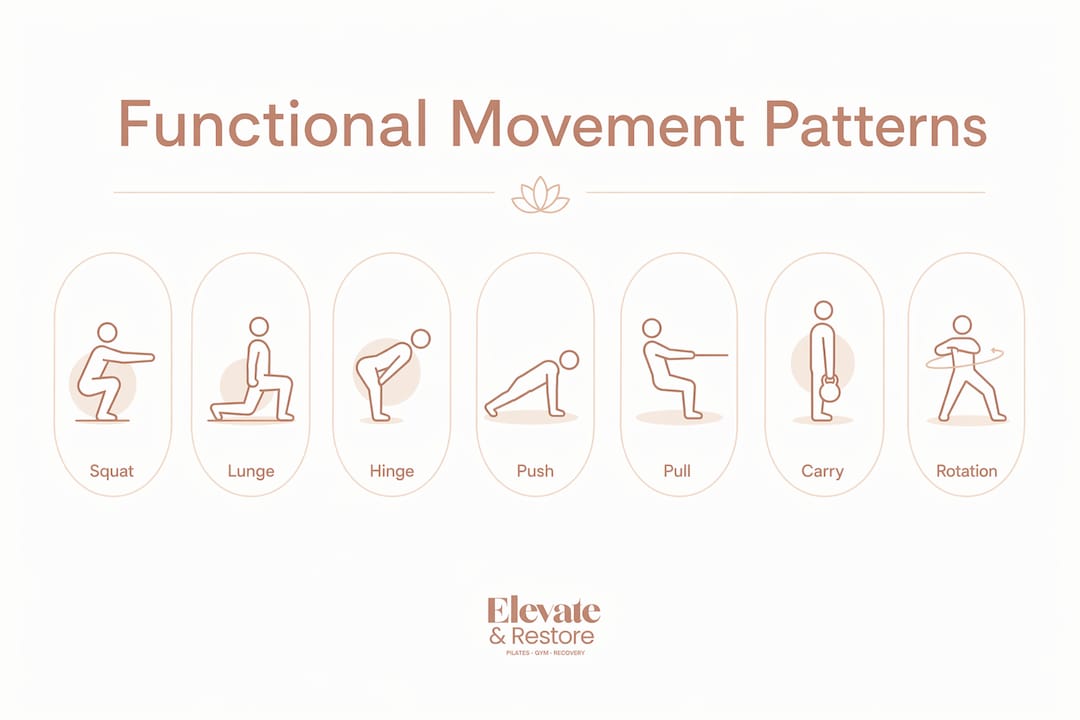
Functional movement patterns are the seven foundational movement templates the human body uses for virtually every daily and athletic activity. Recognised across sports science and rehabilitation, these patterns — squat, lunge, hinge, push, pull, carry, and rotation — form the basis of purposeful, efficient motion that mirrors how the body is biomechanically designed to operate. Unlike isolated gym exercises that target a single muscle, functional movement patterns coordinate multiple joints and muscle groups simultaneously. Understanding them is the first step toward training that actually transfers to real life, whether you're a fitness enthusiast or a personal trainer building better programmes.
What are the seven fundamental functional movement patterns?
The seven primary patterns are squat, lunge, hinge, push, pull, carry, and rotation. Together, they cover virtually every movement encountered in daily life and sport. Each pattern targets distinct muscle groups and operates across different planes of motion.
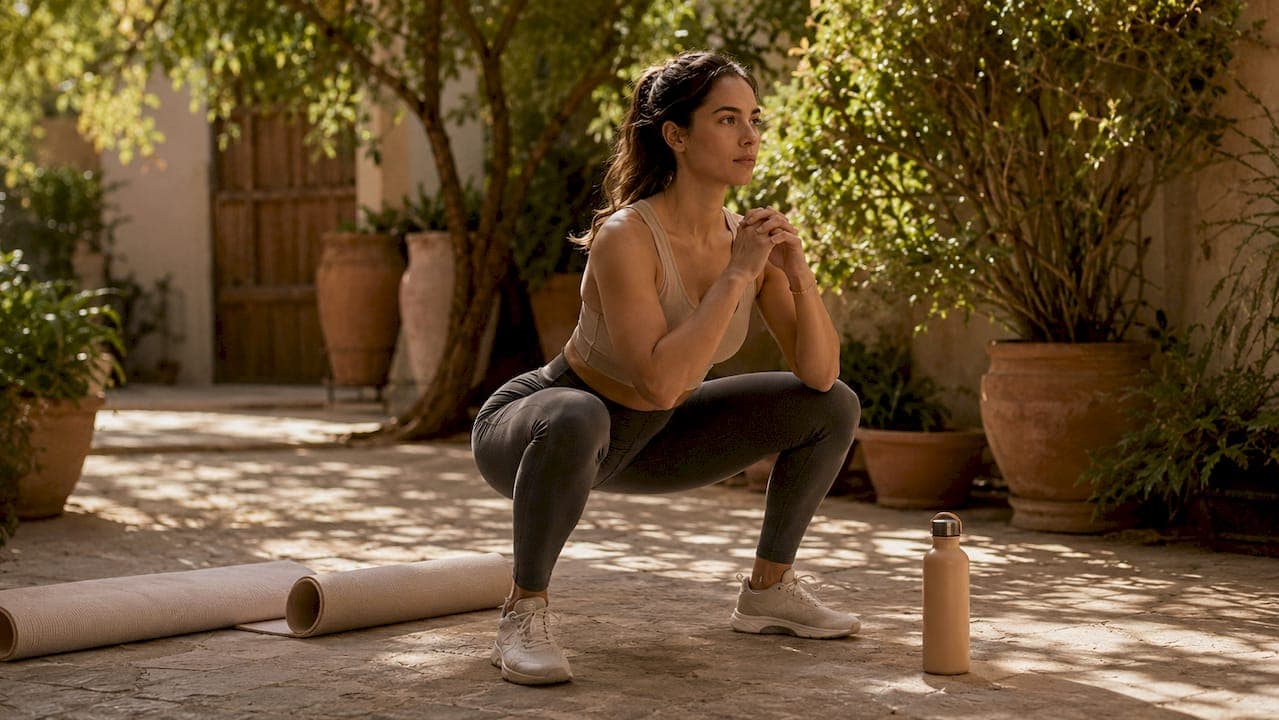
Squat is the foundation of sitting, standing, and lifting from the ground. It loads the quadriceps, glutes, and core through the sagittal plane. Examples include a bodyweight squat, goblet squat, or simply getting up from a chair.
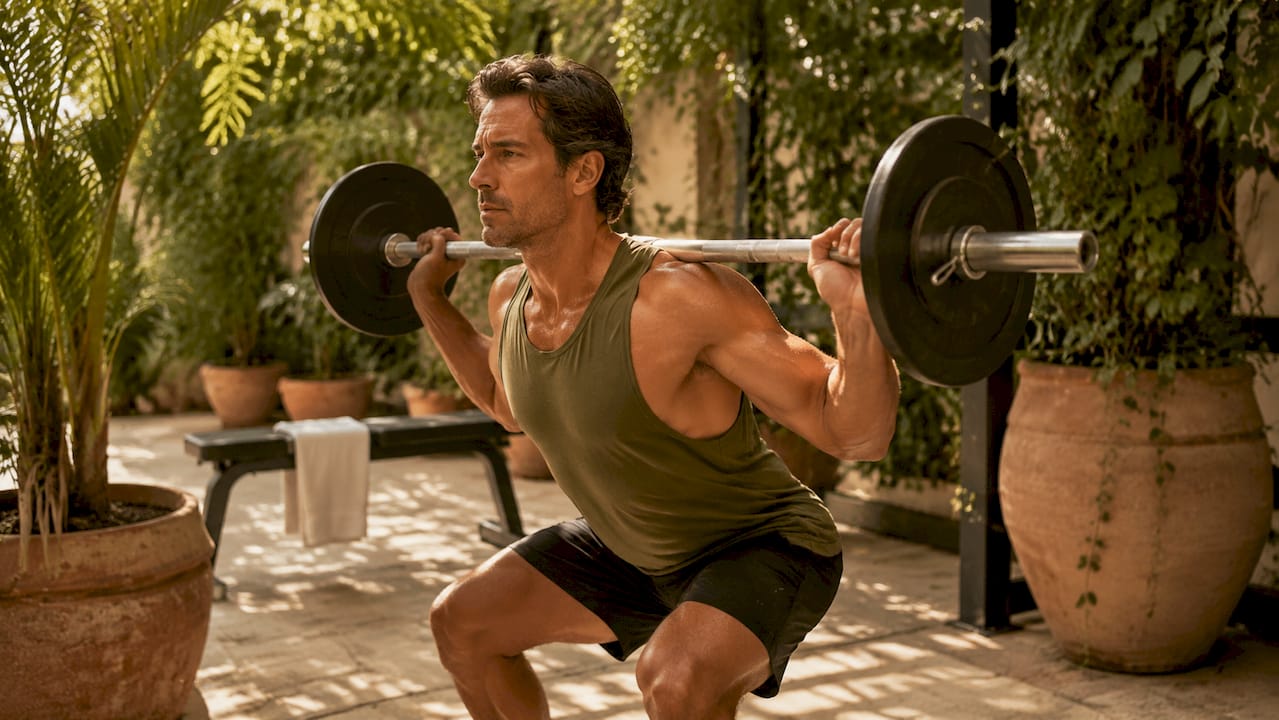
Hinge drives the posterior chain — glutes, hamstrings, and lower back. The deadlift and kettlebell swing are the clearest exercise examples. In daily life, picking up a bag from the floor is a hinge movement.
Lunge trains single-leg stability and hip strength. It operates in both the sagittal and frontal planes. Walking lunges, step-ups, and split squats all fall here.
Push covers any movement where force is directed away from the body. Horizontal pushing (push-up, bench press) and vertical pushing (overhead press) both belong to this category. The primary movers are the chest, shoulders, and triceps.
Pull is the counterpart to push. Rows, pull-ups, and lat pulldowns train the back, biceps, and rear deltoids. Pulling movements are chronically undertrained in most people's programmes.
Carry is the most underrated pattern. Farmer's carries, suitcase carries, and simply walking with shopping bags train grip, core stability, and postural endurance simultaneously.
Rotation is the most commonly neglected pattern. Woodchops, pallof presses, and medicine ball throws train the obliques and transverse abdominis. Rotation connects the upper and lower body during nearly every sport and daily task.
| Pattern | Primary muscles | Movement plane | Daily life example |
|---|---|---|---|
| Squat | Quads, glutes, core | Sagittal | Sitting down, standing up |
| Hinge | Hamstrings, glutes, lower back | Sagittal | Picking up objects from the floor |
| Lunge | Glutes, quads, hip stabilisers | Sagittal, frontal | Climbing stairs, stepping over obstacles |
| Push | Chest, shoulders, triceps | Sagittal, transverse | Pushing a door, overhead reaching |
| Pull | Back, biceps, rear deltoids | Sagittal, transverse | Opening a drawer, lifting overhead |
| Carry | Core, grip, traps | All planes | Carrying groceries, moving furniture |
| Rotation | Obliques, transverse abdominis | Transverse | Throwing, swinging, twisting |
How do functional movement patterns differ from traditional isolated exercises?
Functional training coordinates multiple joints and muscle groups across three planes of motion. Traditional isolation exercises, such as a bicep curl or leg extension, target one muscle through one plane. That distinction matters enormously for real-world performance and injury prevention.
Isolation work builds size and strength in a specific muscle. It does not train the neuromuscular coordination required to use that strength in a squat, a throw, or a sprint. Functional patterns train the nervous system to sequence muscles correctly, which is what actually protects joints under load.
The practical differences are clear:
- Multi-joint vs. single-joint: A deadlift trains the hips, knees, ankles, and spine simultaneously. A leg curl trains only the knee.
- Multiplanar vs. uniplanar: Functional patterns move through sagittal, frontal, and transverse planes. Most machines restrict movement to one plane.
- Motor control vs. machine-guided movement: Functional exercises require the body to stabilise itself. Machines remove that demand entirely.
- Core integration: Every functional pattern requires core engagement to transfer force between the upper and lower body. Isolation exercises rarely load the core.
- Carryover to daily life: Functional patterns mirror real activities. Isolation exercises generally do not.
Neither approach is wrong. Isolation work has a place in rehabilitation and hypertrophy training. The problem arises when isolation exercises replace functional patterns entirely, leaving gaps in coordination, stability, and movement quality that eventually show up as injury.
How are functional movement patterns assessed and why is this important?
Functional movement screens evaluate key patterns to identify range-of-motion limits, asymmetries, and imbalances. The Functional Movement Screen (FMS), developed by physical therapist Gray Cook, scores seven movement tests on a scale of 0–3. A score below 14 out of 21 correlates with elevated injury risk in athletic populations.
Assessment matters because compensatory movement patterns are hidden contributors to chronic pain. When one pattern is weak or restricted, the body borrows movement from another area. Over time, that compensation overloads joints and soft tissue, creating pain that isolated exercises never resolve. Screening identifies these deficits before they become injuries.
Key benefits of a functional movement assessment include:
- Identifying limited hip or ankle mobility that forces the lower back to compensate during squats
- Spotting shoulder asymmetries that increase rotator cuff injury risk during pushing and pulling
- Revealing single-leg stability deficits that affect running, lunging, and change-of-direction tasks
- Providing a baseline score to track improvement over a training block
- Guiding exercise selection so trainers address weaknesses rather than reinforce existing patterns
Assessment also applies well beyond elite sport. General population clients benefit equally from knowing which patterns are restricted. A 45-year-old with chronic lower back pain often has a hinge dysfunction and a rotation deficit. Addressing both frequently resolves pain that years of isolated core work never touched.
Pro Tip: If you are a personal trainer, screen new clients before writing their first programme. A single FMS session saves months of guesswork and prevents you from loading dysfunctional patterns.
What are practical ways to train and improve functional movement patterns?
Mastery of bodyweight movement is the prerequisite to safely adding resistance. Start there, regardless of fitness level. Adding load to a poor pattern does not fix the pattern. It reinforces the dysfunction and accelerates injury.
A practical progression for each pattern looks like this:
- Establish the pattern with bodyweight. Bodyweight squats, hip hinges, and push-ups build motor control without the distraction of load. Focus on joint alignment and range of motion before anything else.
- Add tempo and eccentric control. Eccentric control during lowering phases builds true functional strength. A three-second descent on a squat or push-up is more valuable than a fast, sloppy rep.
- Introduce light external load. A kettlebell goblet squat, a dumbbell Romanian deadlift, or a resistance band pull are appropriate next steps. Keep the load light enough to maintain perfect form.
- Add complexity and planes. Once basic patterns are solid, introduce lateral lunges, rotational rows, and single-arm carries. These challenge the body across multiple planes simultaneously.
- Progress load systematically. Increase resistance only when the current load produces no form breakdown. A 5% weekly increase is a reliable and safe rate.
- Include rotation every session. Neglecting rotation is a common mistake that leads to back pain during routine activities. Even if other patterns are strong, lacking rotation control contributes to injury risk. Pallof presses, cable woodchops, or a simple thoracic rotation stretch address this directly.
Common pitfalls to avoid include skipping the warm-up, rushing past bodyweight progressions, and treating carries as optional. Carries are not optional. They are one of the most transferable patterns to daily life and one of the most neglected in standard training programmes.
Pro Tip: Use "movement snacks" throughout the day. Five bodyweight squats, a hip hinge, and a thoracic rotation between work tasks accumulates significant volume and reinforces pattern quality without a formal session.
What benefits can individuals expect from mastering functional movement patterns?
Mastering functional movement patterns produces benefits that extend well beyond the gym. The improvements show up in sport, daily life, and long-term physical health.
Functional movement training for injury prevention is one of the most evidence-supported applications in exercise science. By training the body to move correctly across all seven patterns, you reduce the compensations that cause overuse injuries, joint pain, and muscle strains.
Key physical and performance outcomes include:
- Reduced injury risk: Correcting movement compensations removes the overload that causes chronic pain and acute injuries.
- Improved athletic performance: Multi-joint, multiplanar training builds the coordination and power transfer that sport demands.
- Better balance and joint stability: Functional patterns train stabiliser muscles that machine-based exercises bypass entirely.
- Greater independence with ageing: Maintaining squat, hinge, and carry capacity directly preserves the ability to perform daily tasks without assistance. Functional fitness is one of the strongest predictors of healthy ageing.
- Faster rehabilitation: Functional screening identifies the root cause of pain. Addressing that cause accelerates recovery compared to treating symptoms in isolation.
- Improved posture and movement efficiency: Training all seven patterns corrects the muscular imbalances that poor posture creates over years of sedentary behaviour.
The compounding effect is significant. Fitness enthusiasts who train functional patterns consistently move better, recover faster, and sustain training for longer without interruption from injury.
Key takeaways
Functional movement patterns are the seven foundational templates — squat, lunge, hinge, push, pull, carry, and rotation — that underpin all efficient, injury-resistant movement in daily life and sport.
| Point | Details |
|---|---|
| Seven core patterns | Squat, lunge, hinge, push, pull, carry, and rotation cover virtually every daily and athletic movement. |
| Functional vs. isolation training | Functional patterns train multiple joints, planes, and the nervous system together; isolation exercises do not. |
| Assessment identifies hidden deficits | Functional movement screens reveal compensations and asymmetries that cause chronic pain and injury. |
| Start with bodyweight | Mastering movement quality before adding load prevents reinforcing dysfunctional patterns under resistance. |
| Rotation is non-negotiable | Neglecting rotation and anti-rotation training is a leading cause of back pain in otherwise fit individuals. |
What I've learned from watching people move
Most people who walk into a gym have never been assessed. They have been loading patterns for years without knowing whether those patterns are sound. The result is predictable: a strong squat with a collapsed arch, a powerful push with no pulling counterpart, and a rotation pattern that simply does not exist.
The single biggest shift I see in clients at Elevateandrestore is not strength. It is awareness. Once someone understands that their knee pain during lunges comes from a hip stability deficit rather than a knee problem, everything changes. They stop chasing symptoms and start fixing causes.
The other thing I have noticed is that people dramatically underestimate the carry. Nobody wants to do farmer's carries. They look too simple. But grip strength, core endurance, and postural control under load are exactly what keeps a 55-year-old moving independently and a 25-year-old athlete performing at their peak. The carry does all of that in one movement.
Movement quality always beats movement quantity. Ten perfect bodyweight squats produce more lasting adaptation than fifty rushed, loaded ones. The body learns what you repeatedly show it. Show it good patterns and it will protect you. Show it poor ones and it will eventually break down.
— Elevate
Functional training and recovery at Elevateandrestore
Elevateandrestore is a functional training and Pilates studio in West Footscray built around small groups of six, which means every session gets real coaching attention rather than a number on a whiteboard.
The studio's reformer Pilates programme directly targets the core stability, hip mobility, and movement control that underpin all seven functional patterns. After training, the recovery hub — sauna, cold plunge, hot tub, and compression boots — supports the tissue repair and nervous system recovery that functional training demands. If you want to move better, reduce injury risk, and train with people who actually watch how you move, Elevateandrestore is worth a visit. You can also explore the gym facilities for functional training-friendly equipment and coached sessions.
FAQ
What is a functional movement pattern?
A functional movement pattern is one of seven foundational movement templates — squat, lunge, hinge, push, pull, carry, and rotation — that the human body uses for daily and athletic activities. These patterns coordinate multiple joints and muscle groups to produce efficient, injury-resistant motion.
How many functional movement patterns are there?
There are seven primary functional movement patterns. They are the squat, lunge, hinge, push, pull, carry, and rotation, and together they cover virtually every movement in daily life and sport.
What is the Functional Movement Screen?
The Functional Movement Screen (FMS) is an assessment tool that scores seven movement tests on a scale of 0–3 to identify range-of-motion limits, asymmetries, and compensatory patterns. It is widely used by trainers and physiotherapists to guide programme design and reduce injury risk.
Why is rotation the most neglected functional pattern?
Rotation and anti-rotation are commonly overlooked in training programmes, yet they are critical for connecting upper and lower body force transfer. Neglecting rotation control is a leading contributor to back pain during otherwise routine activities.
Can beginners train functional movement patterns?
Beginners can and should train functional movement patterns, starting with bodyweight versions of each movement. Bodyweight training builds the motor control needed to safely progress to loaded exercises without reinforcing poor movement habits.