
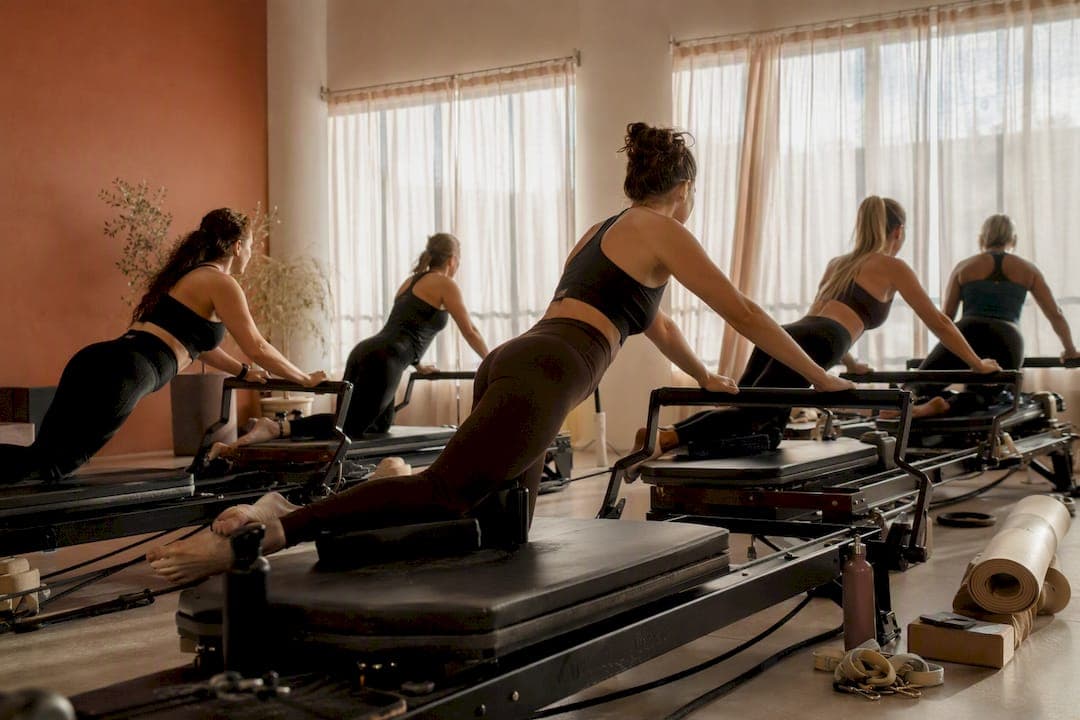
Most Australians pay within the typical range for reformer Pilates classes and memberships, with mat classes usually costing less per session. The exact figure depends on which pricing model you pick: drop-in, class pack, tiered membership, or unlimited. City studios generally sit at the top of that range, while regional and mat-only studios sit lower.
TL;DR:
- Choosing the right membership depends on your actual attendance; a smaller pack can be more cost-effective than unlimited plans if you go fewer times.
- Studio location, instructor experience, equipment quality, class size, and added amenities significantly influence pricing differences.
- Be aware of cancellation policies, minimum commitments, and expiry dates on class packs, as hidden fees and strict terms often increase overall costs.
- Intro offers, off-peak discounts, referral deals, and private trial sessions can help reduce upfront costs and test a studio’s suitability.
- Small-group classes capped at six people provide more instructor attention and value, especially when combined with recovery amenities like saunas and cold plunges.
Table of Contents
- How much does a Pilates membership cost across different plans?
- What affects Pilates pricing (why studios charge different rates)?
- How to calculate per-class value and choose the right membership
- Membership terms, cancellation, freezes and red flags to check
- Ways to reduce cost or try Pilates without a big commitment
- Elevate and Restore: how our small-group studio frames pricing and value
- How we weigh price against experience
- Elevate and Restore membership options and how to get started
- Sources
How much does a Pilates membership cost across different plans?
Studios almost never sell one price. They sell a menu, and picking the wrong item on it is the easiest way to overpay.
Drop-in classes are the most expensive per session but carry zero commitment. Prices vary, but single reformer classes in capital cities tend to be at the higher end compared to mat classes.
Class packs (usually 5 or 10 classes) offer a discounted per-class rate compared to drop-ins, varying by studio.
Limited monthly memberships (4, 8, or 12 classes) are common in boutique studios, with prices varying widely depending on class count and studio tier.
Unlimited memberships sit highest in dollar terms but lowest per class if you actually turn up often. Industry benchmarking puts entry-level tiers around $99 to $149, mid tiers at $159 to $229, and unlimited plans commonly between $199 and $299, though Australian city studios can push past that.
Quick reference for what you'll typically see:
- Single mat class: $15 to $25
- Single reformer class: $25 to $45
- 5 to 10 class pack (reformer): $140 to $350
- 4 to 8 class monthly membership: $150 to $280
- Unlimited monthly membership: $220 to $350+
A NSW-based studio guide records single classes in the $20 to $35 range with unlimited packages sitting well above that, which tracks with what most Melbourne and Sydney studios charge. Some studios also charge a one-off joining or registration fee of $20 to $50, and most offer concession pricing for students or off-peak sessions.
What affects Pilates pricing (why studios charge different rates)?
Two studios two suburbs apart can charge wildly different rates for what looks like the same class, and it's rarely random.
Location and rent drive the biggest swing. A studio in an inner-city strip with premium foot traffic carries overheads a suburban studio simply doesn't, and that cost lands in your membership fee.

Instructor experience matters more in Pilates than most fitness formats, because a poorly cued reformer session is where injuries happen. Studios employing physio-trained or advanced-certified instructors typically charge more.
Equipment quality is a hidden cost driver. Commercial-grade reformers cost thousands of dollars each and need regular servicing, which studios recover through pricing.
Class size matters just as much as any of the above:
- Small-group formats (capped at 6 to 8 people) cost more per seat because there are fewer seats to spread fixed costs across
- Large group classes of 20+ lower per-person cost but reduce individual instructor attention
- Studios adding recovery amenities (sauna, cold plunge, compression therapy) or private sessions justify a higher base membership because members are paying for more than just the class
Pro Tip: Don't compare two studios on price alone. Ask how many people are in a typical class. A $260 membership capped at six people can deliver more actual coaching time than a $180 membership crammed with twenty.
How to calculate per-class value and choose the right membership
The only way to compare offers honestly is to reduce everything to a single number: cost per class. Once you do that, the "cheap" option sometimes isn't.
- Work out your realistic weekly attendance first. Be honest, not aspirational. If you'll genuinely go twice a week, that's roughly 8 classes a month.
- Divide the total membership cost by classes included. An 8-class membership at $220 works out to $27.50 per class. A 10-pack at $320 works out to $32 per class, even though the pack looks cheaper on the sticker.
- Find your break-even point for unlimited. If a studio's unlimited membership is $280 and its 8-class tier is $220, you'd need to attend roughly 10 to 11 classes a month before unlimited pays off, based on typical per-class rates from reformer pricing benchmarks.
- Match the plan to your goal, not the discount. Someone doing Pilates for rehab or strength building three times a week needs a different plan to someone doing one class a fortnight for mobility.
- Weigh class type and group size against price. A cheaper large-group mat class and an expensive small-group reformer session aren't the same product, so don't compare them like they are.
Membership terms, cancellation, freezes and red flags to check
The advertised price is only half the story. What you sign up to matters just as much as what you pay per class.
Most Australian studios run on a rolling monthly membership with a minimum commitment of one to three months, and a notice period (commonly 14 to 30 days) before you can cancel. Miss that window and you're often billed for another cycle.
Watch for these before you sign anything:
- No-show or late cancellation fees, usually $10 to $20, charged when you cancel inside a set window (often 8 to 12 hours before class)
- Freeze policies that let you pause a membership for holidays or injury, though some studios cap freezes at a few weeks per year
- Vague autopay language that doesn't clearly state how to cancel or what notice is required
- High early-termination fees that effectively lock you into a full contract term even if your circumstances change
- Unclear expiry on class packs, since many pack-based fees quietly expire after 3 to 6 months whether you've used the classes or not
Read the cancellation clause before the price list. It's the part most people skip and the part that costs them.
Ways to reduce cost or try Pilates without a big commitment
You don't need to commit to a year-long membership to work out whether a studio is right for you.
Most boutique studios run an intro offer, whether that's a free first class, a discounted trial week, or a short-term unlimited pass priced well below the standard monthly rate. These exist specifically so you can test instructor quality and class size before signing anything longer.
Beyond intro offers:
- Ask about concession or off-peak pricing if you can attend during quieter daytime slots
- Buy a small class pack rather than a membership if your schedule is irregular, but check the expiry date first
- Look for referral deals, since many studios discount a membership when you bring a friend along
- Consider a starter bundle of one or two private sessions plus a small class pack if you're nervous about form on the reformer
Pro Tip: If a studio won't let you trial a single class before committing to a multi-month membership, treat that as information. Confidence in the product usually shows up as flexibility, not pressure.
Elevate and Restore: how our small-group studio frames pricing and value
Our reformer classes are capped at six people, which is deliberately smaller than most studio formats. That cap is the biggest single input into our pricing, because six people get meaningfully more instructor attention and correction per session than twenty ever could.
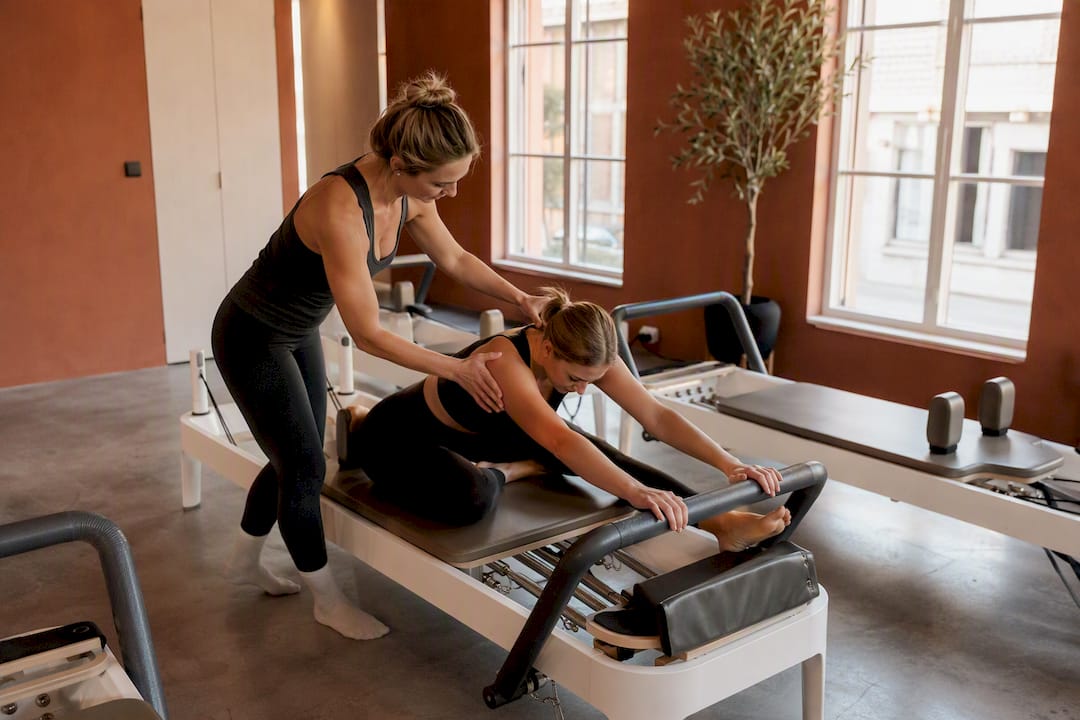
Membership at Elevateandrestore also includes access to a recovery hub, infrared sauna, cold plunge, hot tub, and compression therapy, which sits alongside the training rather than as a separate add-on cost.
This combination tends to suit:
- Adults over 30 who want proper form correction, not just a workout
- Anyone managing an injury or mobility issue who benefits from smaller class ratios, as covered in our guide to building injury resilience through Pilates
- People newer to reformer work who want to understand what reformer Pilates actually involves before committing to a plan
How we weigh price against experience
Price comparisons only tell you part of the story. Six people in a room with a good instructor produces a different result to twenty people in a room with the same instructor, and that difference shows up in outcomes, not just in how the class feels.
If you're deciding between two studios and the price gap is small, weight the decision toward class size, instructor quality, and whatever recovery support comes with it. If the price gap is large, ask exactly what you're losing at the cheaper end before assuming you're getting a bargain.
— Elevate
Elevate and Restore membership options and how to get started
Elevateandrestore runs small-group reformer Pilates capped at six people, functional training and HIIT sessions, and full access to the recovery hub, sauna, cold plunge, hot tub, and compression boots, all built into the membership rather than sold as extras.
If you've read through the price bands above and landed on wanting fewer people per class and genuine recovery support rather than a bare-bones membership, that's exactly what our West Footscray studio is built around. You can see current class times and membership tiers on our reformer Pilates page, or check out the recovery lounge if the sauna, cold plunge, and compression therapy are the deciding factor for you. Book a class and see whether six people in the room, instead of twenty, changes how a Pilates session actually feels.
Sources
For the health case behind Pilates, HealthDirect's overview of health benefits of yoga and Pilates is a solid starting point. For pricing context, The Pilates Business's membership and pricing model analysis breaks down how studios structure tiers.
- The Pilates Business — Club Pilates cost: 2026 membership & franchise pricing
- MegaCore Pilates — Reformer Pilates membership pricing guide