
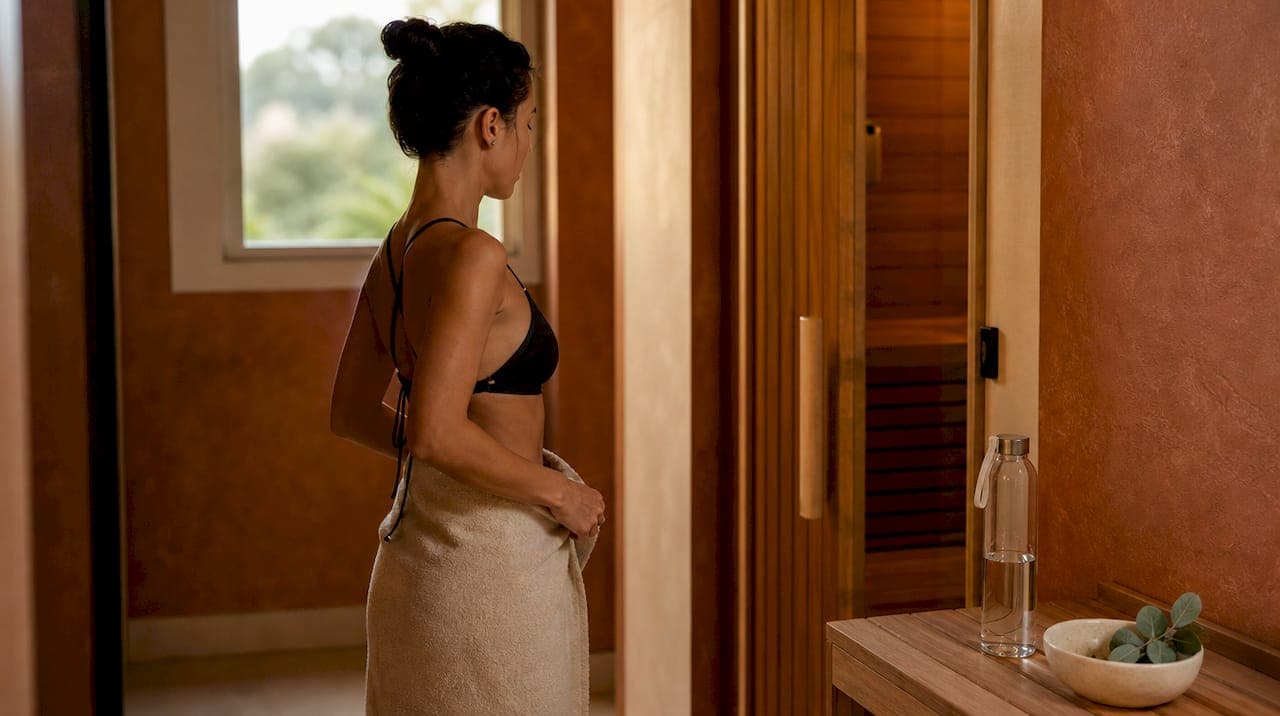
Yes, used the right way, a sauna can help you fall asleep faster. The trick is timing: finish your session roughly 60 to 120 minutes before you want to be asleep, not right before you climb into bed. The mechanism is your core body temperature. It rises during the heat, then falls sharply afterward, and that drop is one of the strongest internal signals your brain uses to start the sleep process.
A session of moderate length, often between a quarter and half an hour, hits the mark for most people. Do it consistently and you're looking at a modest, repeatable improvement in how quickly you drift off, not a fix for chronic insomnia or a diagnosed sleep disorder.
- Finish your sauna session 60 to 120 minutes before lights out.
- Keep sessions to 15 to 25 minutes as a starting point.
- Expect faster sleep onset, not a cure for clinical sleep problems.
Quick fact: A meta-analysis of passive heating studies found that warming the body 1 to 2 hours before bed measurably shortened the time it took participants to fall asleep.
Key Takeaways
Sauna sessions timed 60 to 120 minutes before bed use the post-heat temperature drop to speed up sleep onset, backed most strongly by passive-heating trial data rather than sauna-specific research.
| Point | Details |
|---|---|
| Timing beats duration | Finish your sauna 60 to 120 minutes before bed to align with the natural post-heat temperature drop. |
| Evidence is mixed but real | Warm-bath trials show strong results; sauna-specific data is mostly observational and self-reported. |
| Dose stays modest | Aim for 15 to 25 minutes per session, 2 to 4 nights a week, with a lukewarm cooldown after. |
| Some people need medical advice first | Heart conditions, pregnancy, and certain medications warrant a chat with your GP before starting. |
| Supervised sessions remove the guesswork | Elevate & Restore's recovery hub lets you test the protocol with staff support and the right equipment on hand. |
Table of Contents
- Why sauna for sleep works: the physiology behind the timing
- What the research actually shows and where it falls short
- Your evening sauna routine: timing, dose, and cooldown
- Who should be careful with sauna before bedtime
- How Elevate & Restore approaches sauna timing in practice
- Sauna and sleep disorders: insomnia, sleep apnea, and what changes
- Is regular sauna use safe long term for better sleep?
- Try the evening protocol in a supervised recovery setting
- Sources
Why sauna for sleep works: the physiology behind the timing
Your core temperature isn't flat overnight. It peaks in the early evening, then begins a slow decline that continues until your lowest point in the early hours, and that decline is tightly linked to when you actually fall asleep. Heat up in a sauna and you push your core temperature higher than it would otherwise go. What happens next is the part that matters: your body dumps heat through the skin, hands, and feet, and that rebound cooling happens faster and more steeply than it would without the heat exposure.
This accelerated fall mimics the natural pre-sleep dip, which is why timing the sauna correctly can nudge you toward sleep faster rather than delay it. There's a neurochemical layer too. As your body works to shed heat, autonomic arousal drops, and this generally coincides with the serotonin-to-melatonin conversion your brain uses to prepare for sleep, a relationship well documented in physiological reviews of temperature and sleep.
Traditional and infrared sauna produce the same underlying effect through different routes. A traditional sauna heats the air around you, often past 80°C, and your body absorbs that heat indirectly. An infrared cabin heats you more directly at lower air temperatures, which the Mayo Clinic notes can make sessions more tolerable for people who find traditional heat overwhelming.
- Traditional sauna: high air temperature, faster core heating, shorter tolerable sessions for most people.
- Infrared sauna: lower air temperature, slower but steadier heating, often easier to sit through for 20+ minutes.
- Both trigger the same post-heat cooling effect that supports sleep onset.
What the research actually shows and where it falls short
The best trial evidence for pre-sleep heating doesn't come from saunas at all. It comes from warm baths and showers. The 2019 meta-analysis by Haghayegh and colleagues pooled 17 studies and found that heating the body 1 to 2 hours before bed shortened sleep-onset latency and improved self-rated sleep quality and efficiency. That's a genuinely strong result, but it's a water-based intervention, not a sauna one.
Sauna-specific research is thinner. There are no large randomised controlled trials using polysomnography, the gold-standard sleep lab measurement, to test sauna sessions against a placebo condition. What exists instead is mostly self-report. The global sauna survey by Hussain, Greaves and Cohen found 83.5% of respondents reported improved sleep after sauna use, which sounds compelling until you consider that regular sauna users also tend to exercise more and report better general health, so the result is observational and open to confounding. Older, smaller studies summarised by the Finnish Sauna Society similarly point to increased deep sleep after sauna bathing, but sample sizes are small.
| Evidence type | Strength | Main limitation |
|---|---|---|
| Passive heating mechanism (temperature/melatonin link) | Strong | Well established physiologically, but indirect for sauna specifically |
| Warm bath/shower trials | Moderate to strong | Not sauna specific; 17-study meta-analysis |
| Sauna-specific surveys and small studies | Weak | Self-report, observational, confounded by lifestyle factors |
The honest read is this: the mechanism is well established, the water-based trial data is solid, and the sauna-specific evidence is real but thin. Applying bath-timing findings to sauna sessions is a reasonable inference, not a proven equivalence.
Your evening sauna routine: timing, dose, and cooldown
Getting the sequence right matters more than any single detail. Here's the protocol that reflects both the trial data and practical sauna-specific guidance.
- Time it 60 to 120 minutes before bed. This window lets your core temperature peak and start its descent right as you're winding down, matching the timing window from the Haghayegh meta-analysis.
- Keep the session to 15 to 25 minutes in a traditional sauna. Infrared sessions can often run a little longer given the lower air temperature, though tolerance still varies person to person.
- Cool down with a lukewarm shower, not a cold one. A hard cold hit right before bed can spike alertness when you want the opposite.
- Rehydrate with 450 to 600 ml of fluid after the session to replace what you sweat out.
- Dim the lights, put screens away, and keep the bedroom cool (around 18 to 19°C) once you're out of the sauna.
- Repeat 2 to 4 nights a week and track two things for two weeks: how long it takes you to fall asleep, and how refreshed you feel the next morning.
If your evening is tight on time, shorten the session or drop the intensity rather than skipping the cooldown window and heading straight to bed. Going from sauna heat to horizontal in under 30 minutes tends to work against you, not for you.
Pro Tip: Keep a one-line sleep note on your phone for two weeks, just "time to fall asleep" and "how I felt on waking." Patterns show up fast, and you'll know within a fortnight whether the routine is worth keeping.
Who should be careful with sauna before bedtime
Sauna heat puts real strain on your cardiovascular system, and that's worth respecting rather than pushing through. If you have heart disease, uncontrolled blood pressure, or a history of fainting, talk to your GP first before adding regular evening sessions.
Pregnancy is another clear pause point, as is combining sauna heat with alcohol, diuretics, or some blood pressure medications, since these can amplify dehydration and dizziness risk.
- Consult your GP if you have any cardiovascular condition before starting regular sauna sessions.
- Avoid sauna use during pregnancy unless cleared by your doctor.
- Be cautious combining sauna heat with alcohol, diuretics, or antihypertensive medication.
- Rehydrate properly. Dehydration can itself disrupt sleep, undoing the benefit you're chasing.
- Skip the cold plunge right before bed for evening sessions. A lukewarm rinse is the safer finish.
How Elevate & Restore approaches sauna timing in practice
In supervised recovery settings, session length and sequencing get adjusted to the person, not applied as a blanket rule. Someone newer to heat exposure typically starts shorter, and infrared tolerance varies enough by age and training load that it pays to build up gradually rather than aim for a fixed number from day one.
Evening training adds a wrinkle worth planning around: if a workout finishes early enough, a post-session sauna can still land inside the 60 to 120 minute pre-bed window, a sequencing approach explored in more detail in sauna recovery for strength training. If training runs late, it's usually better to save the sauna for a different night rather than compress the cooldown period.
- Session length is tailored to heat tolerance and training load, not fixed for everyone.
- Older clients or those newer to sauna generally start with shorter sits and build up.
- Evening training and sauna can be sequenced together if timing allows, detailed in this infrared sauna and workout timing guide.
Sauna and sleep disorders: insomnia, sleep apnea, and what changes
Sauna use interacts differently with different sleep problems, and lumping them together does readers a disservice. For general difficulty falling asleep, the passive heating protocol described above is a reasonable, low-risk addition to a routine. It works on sleep onset, the time it takes to drift off, which is exactly the mechanism behind most mild insomnia complaints.
Chronic insomnia is a different story. If you're dealing with a diagnosed insomnia disorder, sauna timing might shave a few minutes off sleep onset, but it won't address the underlying drivers, which are often behavioural or cognitive and better handled through approaches like cognitive behavioural therapy for insomnia. Treat sauna as a support, not a substitute.
Sleep apnea introduces a different consideration again. Heat exposure and the resulting hydration shifts can affect airway tissue and breathing patterns in ways that aren't well studied for sauna specifically. Anyone with diagnosed or suspected sleep apnea should raise sauna use with their treating doctor rather than assume the general timing advice applies unchanged, particularly if they use a CPAP machine or have other airway related conditions.
The safest framing: sauna helps most with the mechanical side of falling asleep faster. It doesn't replace treatment for a diagnosed sleep disorder, and anyone with one should get personalised advice before building a routine around it.
Is regular sauna use safe long term for better sleep?
Used sensibly, regular sauna sessions carry a well-documented safety profile for most healthy adults, and the main long-term considerations are cumulative rather than acute. Cardiovascular adaptation is generally positive. Studies referenced by the Cleveland Clinic point to heat exposure improving vascular function over time in people without pre-existing heart conditions, similar to a mild cardiovascular workout.
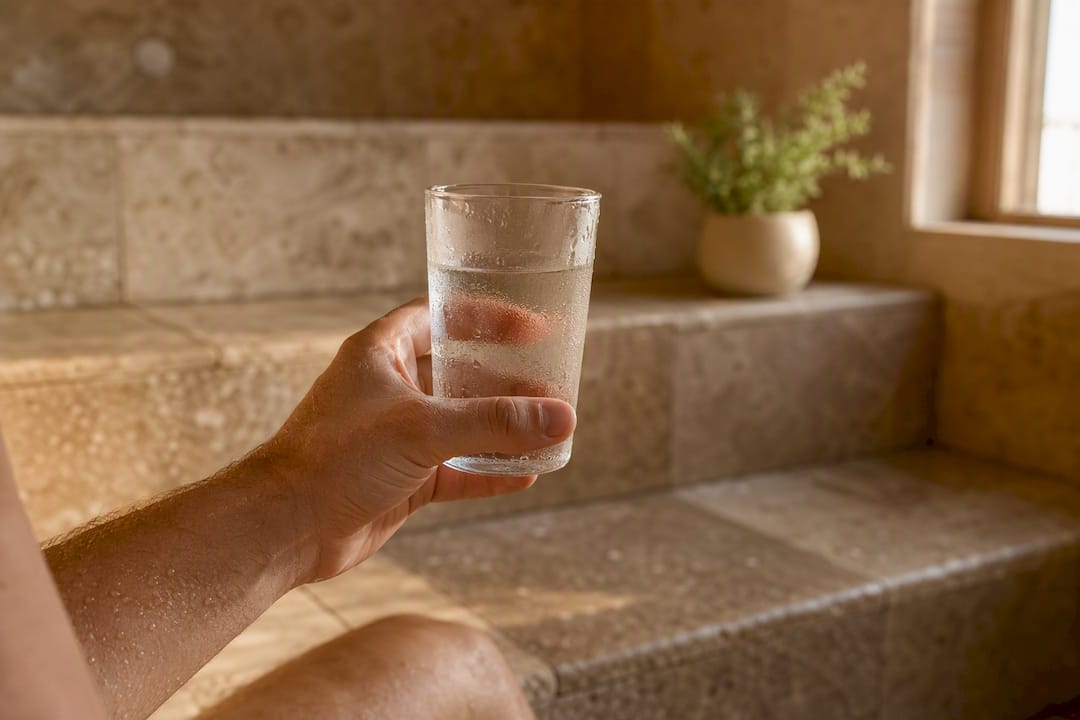
The bigger long-term factors to watch are hydration habits and consistency of monitoring. Frequent sauna use without adequate fluid replacement can chip away at kidney function markers over months, particularly in older adults or anyone on medication that affects fluid balance. Building the 450 to 600 ml rehydration step into every session, not just occasionally, matters more the longer you keep the routine going.
Frequency itself doesn't appear to carry escalating risk for most healthy users. Two to four sessions a week, sustained over months or years, is the range most practical guides and observational sauna research settle on, rather than daily use pushing for faster results. What does matter over the long run is reassessing your tolerance as you age or as health conditions change. Someone who tolerated 25 minutes comfortably at 35 might need to dial that back at 55, particularly around blood pressure medication changes. The cardiovascular considerations worth understanding before starting apply just as much to someone five years into a routine as someone on their first session.
A realistic way to test this yourself
Treat sauna as a nudge, not a fix. Expect to fall asleep a bit faster, not to solve a diagnosed sleep disorder overnight. Track your time to sleep and how refreshed you feel each morning for two weeks, and pair the routine with the basics: a consistent bedtime, a cool room, and a dark bedroom.
— Elevate
Try the evening protocol in a supervised recovery setting
Elevate & Restore's recovery hub gives you infrared sauna, cold plunge, hot tub, and compression boots in one small-group setting, so you can run the evening protocol with actual guidance instead of guessing at timing on your own. Sessions are supervised, which matters if you're new to heat exposure or unsure how your body responds to a 20-minute sit followed by a cooldown.
If you're already training with us, sauna access pairs naturally with a reformer Pilates session earlier in the evening, giving you a realistic window to finish training, heat, cool down, and still land inside the 60 to 120 minute pre-bed target. If sleep is your main goal, a single recovery session is the easiest way to see how your body responds before committing to anything ongoing. Book a recovery pass and test the protocol this week with staff on hand to guide session length and cooldown.
Sources
- Haghayegh S, et al. (2019) — meta-analysis on passive body heating and sleep
- Hussain, Greaves & Cohen — Global sauna survey (2019)
- Okamoto-Mizuno & Mizuno — Sleep and temperature review (PMC article)
- Mayo Clinic — infrared sauna FAQ
- Finnish Sauna Society — sauna and sleep overview