

Wellness studio services are defined as structured offerings that promote physical and mental health through fitness, movement, recovery therapies, nutrition coaching, and mind-body practices delivered under one roof. Studios today bundle these across four core categories: fitness and movement, recovery and relaxation, nutrition and health coaching, and mind-body mental health support. Understanding the types of wellness studio services available helps you choose the right combination for your goals, whether that is building strength, managing stress, recovering faster, or simply feeling better in your body day to day.
1. Fitness and movement classes
Fitness and movement services are the most visible category of wellness studio offerings, covering everything from yoga and Pilates to strength training and electro muscle stimulation (EMS) workouts. A multi-service wellness model treats these classes as the entry point for most clients, with other services layering on top as goals evolve.
Common fitness and movement options include:
- Yoga: Group or individual sessions targeting flexibility, strength, and stress relief
- Reformer Pilates: Equipment-based Pilates focused on core strength, posture, and controlled movement
- Functional strength training: Small-group or personal training sessions using bodyweight, kettlebells, or resistance equipment
- EMS training: 20-minute full-body sessions using electro muscle stimulation to activate up to 90% of muscle fibres simultaneously
- Barre and low-impact cardio: Accessible movement options suited to rehabilitation or beginners
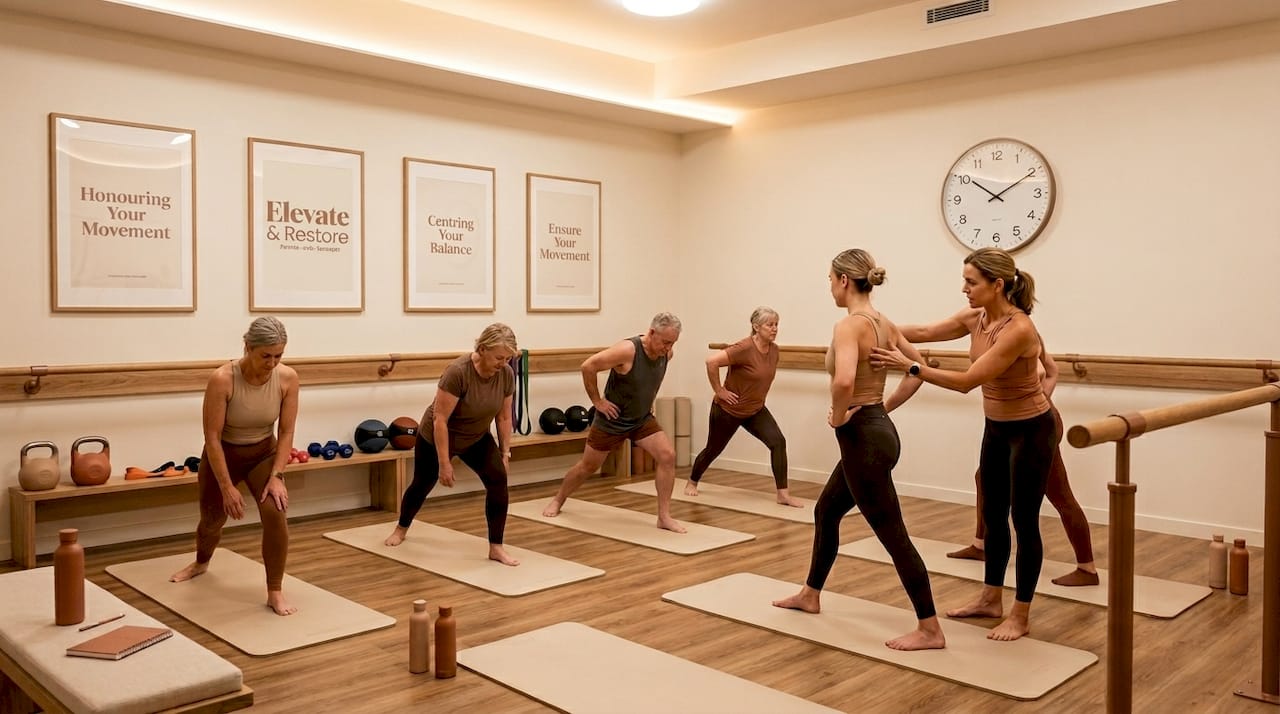
Boutique studios like Elevateandrestore specialise in small-group functional training sessions capped at six people, which means coaching is genuinely personalised rather than generic. That format sits between a group class and personal training, and it produces better technique and accountability than a crowded gym floor.
Pro Tip: When evaluating a fitness studio, ask whether sessions are led by a certified trainer or physiotherapist. Credential-backed instruction reduces injury risk and produces faster results, particularly for Pilates and functional strength work.
2. Reformer Pilates as a standalone service
Reformer Pilates is a distinct wellness service type that deserves its own category because it sits at the intersection of rehabilitation, strength, and mind-body fitness. The reformer machine uses spring resistance to create controlled, low-impact resistance training that builds deep stabilising muscles without loading joints excessively.
Studios offering reformer Pilates typically run classes of four to eight people to allow instructors to correct form in real time. This format suits post-injury recovery, pre- and post-natal fitness, and anyone building a foundation of movement quality before adding load. The evidence base for Pilates in improving posture, reducing lower back pain, and building core endurance is well established in physiotherapy literature.
Elevateandrestore runs reformer Pilates in groups of six, which keeps the session focused and the coaching specific. This is not a stretch class with a machine. It is a structured strength programme that progresses week to week.
3. Recovery and relaxation therapies
Recovery services are the second major pillar of wellness studio offerings, covering modalities designed to reduce muscle soreness, lower cortisol, improve circulation, and support the nervous system after physical exertion or chronic stress. Wellness centres commonly combine spa-style comfort with clinically grounded recovery tools to serve both athletes and everyday clients.
Typical recovery and relaxation services include:
- Infrared or traditional sauna: Heat exposure that promotes muscle relaxation, improved circulation, and stress reduction
- Cold plunge or cryotherapy: Cold water immersion or whole-body cold exposure to reduce inflammation and accelerate recovery
- Hot tub or hydrotherapy: Warm water therapy targeting joint mobility and parasympathetic nervous system activation
- Compression therapy: Pneumatic compression boots that improve lymphatic drainage and reduce post-exercise swelling
- Massage therapy: Remedial, sports, or relaxation massage targeting soft tissue tension and pain relief
Elevateandrestore's recovery hub includes a sauna, cold plunge, hot tub, and compression boots, which covers the full spectrum of thermal contrast and compression recovery in a single visit. Thermal contrast therapy, alternating between heat and cold, is used by professional sports teams and is now accessible in boutique studio settings.
Pro Tip: If a studio offers cryotherapy or cold plunge, ask about water temperature, session duration guidelines, and contraindications. These are safe for most people but require basic screening for cardiovascular conditions.
4. Nutrition and health coaching
Nutrition services within wellness studios range from one-off dietary consultations to ongoing coaching programmes that integrate with your fitness and recovery plan. Integrated wellness centres place onsite nutritionists or dietitians alongside fitness coaches so that training and eating strategies are aligned rather than siloed.
Common nutrition and health coaching services include:
- Personalised meal planning: A dietitian or nutritionist builds an eating plan around your training load, health goals, and food preferences
- Weight management coaching: Structured programmes combining caloric guidance, behaviour change strategies, and progress tracking
- Metabolic health assessments: Body composition analysis, resting metabolic rate testing, and blood marker reviews
- Supplement and vitamin guidance: Evidence-based advice on protein, creatine, omega-3s, and micronutrient gaps
- Lifestyle coaching: Broader support covering sleep, stress, and daily habits that affect body composition and energy
Some studios now offer medically supervised metabolic programmes including GLP-1 weight loss protocols using semaglutide or tirzepatide. These require physician oversight and are not appropriate for every client, but they represent a growing category of wellness service types that sit at the boundary of clinical medicine and lifestyle coaching.
Pro Tip: Always verify that nutrition advice is delivered by a registered dietitian (APD in Australia) rather than a general wellness coach. The title "nutritionist" is not protected in Australia, so credentials matter significantly.
5. Mind-body and mental health support
Mind-body services address the psychological and emotional dimensions of health, and they are increasingly standard in wellness studio programmes rather than optional add-ons. A 2026 systematic review of 30 controlled studies involving 2,288 participants found that yoga interventions significantly reduce stress, anxiety, and depression, with stress-relief effects strengthening with age.
Common mind-body and mental health offerings include:
- Mindfulness and meditation classes: Guided sessions teaching breath awareness, body scanning, and present-moment focus
- Stress management workshops: Group or individual programmes addressing chronic stress through evidence-based techniques
- Yoga variations: Restorative, yin, vinyasa, and strength-focused yoga tailored to different physical and emotional needs
- Breathwork sessions: Structured breathing protocols targeting nervous system regulation and anxiety reduction
- Counselling integration: Some studios partner with psychologists or counsellors to offer mental health support alongside physical services
The 2026 meta-analysis found yoga's stress-relief effects vary by age, which means studios that offer multiple yoga formats, restorative for older adults and strength-focused for younger clients, are better positioned to deliver real outcomes. A single yoga class format does not serve every demographic equally.
6. Medical-adjacent and advanced wellness services
Advanced wellness services include IV drip therapy, NAD+ infusions, peptide treatments, hormone replacement therapy, and vitamin injections. These are now offered by a growing number of wellness studios alongside conventional fitness and recovery services, reflecting a shift toward metabolic health and longevity as mainstream wellness goals.
The table below compares these services by evidence strength and safety considerations:
| Service | Evidence strength | Key safety consideration |
|---|---|---|
| IV vitamin therapy | Limited for healthy individuals | Requires sterile technique and clinical oversight |
| NAD+ infusions | Emerging, not yet conclusive | Must be administered by licensed practitioner |
| Peptide therapies | Varies by peptide; some well-studied | Requires physician prescription and monitoring |
| Hormone replacement therapy | Strong for clinical indications | Needs full hormonal panel and medical supervision |
| GLP-1 weight loss injections | Strong for obesity and metabolic disease | Physician-supervised protocol required |
Consumer guidance from 2026 advises verifying licensed oversight before committing to any of these treatments. Studios that market these services without clear physician involvement or individualised protocols are a red flag. Clinical governance, meaning a licensed doctor reviewing your case and monitoring outcomes, is non-negotiable for higher-risk interventions.
7. Wellness programme packages and memberships
Wellness studios increasingly sell service packages rather than individual sessions, reflecting the understanding that complementary service lines feed each other as clients move from acute recovery to performance to lifestyle maintenance. A membership that bundles fitness classes with recovery access produces better adherence and outcomes than either service alone.
Common package structures include unlimited class memberships with recovery access, class-plus-coaching bundles that pair fitness sessions with nutrition check-ins, and recovery-only memberships for clients who train elsewhere but want access to sauna, cold plunge, and compression therapy. The best studios design these packages around client progression rather than revenue maximisation. You should be able to see a clear pathway from where you start to where you want to be, with services that support each stage of that progression.
Key takeaways
Wellness studios deliver the best results when movement, recovery, nutrition, and mind-body services are selected together rather than in isolation.
| Point | Details |
|---|---|
| Four core service categories | Fitness, recovery, nutrition, and mind-body support form the foundation of any wellness studio. |
| Recovery tools matter | Sauna, cold plunge, and compression therapy accelerate physical recovery and reduce injury risk. |
| Yoga has strong evidence | A 2026 meta-analysis of 2,288 participants confirms yoga reduces stress, anxiety, and depression. |
| Medical services need oversight | IV therapy, GLP-1 programmes, and peptide treatments require licensed physician supervision. |
| Package design signals quality | Studios that structure memberships around client progression prioritise outcomes over transactions. |
What I have learnt from running a small-group wellness studio
The most common mistake people make when choosing wellness services is picking the one that sounds most appealing rather than the one that addresses their actual gap. Someone who trains hard five days a week and sleeps poorly does not need another fitness class. They need recovery, sleep coaching, and possibly a nervous system reset through breathwork or a proper sauna protocol.
At Elevateandrestore, we see this pattern constantly. Clients come in asking about adding more sessions, and after a conversation about their week, it becomes clear that their training is fine and their recovery is non-existent. The cold plunge and sauna combination changes their sleep and energy within two weeks. That is not a coincidence. Thermal contrast therapy has a measurable effect on parasympathetic nervous system activation.
The other thing worth saying plainly: not every wellness studio offering is equal. Some services have decades of clinical evidence behind them. Others are marketed aggressively with very little science to support the claims. The way to tell the difference is to ask who is overseeing the service, what the protocol is, and what the expected outcome looks like in four to eight weeks. A good studio answers those questions without hesitation. A studio that deflects or speaks only in vague wellness language is one to approach with caution.
Choose services that complement each other. Move well, recover properly, eat in a way that supports your training, and address your mental load. That combination, not any single treatment, is what produces lasting change.
— Elevate
Experience holistic wellness at Elevateandrestore
Elevateandrestore brings together boutique functional training, reformer Pilates, and a full recovery lounge in one studio in Melbourne's inner west. Every fitness session runs with a maximum of six people, so coaching is specific and progression is real. The recovery hub includes a sauna, cold plunge, hot tub, and compression boots, giving you the tools to train harder and recover faster in the same visit.
If you are ready to experience what a genuinely integrated wellness studio feels like, Elevateandrestore offers a service stack built around your physical and mental health goals. Explore the full range of offerings and find the combination that fits where you are right now.
FAQ
What are the main types of wellness studio services?
Wellness studios typically offer four core service types: fitness and movement classes, recovery and relaxation therapies, nutrition and health coaching, and mind-body mental health supports. Many studios bundle these into memberships or packages to support client progression.
Is reformer Pilates considered a wellness service?
Reformer Pilates is a wellness service that combines strength training, rehabilitation, and mind-body fitness using spring-resistance equipment. It is particularly effective for building core stability, improving posture, and supporting post-injury recovery.
Are recovery services like sauna and cold plunge worth it?
Sauna and cold plunge therapy are well-supported recovery tools that reduce muscle soreness, improve circulation, and activate the parasympathetic nervous system. Thermal contrast protocols are used by professional athletes and are now accessible in boutique studio settings.
How do I know if a wellness studio's medical services are safe?
Consumer guidance from 2026 recommends verifying licensed physician oversight for any medical-adjacent service including IV therapy, GLP-1 injections, or peptide treatments. A reputable studio will provide clear information about the supervising practitioner and individualised protocols.
What is the difference between a wellness studio and a gym?
A wellness studio integrates multiple health modalities including recovery, nutrition, and mind-body services alongside fitness classes, whereas a gym primarily provides equipment and group exercise. Boutique wellness studios also typically offer smaller class sizes and more personalised coaching than a commercial gym.