
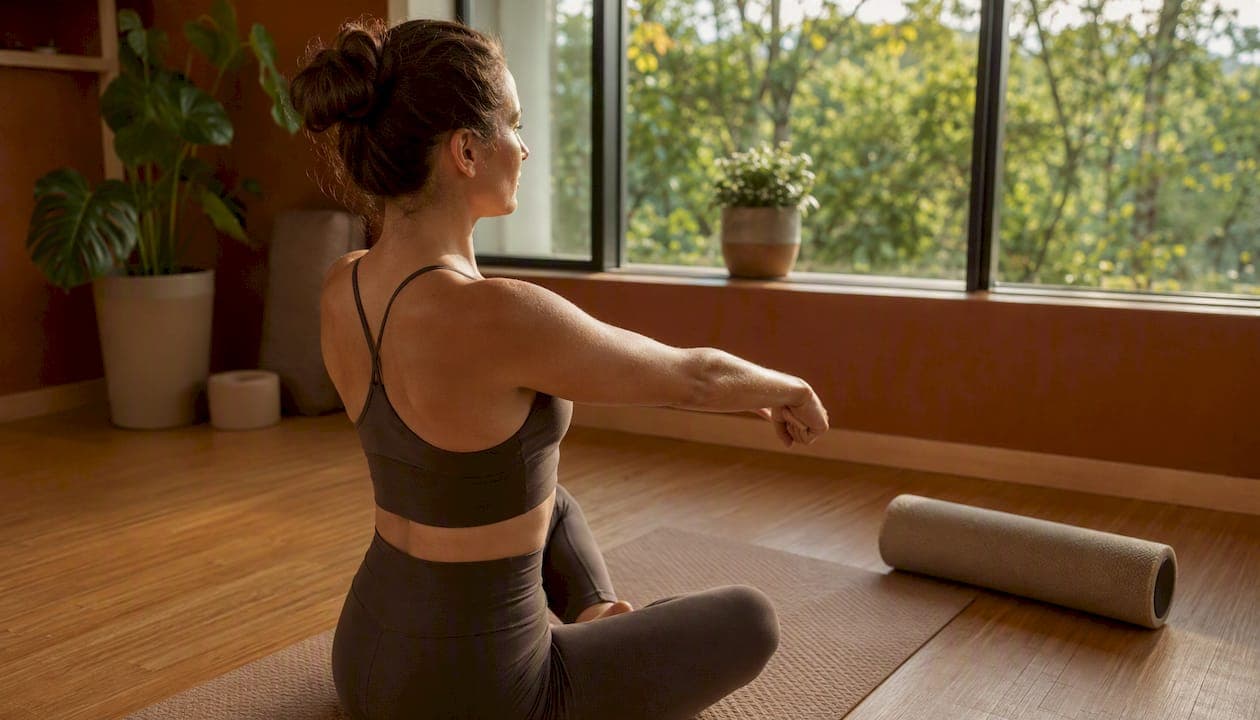
Posture commonly declines after 30 because of two forces working together: measurable muscle loss that begins in your thirties and the accumulated effect of sedentary habits. The good news is that most of this decline is driven by modifiable factors, which means targeted work genuinely reverses it. Right now, before reading further, try three things: stand up and take a two-minute walk break, draw your lower ribs gently in to activate your deep core, and clasp your hands behind your back to open your chest. Those three micro-habits, done consistently, are where posture correction actually starts.
Red flag check first: if you have sudden arm or leg weakness, numbness, new bowel or bladder changes, or severe pain that does not ease with position changes, stop and see a GP before starting any exercise programme.
Key takeaways
Posture worsens after 30 primarily because of sarcopenia and sedentary habits, but both are modifiable with consistent, targeted training and daily habit changes.
| Point | Details |
|---|---|
| Muscle loss starts at 30 | Sarcopenia reduces core and posterior chain strength; measurable height loss is common by older age. |
| Habits drive most decline | Prolonged sitting and screen use shorten chest muscles and weaken upper-back stabilisers; changing these habits is the fastest lever. |
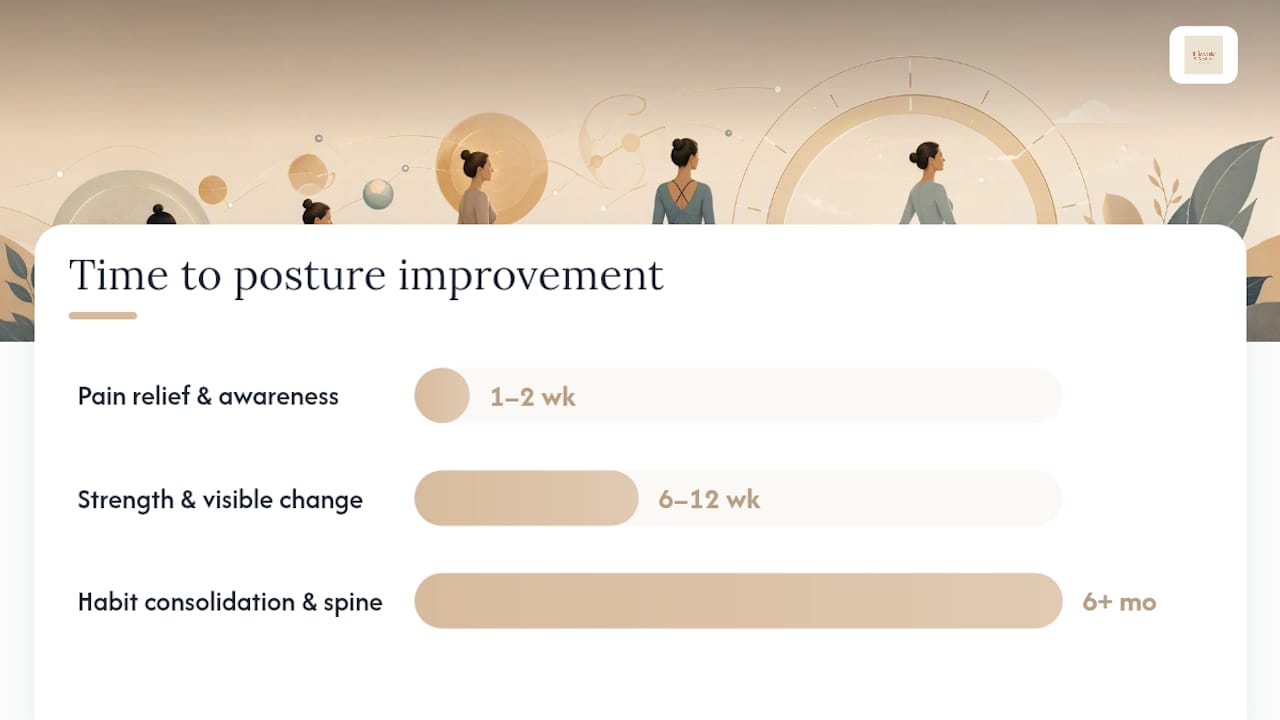
| Improvement timeline | Pain relief often begins within 1–2 weeks; visible posture shifts typically take 6–12 weeks of consistent training. |
| See a clinician for red flags | Sudden weakness, numbness, bowel/bladder changes, or significant height loss warrant a GP visit before starting exercise. |
| Coached training accelerates results | Elevateandrestore's small group reformer Pilates and functional training target the specific muscles and movement patterns that drive posture decline after 30. |
Table of Contents
- Why posture tends to worsen after 30: the real causes
- What poor posture does to your body over time
- A practical plan to improve posture after 30
- Everyday fixes that stop posture getting worse
- How long does posture improvement actually take?
- Red flags and when to see a health professional in Australia
- How reformer Pilates and functional training address posture after 30
- Is it too late to fix your posture after 30?
- A practitioner's perspective on working with clients in their 30s and 40s
- Elevateandrestore: posture-focused training in inner west Melbourne
- Sources
Why posture tends to worsen after 30: the real causes
The short answer is that posture decline after 30 is rarely one thing. It is a slow collision between biology and behaviour, and understanding both tells you exactly where to intervene.
Muscle atrophy begins in a measurable way after age 30, and by age 70 many people experience some measurable loss in height. This process, known clinically as sarcopenia, progressively reduces the core and posterior chain strength that holds your spine upright. Intervertebral discs also lose water content with age, reducing their height and shock-absorbing capacity. Connective tissue becomes less elastic, and photogrammetry studies show that neck and thoracic angles shift significantly with ageing, with the neck showing the earliest and most pronounced changes.
Alongside these biological shifts, lifestyle habits compound the problem fast. Prolonged sitting, smartphone use and couch slouching shorten chest muscles and overstretch the upper back, creating the classic forward-head, rounded-shoulder pattern most people recognise in themselves by their mid-thirties.
Main causes of posture decline after 30:
- Sarcopenia: Progressive loss of muscle mass reduces the deep core and posterior chain strength that holds the spine upright.
- Sedentary habits: Prolonged sitting tightens hip flexors and chest muscles while switching off glutes and mid-back stabilisers.
- Tech neck: Sustained forward head posture from screens loads the cervical spine with forces well beyond its resting weight.
- Disc and connective tissue changes: Reduced disc height and less elastic ligaments limit spinal mobility and alter load distribution.
- Lumbar lordosis reduction: Research shows total lumbar lordosis reduces with age, particularly in the mid-lumbar region, flattening the lower back curve.
- Weight redistribution: Changes in body composition shift the centre of gravity, altering how the spine compensates.
- Prior injuries: Old ankle, knee, or shoulder injuries create movement compensations that gradually load the spine unevenly.
- Neuromuscular changes: Older adults increasingly rely on greater muscle co-contraction to maintain stability, which is less efficient and harder to retrain without targeted coaching.
The critical distinction: muscle strength, daily habits, and mobility are all modifiable. Advanced osteoporosis with vertebral fractures or a fused spine from ankylosing spondylitis are structural and require medical management first. Most people in their 30s and 40s are dealing with the modifiable kind.
What poor posture does to your body over time
The consequences of poor posture go well beyond looking tired or slouched. They accumulate quietly and then become hard to ignore.
Forward posture increases mechanical load on neck and back muscles and is directly associated with pain, headaches and reduced respiratory function. When your head sits 5 cm forward of neutral, the effective load on your cervical spine roughly doubles. Breathing suffers because a rounded thorax restricts rib expansion, reducing lung capacity during everyday activity.
Common consequences of sustained poor posture:
- Chronic neck and upper back pain, often worse by late afternoon
- Tension headaches driven by overloaded suboccipital muscles
- Reduced breathing capacity from restricted rib cage movement
- Increased joint load at the hip, knee and ankle from altered alignment
- Hyperkyphosis shifts the centre of pressure forward, increasing postural sway and fall risk in older adults
- Movement inefficiency: more energy spent on basic tasks like carrying shopping or climbing stairs
- Long-term structural changes including vertebral compression fractures in those with low bone density
The preventable versus structural distinction matters here. Pain, muscle imbalance, and movement inefficiency respond well to targeted training. Established hyperkyphosis from osteoporotic fractures is structural and requires medical input alongside exercise, though exercise still helps prevent further deterioration.
A practical plan to improve posture after 30
The principle is straightforward: strengthen the posterior chain, activate deep core stabilisers, and restore thoracic mobility. Mobility without strength does not hold. Strength without mobility creates rigidity. You need both, plus movement retraining so the new patterns become automatic.
Harvard Health confirms that posture correction requires changing daily activity patterns and strengthening the relevant muscles, not a single fix. Here is a structured approach.
Exercise examples with cues
Scapular retraction (rhomboids and lower trapezius): Sit or stand tall. Draw your shoulder blades down and together as if squeezing a pencil between them, but keep your neck long and relaxed. Hold 5 seconds, release fully. This targets the deep scapular stabilisers, not the upper trapezius. Do 3 sets of 10.
Dead bug (deep core activation): Lie on your back, arms pointing to the ceiling, knees bent at 90 degrees. Slowly lower one arm overhead and the opposite leg toward the floor while keeping your lower back pressed flat. Return and alternate. 3 sets of 8 per side.
Thoracic extension over a foam roller: Place a foam roller horizontally across your mid-back. Support your head with your hands and gently extend over the roller for 30–60 seconds, moving it up the thoracic spine in small increments. This directly addresses the thoracic stiffness that drives forward head posture. See the thoracic mobility guide for lifters over 30 for progressions.
Chest stretch (doorway or band): Stand in a doorway with arms at 90 degrees. Step one foot forward and lean gently until you feel a stretch across the chest and front of the shoulders. Hold 30 seconds, 3 times.
Plank (anterior core endurance): Start on forearms and toes, body in a straight line from head to heel. Breathe normally. Begin with 20–30 seconds and build to 60 seconds over several weeks.
Three-level weekly progression
-
Beginner (weeks 1–4): Three sessions per week. Scapular retraction, dead bug, doorway chest stretch, and 20-second plank. Focus on learning the movement patterns rather than load or duration. Add the foam roller thoracic extension daily.
-
Intermediate (weeks 5–12): Four sessions per week. Add resistance band rows, single-leg dead bug, plank progressions to 45–60 seconds, and introduce light Romanian deadlifts for posterior chain loading. Begin strength training progressions if new to structured lifting.
-
Return-to-sport or performance (week 12+): Four to five sessions per week. Loaded carries, cable face-pulls, thoracic rotation with load, and integrated functional movements. Prioritise mobility and athletic longevity protocols to maintain gains.
Pro Tip: "Pull your shoulders back" is one of the least effective posture cues because it usually activates the upper trapezius, which increases neck tension and fatigue. Instead, cue "draw your shoulder blades down and away from your ears, then gently together." That sequence recruits the lower trapezius and rhomboids, which are the muscles that actually hold posture without strain.
Safety note: Stop any exercise that causes sharp pain, pins and needles, or dizziness. If pain persists beyond 48 hours after a session, reduce load and seek assessment from a physiotherapist or accredited exercise physiologist before continuing.
Everyday fixes that stop posture getting worse
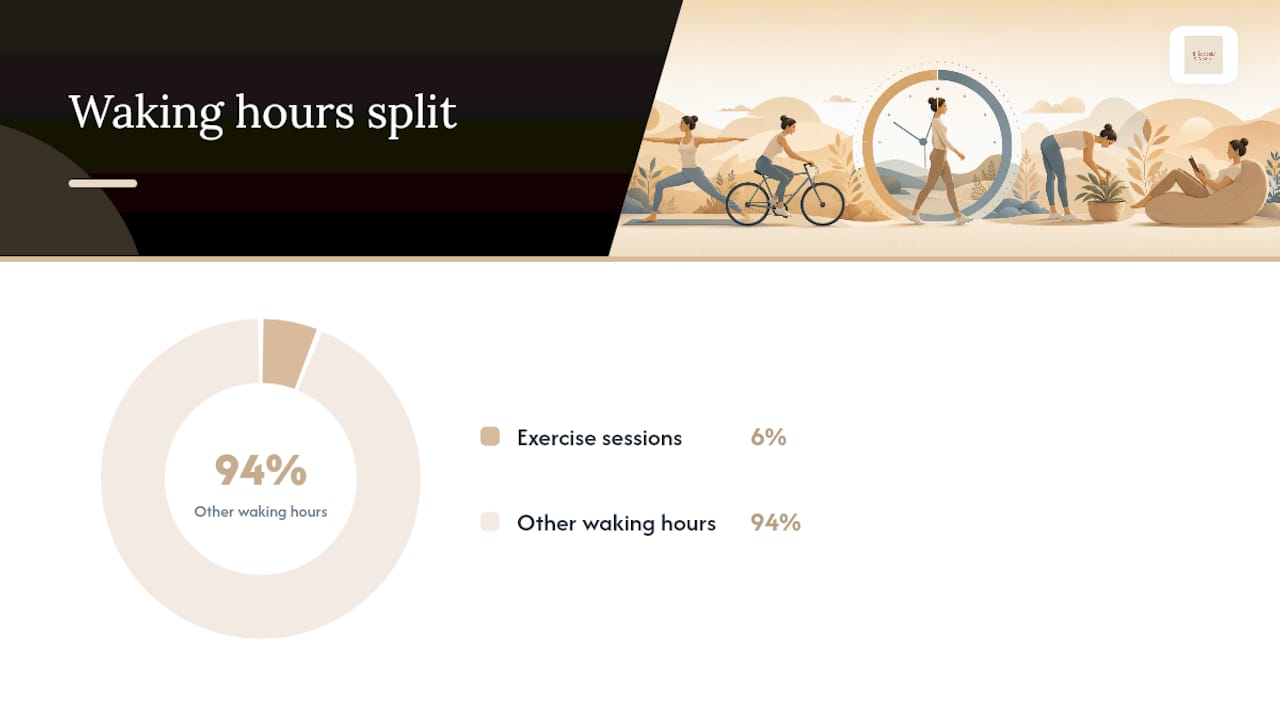
Exercise sessions matter, but they are one hour out of sixteen waking hours. The other fifteen determine whether your training gains hold or get undone.
Desk and screen ergonomics:
- Screen top at or just below eye level; a laptop stand with an external keyboard is a practical fix for most home setups
- Chair height so hips are at 90 degrees or slightly open, feet flat on the floor
- Monitor arm's length away; no craning forward to read
- Keyboard and mouse close enough that elbows stay near 90 degrees
Phone and leisure habits:
- Hold your phone at eye level rather than looking down; even 15 minutes of sustained neck flexion adds up across a day
- Set a micro-break reminder every 30–45 minutes: stand, roll your shoulders back, take three deep breaths
- On the couch, use a lumbar cushion or sit upright rather than sinking into a C-curve for hours
Sleep position:
- Side sleeping with a pillow that fills the gap between your ear and shoulder keeps the cervical spine neutral; a pillow that is too flat or too thick creates sustained lateral flexion overnight
- Back sleeping with a pillow under your knees reduces lumbar load
- Stomach sleeping is the least supportive position for the neck and is worth changing if neck pain is a recurring issue
Habit stacking for posture:
Attach posture cues to existing habits. Every time you make a coffee, do 10 scapular retractions. Every time you answer a phone call, stand up. Every time you sit down at your desk, check your screen height. These micro-moments compound faster than a single weekly stretch session.
How long does posture improvement actually take?
Honest answer: faster than most people expect for pain relief, slower than most expect for structural change.
- Weeks 1–2: Increased body awareness and often a noticeable reduction in end-of-day pain and tension. This is not structural change; it is neuromuscular retraining beginning to shift habitual patterns.
- Weeks 6–12: Measurable strength improvements in the posterior chain and core. Colleagues or a partner may notice a visible change in how you carry yourself. This is when the work starts to feel worth it.
- Months 6 and beyond: Longer-term habit consolidation, improved thoracic mobility, and in some cases measurable changes in spinal angles on assessment. Lumbar range of motion responds to consistent loading, though the degree of change depends on baseline stiffness and consistency.
Factors that speed progress: consistent loading three or more times per week, coached feedback on movement quality, adequate protein intake to support muscle repair, and quality sleep. Factors that slow it: unresolved pain that limits training, advanced bone density changes, high stress and poor sleep, and sporadic training with long gaps.
Tracking progress practically: Take a side-on photo against a wall on day one. Repeat at 6 and 12 weeks. A timed plank and a simple shoulder mobility test (can you touch your hands behind your back?) give you strength and mobility benchmarks that are easy to retest. These markers are more motivating than waiting to "feel" different.
Red flags and when to see a health professional in Australia
Most posture decline is a training and habit problem, not a medical emergency. But some presentations need clinical assessment before you start any programme.
See a GP promptly if you have:
- Sudden or progressive arm or leg weakness
- Numbness or tingling that does not resolve with position changes
- New bowel or bladder symptoms alongside back pain
- Severe, unrelenting pain that does not respond to rest or position changes
- Significant unexplained height loss (more than 3–4 cm) suggesting possible vertebral fractures
Which clinicians to see in Australia:
- GP: First port of call for assessment, referrals, and to rule out serious pathology. Ask about a DEXA scan if you are post-menopausal, have a family history of osteoporosis, or have had a fracture from a minor fall.
- Physiotherapist: Movement assessment, manual therapy, and a tailored exercise programme. Medicare rebates may apply under a GP Management Plan.
- Accredited Exercise Physiologist (AEP): Specialises in exercise prescription for chronic conditions and injury; Medicare-rebatable under a GP referral for eligible conditions.
- Osteopath: Useful for manual assessment of spinal mobility and joint restrictions alongside exercise advice.
For postural imbalance assessment and correction, a movement screen with a qualified practitioner is the most efficient starting point. It identifies which specific muscles are weak or overactive so your programme targets the right things from session one.
How reformer Pilates and functional training address posture after 30
The mechanisms that drive posture decline after 30, specifically sarcopenia, neuromuscular changes, and accumulated movement habits, respond particularly well to the combination of reformer Pilates and functional training. This is not a general claim. Postural control is neuromuscular, not purely mechanical, and training that improves movement patterns reduces the maladaptive co-contraction patterns that make posture harder to hold as you age.
At Elevateandrestore, small group reformer Pilates sessions (capped at six people) focus on:
- Breath and spinal control: Learning to breathe into the back and sides of the ribcage while maintaining a neutral spine is foundational. It directly addresses the respiratory restriction that poor posture causes.
- Scapular stabilisation: The reformer's spring resistance makes it possible to load the lower trapezius and rhomboids progressively, which is difficult to do with bodyweight alone.
- Posterior chain loading: Footwork, bridging, and long box rowing sequences build the glutes, hamstrings, and mid-back that hold the pelvis and thorax in alignment.
- Thoracic mobility: Rotation and extension exercises on the reformer restore the range of motion that desk work progressively removes.
Functional training sessions at Elevateandrestore layer in compound movements, carries, and integrated strength work that translate posture gains into real-world capacity. The recovery hub (infrared sauna, cold plunge, hot tub, and compression therapy) supports the programme by managing the inflammation and stiffness that slow progress after 30.
Pro Tip: In a coached reformer session, the cue "lengthen through the crown of your head while your tailbone drops" does more for spinal alignment in 10 seconds than months of "sit up straight." The difference is that it recruits the deep spinal extensors and releases the superficial muscles that generic posture advice tends to overtighten.
For women over 30 specifically, Pilates for pelvic floor and deep core is an important component of any posture programme, since the pelvic floor and deep abdominals are part of the same stabilising system as the thoracic spine.
Is it too late to fix your posture after 30?
No. For the vast majority of adults in their 30s, 40s, and 50s, posture decline is driven by modifiable factors: muscle weakness, tight chest muscles, and ingrained movement habits. Clinical experts note that lifestyle accumulation, not inevitable ageing alone, explains most mid-life postural changes, which means targeted work changes the trajectory.
What you can realistically expect from consistent effort:
- Less neck and back pain within the first few weeks
- Better breathing capacity as the thorax opens
- More energy through the day as your body stops fighting gravity
- Lower fall risk as balance and proprioception improve
- A visible change in how you carry yourself within 6–12 weeks
Start small. One daily chest stretch, one set of scapular retractions, and one standing break every hour are enough to begin shifting the pattern. Consistency over weeks beats intensity over one weekend.
A practitioner's perspective on working with clients in their 30s and 40s
The most common thing we see at Elevateandrestore is not a structural problem. It is someone who has spent a decade being very good at their job, sitting at a desk, carrying a bag on one shoulder, and never quite getting around to the gym. By their late 30s, the pattern is visible: forward head, elevated and protracted shoulders, a flat lower back, and tight hip flexors. They often describe it as "just getting older."
It is not just getting older. It is ten years of the same position, repeated thousands of times a day, with no countermovement. The encouraging part is that the body responds quickly once you give it the right input. A client who commits to three sessions per week typically notices reduced pain within the first fortnight and a measurable strength shift by week eight. The timeline is not dramatic, but it is consistent.
What makes the difference is coached progression. Generic advice to "strengthen your core" or "stretch your chest" rarely produces lasting change because it does not address which specific muscles are underperforming or how to cue them correctly. A movement screen followed by a structured programme, whether that is reformer Pilates, functional training, or a combination, removes the guesswork and makes the process far more efficient. For anyone with concerns about bone density or a history of injury, a GP referral before starting is the right first step.
Elevateandrestore: posture-focused training in inner west Melbourne
If the programme in this article sounds like exactly what you need but you want it coached, progressive, and done in a space designed for recovery as much as training, Elevateandrestore is worth a look.
Reformer Pilates classes at Elevateandrestore run in groups of six, which means every session includes genuine coaching attention, not just a room full of people following along. Each class targets the specific mechanisms covered in this article: breath, spinal control, scapular stabilisation, and posterior chain strength. After class, the recovery lounge (infrared sauna, cold plunge, hot tub, and compression therapy) helps manage the stiffness and inflammation that slow progress after 30. If you have a complex history or a GP referral, bring it along; the team works alongside your existing health professionals. Book a trial class or a movement screen at the studio in West Footscray and see what a structured, coached approach actually feels like.
Sources
- Aging changes in body shape: MedlinePlus Medical Encyclopedia
- Is it too late to save your posture? - Harvard Health
- Aging-related changes in neuromuscular control strategies and their influence on postural stability | Scientific Reports
- Postural angle changes across ages — photogrammetry study (PubMed)
- Age-related changes in lumbar lordosis and range of motion (PubMed)
- The health effects of poor posture - Cleveland Clinic
This article provides general health information only and is not a substitute for professional medical or allied health advice. Consult your GP or a qualified health professional for personalised assessment and guidance.